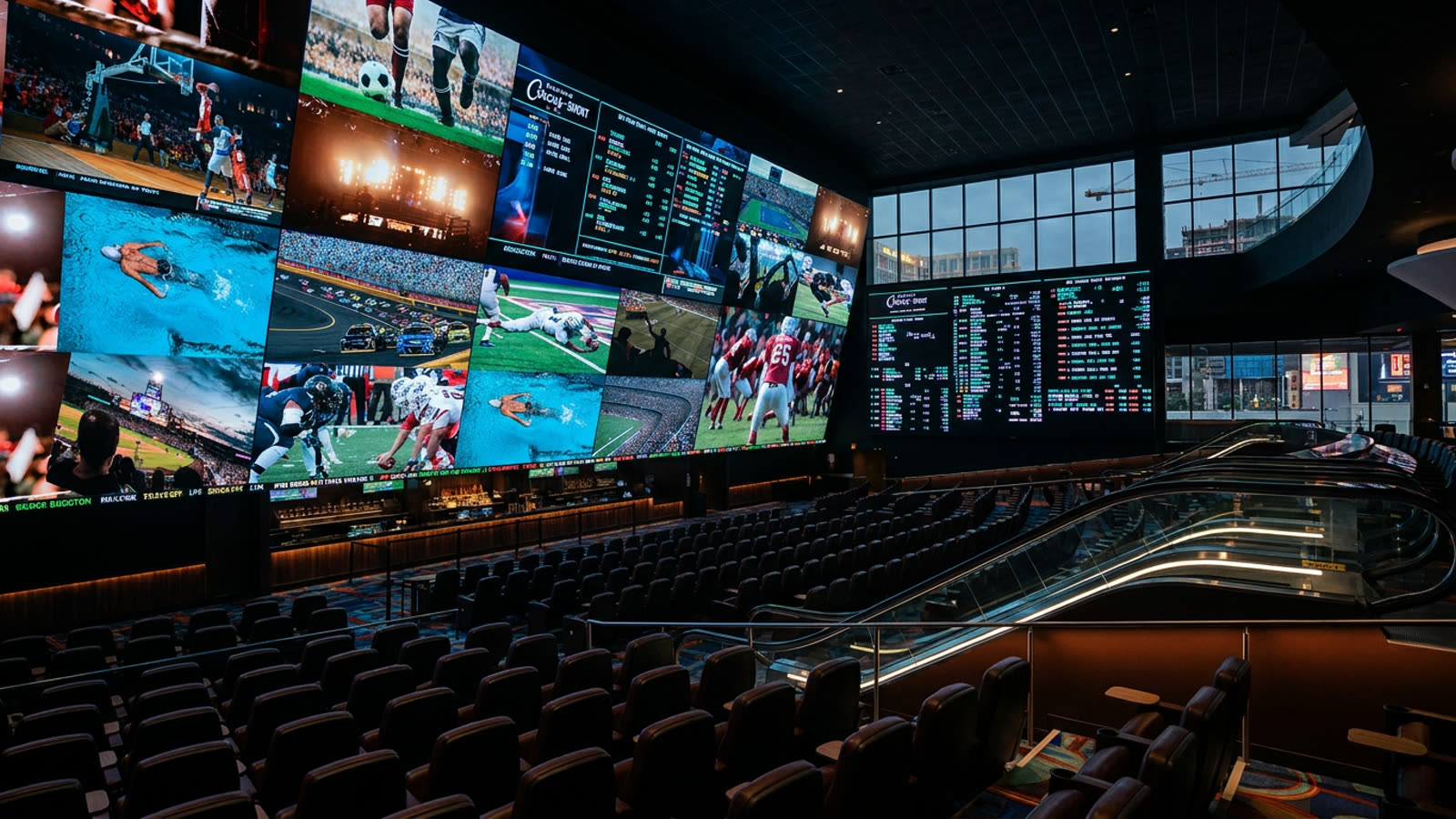
The latest Las Vegas mega-project isn't a casino in the traditional sense—it's a temple to the proposition that Americans will pay premium prices to watch sports in environments specifically engineered to separate them from their money more efficiently.
The Sphere, MSG's $2.3 billion orb of LED screens, was merely the appetizer. Now a consortium of sports-betting operators and entertainment developers is pushing forward with a new generation of venues designed from the ground up around live wagering. The pitch: immersive environments where real-time odds pulse across wraparound displays, where biometric wristbands enable frictionless betting, and where the line between spectator and gambler dissolves entirely. The price tag for the first such venue reportedly exceeds $1.5 billion, with at least two more in various stages of planning.
The revenue thesis
The economics rest on a seductive premise: that combining premium entertainment with integrated betting will unlock spending levels neither industry achieves alone. Operators point to the success of in-stadium sportsbooks at venues like Capital One Arena and the growing handle at live-betting windows. They note that Americans wagered over $120 billion legally on sports in 2025, with live in-game betting representing the fastest-growing segment.
But the projections require heroic assumptions. These venues need to fill thousands of seats at prices well above traditional sportsbook lounges, night after night, while maintaining betting volumes that justify the technology investment. The target demographic—high-net-worth sports fans willing to pay $500-plus for a seat—is real but finite. And unlike casinos, which profit from games with known house edges, sportsbooks operate on razor-thin margins that require enormous volume to generate meaningful returns.
The regulatory overhang
Timing compounds the uncertainty. State gambling regulators are growing more skeptical of industry expansion, not less. Several states have tightened advertising restrictions, and congressional interest in federal oversight has intensified following a series of integrity scandals in college sports. The immersive betting environments these projects envision may face regulatory scrutiny that didn't exist when they were conceived.
Meanwhile, the broader sports-betting industry is consolidating rapidly as operators who expanded aggressively during the post-PASPA gold rush confront the reality that customer acquisition costs exceed lifetime value in most markets. DraftKings and FanDuel dominate, but neither has demonstrated consistent profitability at scale.
Our take
Las Vegas has always been a place where optimism about human appetite for risk gets monetized. Sometimes that optimism is vindicated; sometimes it produces beautiful ruins. The immersive-betting thesis isn't crazy—Americans genuinely do want novel ways to engage with sports, and the integration of entertainment and wagering has obvious appeal. But the billion-dollar bet assumes that regulatory tolerance, consumer spending, and operational margins will all break favorably simultaneously. That's a parlay with long odds, and the house doesn't always win.