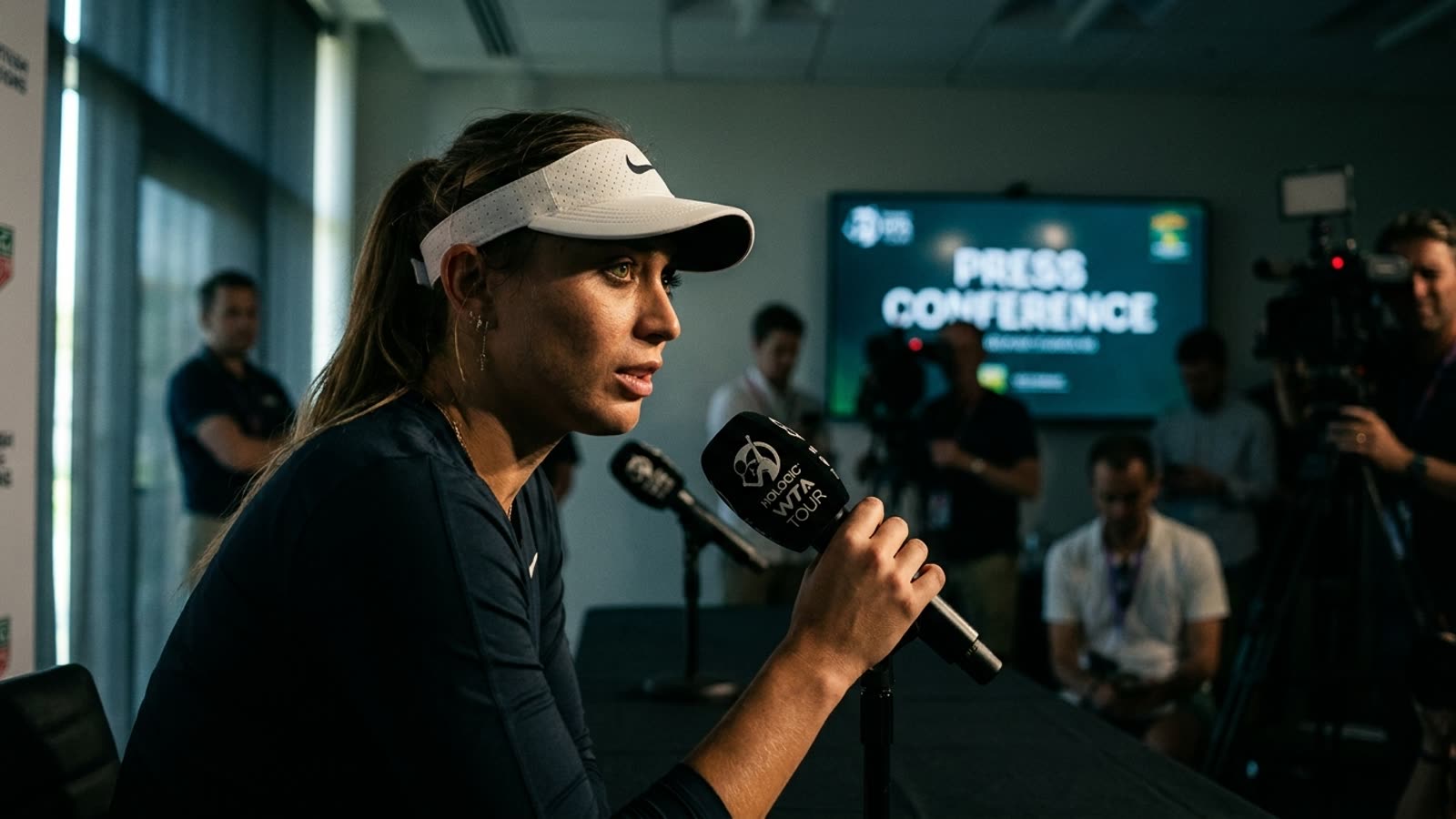
When Paula Badosa Vallejo exited the French Open this week after a straight-sets loss, she did not blame her forehand or her fitness or the Parisian clay. She blamed the chair umpire's gender, telling reporters the match "needed a man" to control it properly.
The comment landed with the dull thud of inevitability. Women's tennis has spent decades insisting it deserves equal prize money, equal broadcast slots, equal respect—and then, periodically, one of its own suggests that female officials lack the authority to manage female players. It is a self-inflicted wound the sport keeps reopening.
The Ramos precedent
Vallejo's remarks arrive eight years after Serena Williams's volcanic confrontation with Carlos Ramos at the 2018 US Open final, a match that ended with Williams calling the Portuguese umpire a "thief" and the tennis establishment tying itself in knots over whether her treatment was sexist, deserved, or both. The WTA responded by floating proposals for more lenient officiating of women's matches—an idea that quietly died because it would have codified the very double standard it claimed to oppose.
What survived was an unspoken assumption: that women's matches are emotionally hotter, that players push boundaries more aggressively, and that officials need some ineffable quality—often coded as male authority—to keep order. Vallejo did not invent this belief; she merely said it out loud.
Why the silence?
Neither the WTA nor Roland-Garros had issued a statement by Thursday evening. The reluctance is understandable, if cowardly. Condemning Vallejo risks alienating a popular Spanish player and reigniting the culture-war discourse that followed the Williams-Ramos affair. Ignoring her risks signaling that such comments are acceptable.
The broader context makes the silence worse. Women's tennis has positioned itself as a leader in athlete-driven social advocacy, from Naomi Osaka's mental-health candor to the tour's vocal support for pay equity. A player publicly questioning whether women can officiate women undermines that brand in a single sentence.
Our take
Vallejo lost a tennis match and offered an excuse that would have been unremarkable in 1974. That it remains unremarkable in 2026 is the real story. The WTA can issue a fine, or a statement, or both—but until the tour treats casual sexism from its own players with the same seriousness it reserves for outside critics, the equal-respect campaign will remain a marketing exercise rather than a principle.