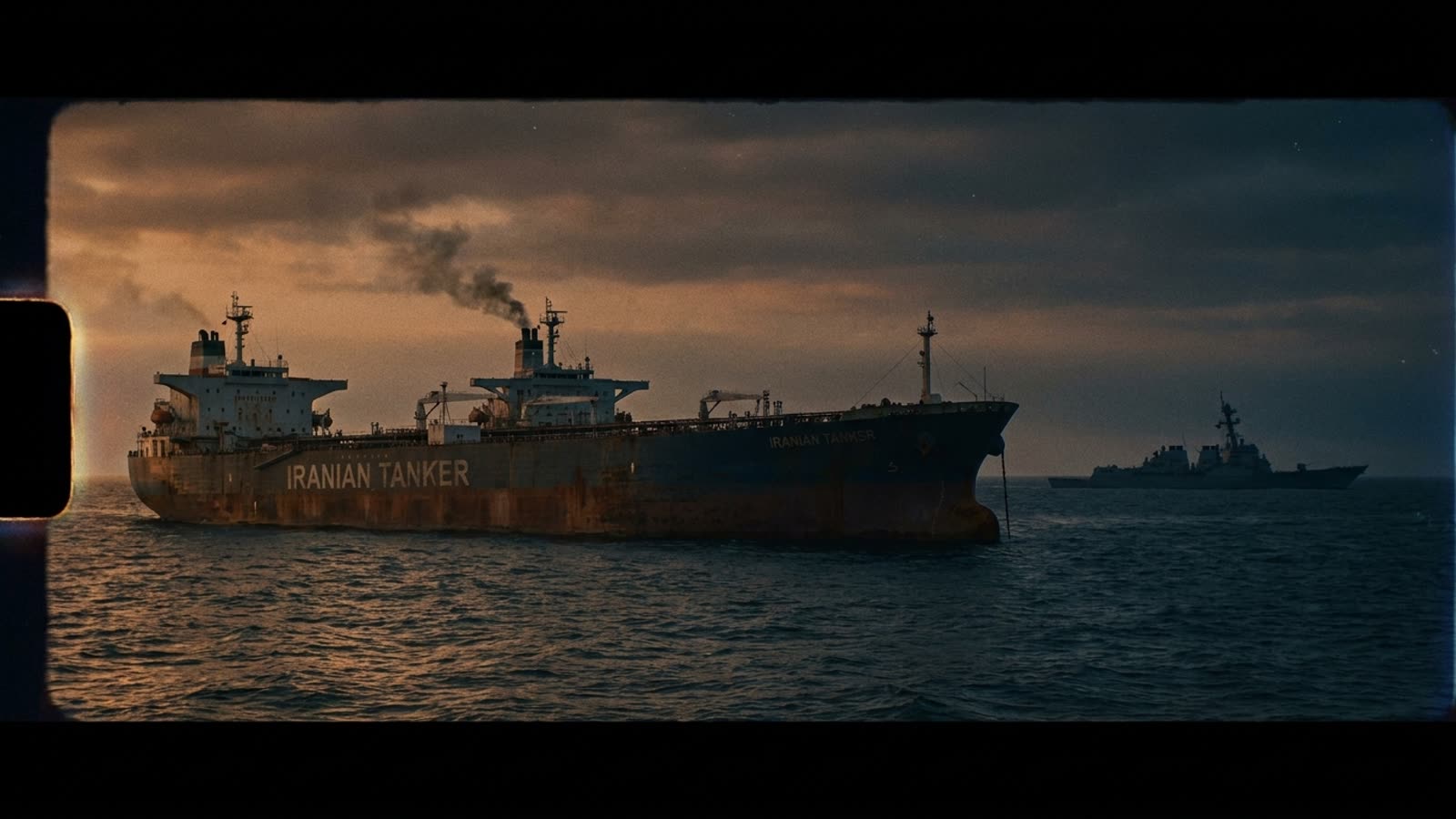
The US naval blockade of Iran, announced during the opening weeks of the war in February and maintained through the fragile ceasefire that has technically held for weeks, turned decisively kinetic on Friday. US Central Command said American forces had "disabled" two Iranian-flagged, unladen oil tankers that were attempting to pull into an Iranian port on the Gulf of Oman "in violation of the ongoing US blockade," by firing precision munitions into their smokestacks.
"US forces fired precision munitions into their smokestacks, preventing the non-compliant ships from entering Iran," the Centcom statement said. The command added that American warships and aircraft are now preventing more than 70 tankers from entering or leaving Iranian ports, a tempo of interdiction that has climbed steadily since Washington formally re-imposed what it now calls "maritime pressure" last month.
Tehran's response: 'reckless military adventure'
Iran's Foreign Minister Abbas Araghchi responded on X with language calibrated less at American diplomats than at European ones. "Is it a crude pressure tactic? Or the result of a spoiler once again duping POTUS into another quagmire?" he wrote, before adding that Iranians "will never bow to pressure." Araghchi accused the US of choosing a "reckless military adventure" every time "a diplomatic solution is on the table."
The phrasing is not rhetorical throat-clearing. Araghchi is signalling that Tehran considers the Friday strikes a political manoeuvre by Washington to force Iranian concessions at the negotiating table, not the restoration of a drifted ceasefire. That read is shared by European diplomats, who have privately told the BBC and other outlets that the Trump administration's tempo of escalation has outpaced its diplomatic offers.
What comes next: the Friday proposal
US Secretary of State Marco Rubio, speaking during a visit to Italy, said he expected Iran to respond to the latest US proposal Friday. "I hope it's a serious offer, I really do," Rubio said, pointedly not describing Washington's own proposal. Iranian state media had earlier indicated Tehran would respond by the end of the week, but gave no indication of content.
The naval incident itself — in the Minab region of Hormozgan province — follows Thursday's confused exchanges in the Strait of Hormuz, which both sides blamed on each other. Centcom accused Iranian missiles, drones and small boats of launching an "unprovoked attack" on three US warships. Iran's top military command alleged the US had targeted an Iranian oil tanker, struck a second vessel near Hormuz, and conducted "aerial attacks" on coastal facilities.
One cargo vessel near Minab caught fire. Ten injured sailors have been hospitalised, Hormozgan official Mohammad Radmehr told Iranian state agency Mehr; the fate of other crew is unknown.
President Trump on Truth Social
President Donald Trump posted overnight that US forces had destroyed multiple small boats, missiles and drones. "Just like we knocked them out again today, we'll knock them out a lot harder, and a lot more violently, in the future, if they don't get their Deal signed, FAST!" he wrote. His tone — threat-plus-deadline — is the register he used during the December 2024 tariff negotiations, and then during the opening phase of the Iran war itself.
Our take
A blockade that fires on ships is no longer a blockade — it is a running naval engagement. The Friday strikes do not blow up the ceasefire formally, because neither side has been treating it as one for weeks, but they do raise the floor on the next round of talks. If Tehran's response is anything short of a substantive counter-offer, expect Centcom's tempo of interdiction to climb again next week.