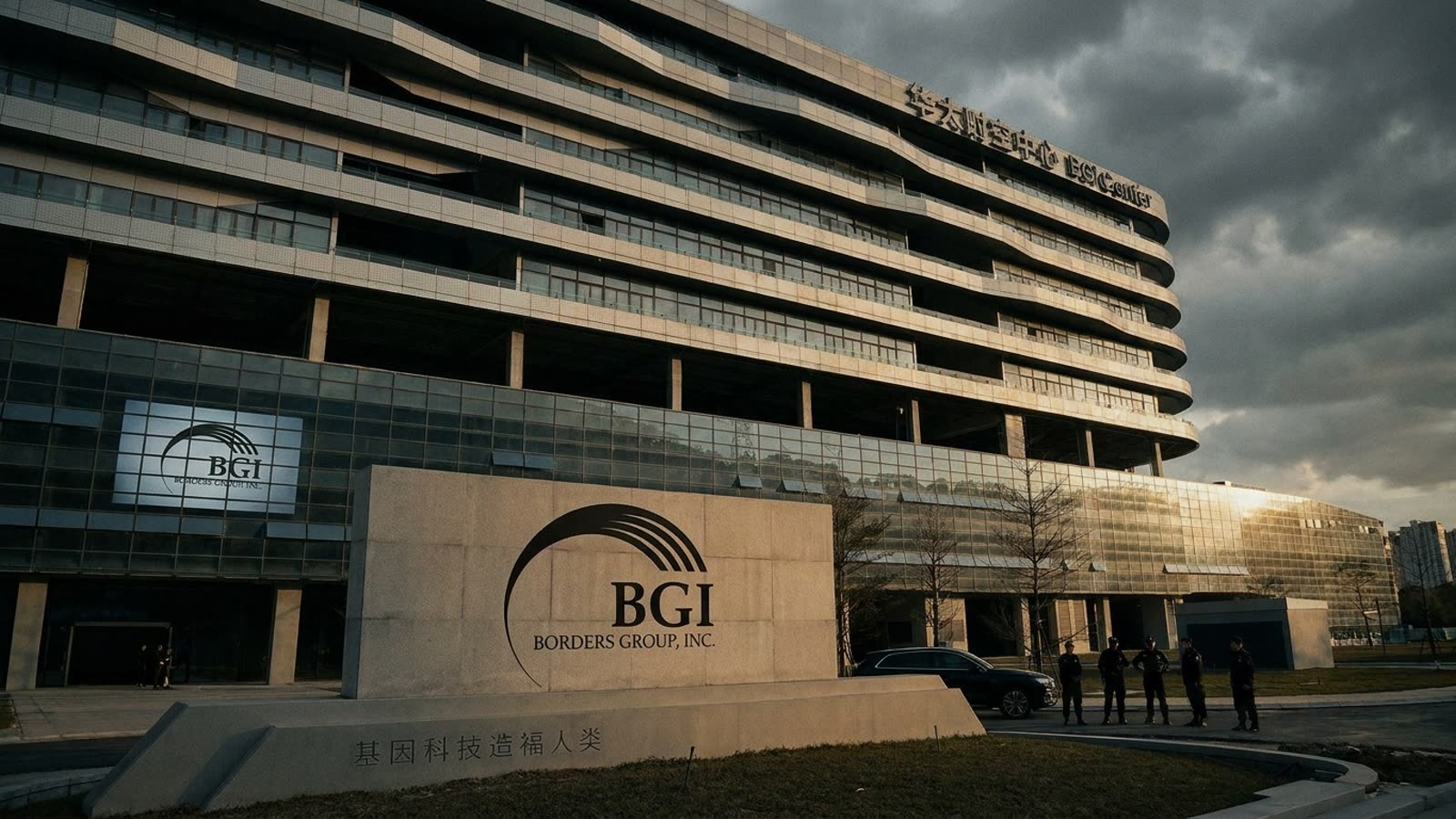
The Biden administration's decision to restrict trade with BGI, China's genomics behemoth, is not really about forced labor or Uyghur persecution—though those allegations provide the legal architecture. It is about something larger: the quiet recognition that whoever sequences the world's DNA controls a strategic resource as valuable as oil was in the last century.
BGI is not some obscure laboratory. It is the world's largest genomics organization, responsible for sequencing more human genomes than any other entity on earth. Its machines sit in hospitals and research institutions across dozens of countries. Its databases contain genetic information on millions of people. And now, American companies cannot ship it components without explicit government approval.
The biotech iron curtain descends
The Commerce Department's move places BGI on the Entity List, the same trade restriction tool used against Huawei and other Chinese technology champions. The stated rationale centers on BGI's alleged connections to surveillance of ethnic minorities in Xinjiang and its ties to the Chinese military-industrial complex. But the timing—coming as China accelerates its push for self-sufficiency in biotechnology—suggests the restrictions serve a dual purpose.
Genomics has become infrastructure. Personalized medicine, agricultural biotechnology, pandemic preparedness, and pharmaceutical development all depend on sequencing capacity. A country that cannot sequence cannot compete in twenty-first-century healthcare. The U.S. appears determined to ensure China builds that capacity without American help.
What BGI actually does
Founded in 1999 to participate in the Human Genome Project, BGI evolved from a research institute into a vertically integrated genomics conglomerate. It manufactures sequencing machines, operates the world's largest gene bank, and runs clinical testing services that have touched hundreds of millions of lives. During the pandemic, BGI's testing kits were deployed globally, raising concerns in Washington about data flowing back to Beijing.
The company has denied wrongdoing and previously called U.S. accusations politically motivated. But denials matter less than capabilities, and BGI's capabilities are formidable. Its sequencing costs undercut Western competitors. Its data repositories dwarf them.
The real target is data sovereignty
Genetic information is the ultimate personal data—immutable, hereditary, predictive. Intelligence agencies have long worried about foreign access to American genomic databases, and BGI's global footprint made it a natural target. The restrictions will not prevent China from advancing its genomics industry; they will merely slow the transfer of American technology that might accelerate it.
For BGI's international partners—universities, hospitals, pharmaceutical companies—the blacklisting creates immediate headaches. Equipment maintenance, reagent supplies, and collaborative research all become legally fraught. Some will find workarounds. Others will simply decouple.
Our take
The BGI restrictions confirm what has been obvious for years: the U.S.-China technology competition has no natural boundary. Semiconductors, artificial intelligence, quantum computing, and now genomics—each successive front expands the definition of strategic technology. The logic is self-reinforcing and probably irreversible. Whether this makes either country safer or richer is a question nobody in Washington or Beijing seems interested in answering.