The American military entered Iran with a doctrine built for the last war. It is learning, expensively, from a conflict it largely sat out.
When U.S. forces began sustained operations against Iranian military infrastructure this spring, commanders discovered that many of the tactics they faced—and many they needed—had been refined not in Pentagon simulations but in the muddy trenches of the Donbas and the skies over Crimea. The Ukraine war, now grinding past its fourth year, has functioned as the world's most consequential weapons laboratory since the Spanish Civil War. Iran, which supplied Russia with Shahed drones and received battlefield data in return, has absorbed those lessons. So, belatedly, has Washington.
The drone revolution's second act
Ukraine demonstrated that cheap, expendable drones could neutralize equipment costing orders of magnitude more. Iran took notes. American armored columns in the current conflict have faced drone swarms operating with a coordination that echoes Ukrainian tactics against Russian convoys—small quadcopters for reconnaissance feeding targeting data to loitering munitions. The Pentagon's counter-drone systems, designed for the slower tempo of counterinsurgency, have struggled with saturation attacks.
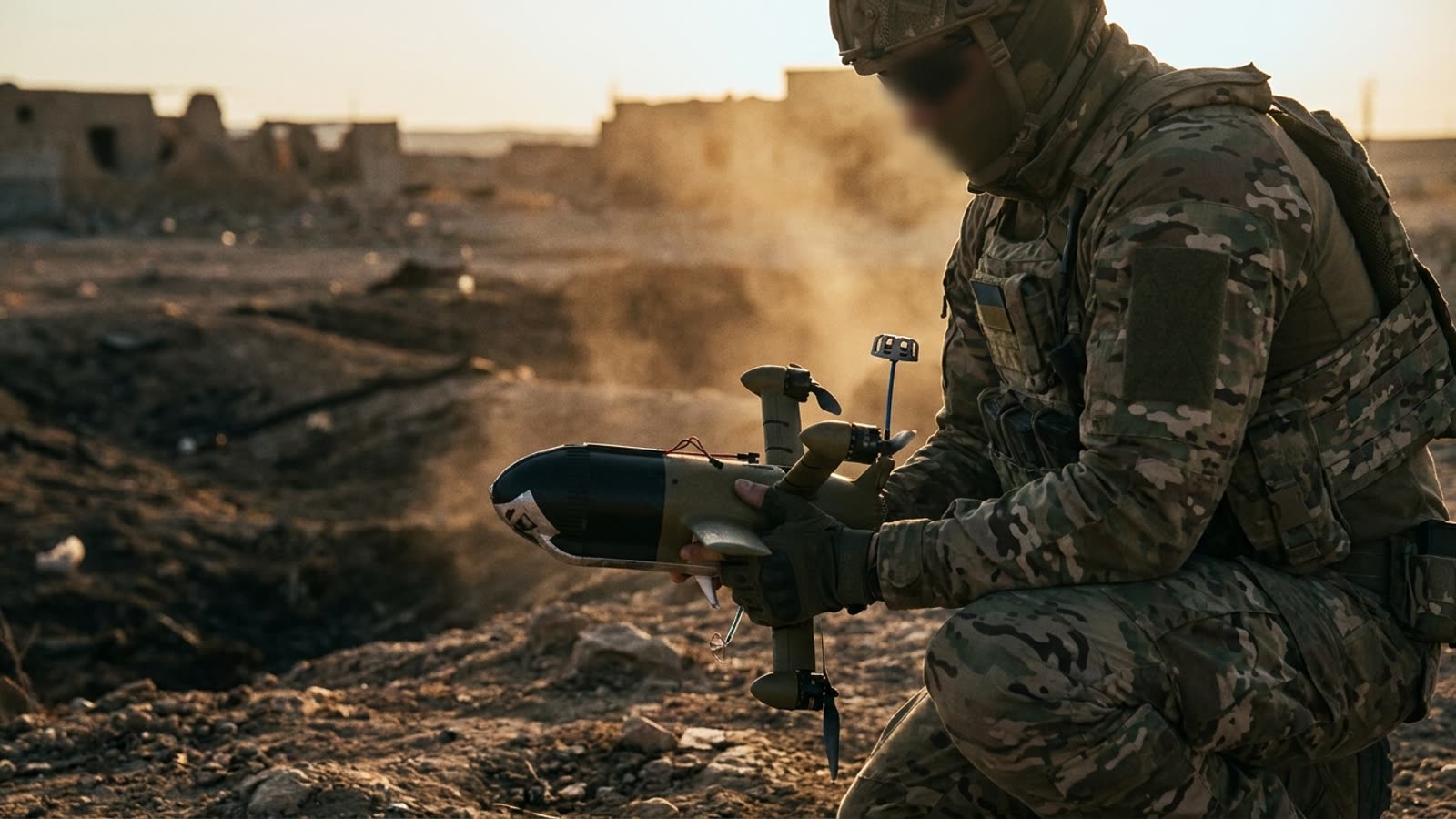
The adaptation runs both directions. Ukraine pioneered the use of first-person-view racing drones as precision munitions, a technique American special operations forces are now deploying against Iranian Revolutionary Guard positions. Electronic warfare jamming, which both Russia and Ukraine refined through brutal trial and error, has become central to operations on both sides of the Persian Gulf.
What Washington learned too late
The U.S. military watched the Ukraine war closely but implemented its lessons unevenly. Procurement cycles move slower than battlefields. The Army's next-generation counter-drone systems remain years from full deployment. Meanwhile, Iran—with shorter supply chains and fewer bureaucratic layers—integrated Ukrainian-theater innovations within months of observing them.
This asymmetry matters beyond the current conflict. China is watching both wars with the same attentiveness Iran showed toward Ukraine. Taiwan's defense planners are reportedly studying Iranian drone tactics as a preview of what they might face. The battlefield is becoming a global feedback loop, with innovations cycling between conflicts faster than any single military can institutionalize them.
Our take
The connection between Ukraine and Iran is not merely tactical; it is strategic. By declining to commit ground forces to Ukraine's defense, the United States ceded the most intensive laboratory for modern warfare to adversaries willing to participate directly. Iran learned from Russia's mistakes and Russia's adaptations. America is now paying tuition on lessons it could have absorbed earlier and cheaper. The next war—wherever it occurs—will be shaped by what is happening in both theaters today. The question is whether Washington can learn faster than its rivals can teach.