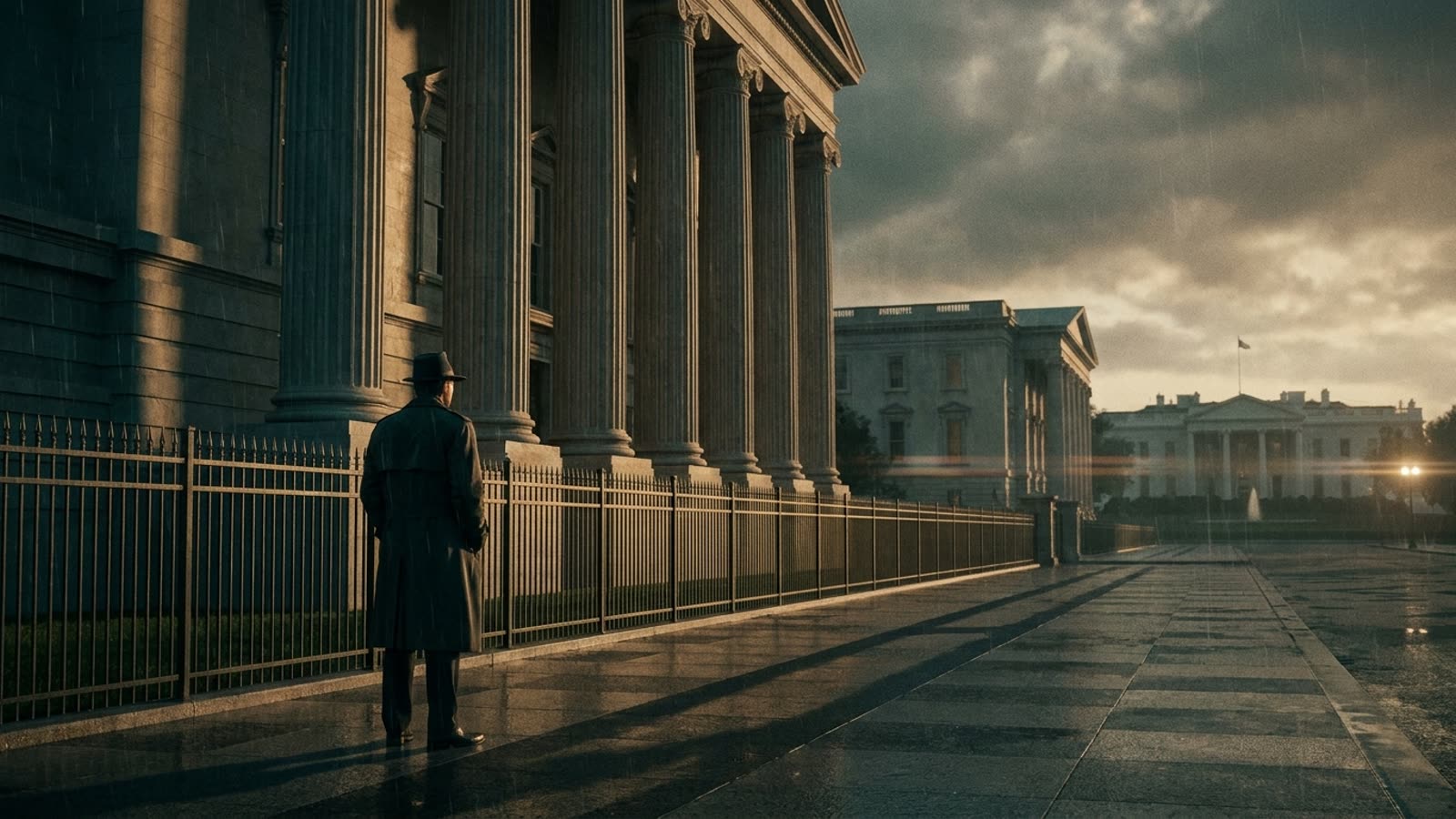
The President of the United States has decided that the White House needs more columns. According to reports emerging this week, Donald Trump has directed staff to explore adding a colonnade or portico extension to the executive residence—a project that would represent the most significant structural alteration to the building since the Truman reconstruction of the late 1940s.
The impulse is not surprising. Trump has long favored neoclassical grandeur, from the gilded interiors of his private residences to his 2020 executive order mandating classical architecture for federal buildings. What is surprising is the apparent assumption that a president can simply order such work done. He cannot—at least not without Congress.
The legal architecture
The White House is federal property, and alterations to federal buildings require congressional appropriation. The General Services Administration oversees maintenance and renovation of the executive residence, but major construction projects must be funded through the legislative branch. The Committee for the Preservation of the White House, established by executive order in 1964, advises on changes to the building's public rooms, but its recommendations are not binding and do not extend to structural additions.
More fundamentally, the National Historic Preservation Act of 1966 subjects the White House to review under Section 106, which requires federal agencies to consider the effects of their undertakings on historic properties. Adding columns to a building that has looked essentially the same since 1824 would trigger extensive review by the Advisory Council on Historic Preservation.
Then there is the question of the National Capital Planning Commission, which must approve major construction in Washington. The commission has historically been protective of the capital's sight lines and architectural coherence.
The political structure
Republican majorities in both chambers might seem to smooth the path, but appropriating funds for presidential vanity projects is different from passing tax cuts. Members facing reelection in 2028 may not relish explaining why they voted to spend public money on columns while constituents struggle with grocery prices.
Democrats have already signaled they will frame any such appropriation as emblematic of misplaced priorities. Senator Chuck Schumer's office released a statement calling the reported plans "a monument to ego while American families build nothing but debt."
The White House has not confirmed specific designs or cost estimates. Press Secretary communications have emphasized that the president is merely "exploring options" to "restore the dignity" of the executive residence.
Historical precedent
Presidents have modified the White House before, but rarely without controversy. Theodore Roosevelt's 1902 renovation, which created the West Wing, required congressional funding. Truman's gutting and reconstruction of the residence between 1948 and 1952—necessary because the building was literally collapsing—cost the equivalent of roughly $100 million in today's dollars and required extensive congressional negotiation.
Jacqueline Kennedy's famous restoration in the early 1960s was funded largely through private donations and focused on interior decoration rather than structural changes. That model—private funding for aesthetic improvements—might offer Trump a path forward, though it would require him to solicit donations rather than command appropriations.
Our take
There is nothing inherently wrong with a president wanting to improve his residence, and reasonable people can disagree about whether the White House could use more columns. But the assumption that presidential desire equals presidential authority is the consistent thread running through this administration's approach to governance. The Constitution's framers designed a system of shared powers precisely to prevent any single branch from building whatever monuments it pleased. If Trump wants his columns, he will have to do what every other president has done: ask Congress. The architecture of American government, unlike the White House itself, is not subject to renovation by executive order.