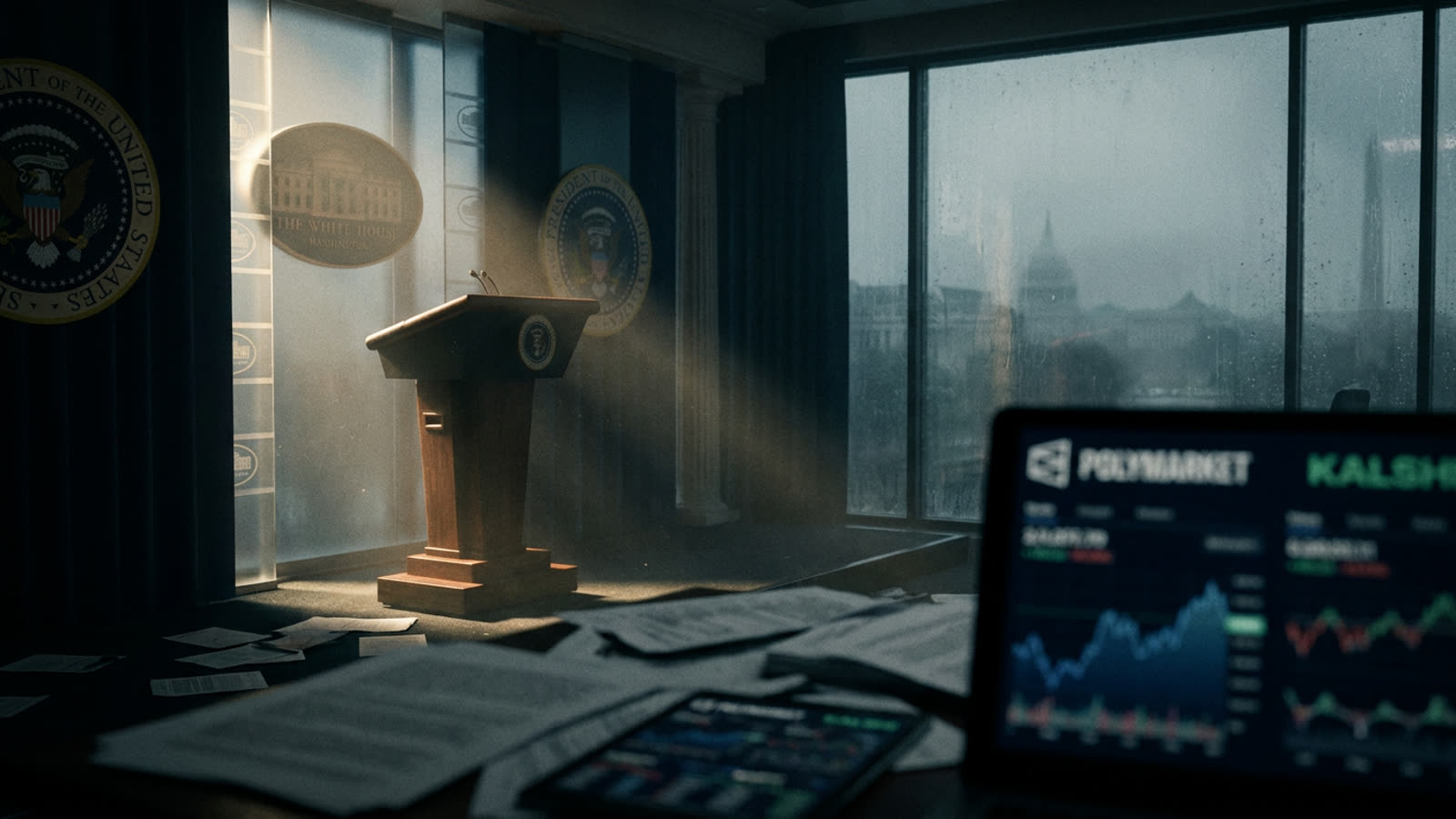
The president who built a political brand on states' rights and regulatory rollback now wants the federal government to seize control of prediction markets from state authorities — and he's deploying characteristically Trumpian rhetoric to get there.
In remarks this week, Donald Trump called for unified federal regulation of prediction-market platforms while labeling state officials who have moved to restrict or ban such services as "scum." The outburst came as Indonesia joined a growing list of jurisdictions cracking down on Polymarket and similar platforms, and as domestic state regulators have questioned whether these markets constitute illegal gambling.
The Personal Angle
Trump's interest in prediction markets is not academic. The president has been publicly associated with Polymarket since the platform's contracts on the 2024 election drew global attention, and his allies have invested in competing platforms. A federal regulatory framework that preempts state gambling laws would remove the patchwork of restrictions that currently limits these platforms' domestic reach — and their valuations.
The irony is thick. This is the same administration that has championed state sovereignty on everything from environmental regulation to education policy. But when state gaming commissions threaten an industry aligned with Trump's financial and political interests, federalism suddenly becomes an obstacle rather than a principle.
The Regulatory Reality
Prediction markets exist in a genuine legal gray zone. The Commodity Futures Trading Commission has jurisdiction over certain event contracts, but states retain authority over gambling. Kalshi has fought legal battles to offer election contracts; Polymarket operates offshore, inaccessible to U.S. users in its full form. A clear federal framework could legitimize the industry — but it could also hand enormous power to whichever administration controls the relevant agencies.
Trump's "scum" comment, directed at unnamed state officials, suggests he views any regulatory friction as personal obstruction rather than legitimate governance. It's a tell: the president sees prediction markets not as a policy question but as a loyalty test.
Our take
There's a reasonable case for federal clarity on prediction markets — the current patchwork genuinely hampers innovation and creates arbitrage opportunities for offshore operators. But that case is undermined when it's made by a president with obvious financial interests, delivered with insults rather than arguments, and framed as an attack on the very federalism his party claims to champion. Prediction markets deserve better advocates than someone who treats regulatory disagreement as treason.