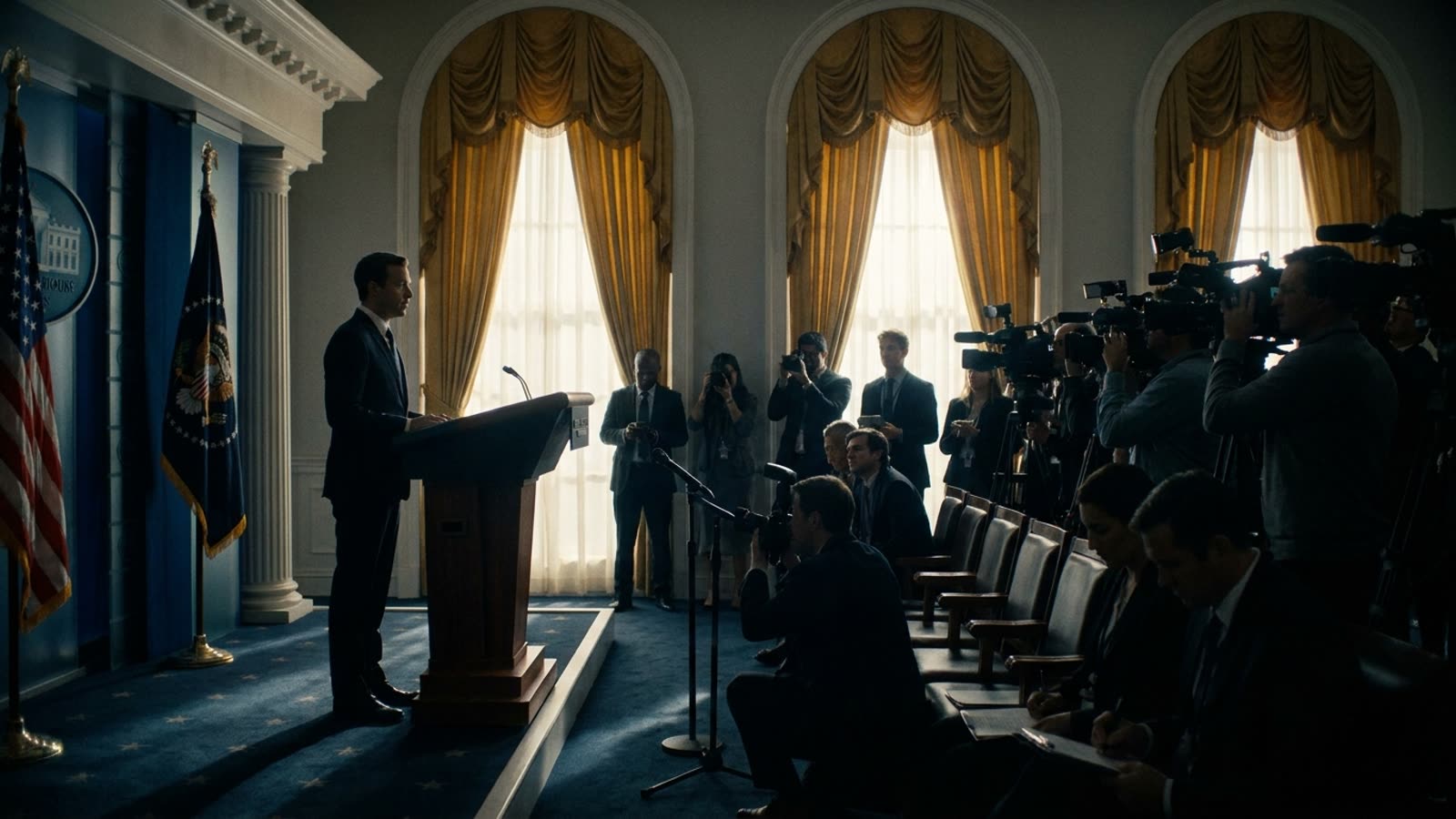
The Trump administration has postponed an executive order on AI security, with the president telling reporters the draft language "could have been a blocker" for American companies. The retreat exposes a fundamental tension at the heart of the administration's technology agenda: how do you simultaneously champion unfettered AI development and address legitimate concerns about the technology's potential for misuse?
The order, which had been expected to establish baseline security requirements for AI systems deployed in critical infrastructure, was pulled from the signing schedule late Thursday. Officials offered no timeline for its return.
The deregulation trap
Trump's AI policy has operated on a simple premise: regulations hurt American competitiveness, and China is catching up. The administration has already rolled back Biden-era disclosure requirements and signaled hostility toward any framework that might slow deployment. But national security advisors have grown increasingly vocal about vulnerabilities—AI systems managing power grids, financial networks, and defense logistics present obvious attack surfaces.
The withdrawn order reportedly attempted to thread this needle, establishing voluntary security standards with enforcement triggers only in cases of demonstrated negligence. Even this modest approach proved too much.
Industry pressure, real and imagined
Tech executives have maintained a steady presence at Mar-a-Lago, and their message has been consistent: any regulation creates compliance costs that benefit well-resourced Chinese state enterprises. The argument has obvious appeal to an administration that views economic competition with Beijing as existential.
What's less clear is whether the industry actually opposed this particular order. Several major AI companies have publicly called for security frameworks, recognizing that a catastrophic incident—a compromised medical AI, a manipulated trading algorithm—would invite far harsher intervention. The "blocker" language may reflect internal White House politics more than external lobbying.
The vacuum persists
The United States now enters its second year without coherent federal AI policy. The EU's AI Act is fully operational. China has implemented its own regulatory framework, however selectively enforced. American companies operate in a patchwork of state laws and sector-specific guidance, while the federal government oscillates between laissez-faire rhetoric and security panic.
Our take
The delay is less surprising than clarifying. This administration cannot reconcile its ideological commitment to deregulation with the genuine national security implications of advanced AI systems. Rather than make a choice, it has chosen paralysis—which is itself a choice, and not a particularly strategic one. The next AI incident involving critical infrastructure will arrive on a government that has spent two years actively avoiding the question of what to do about it.