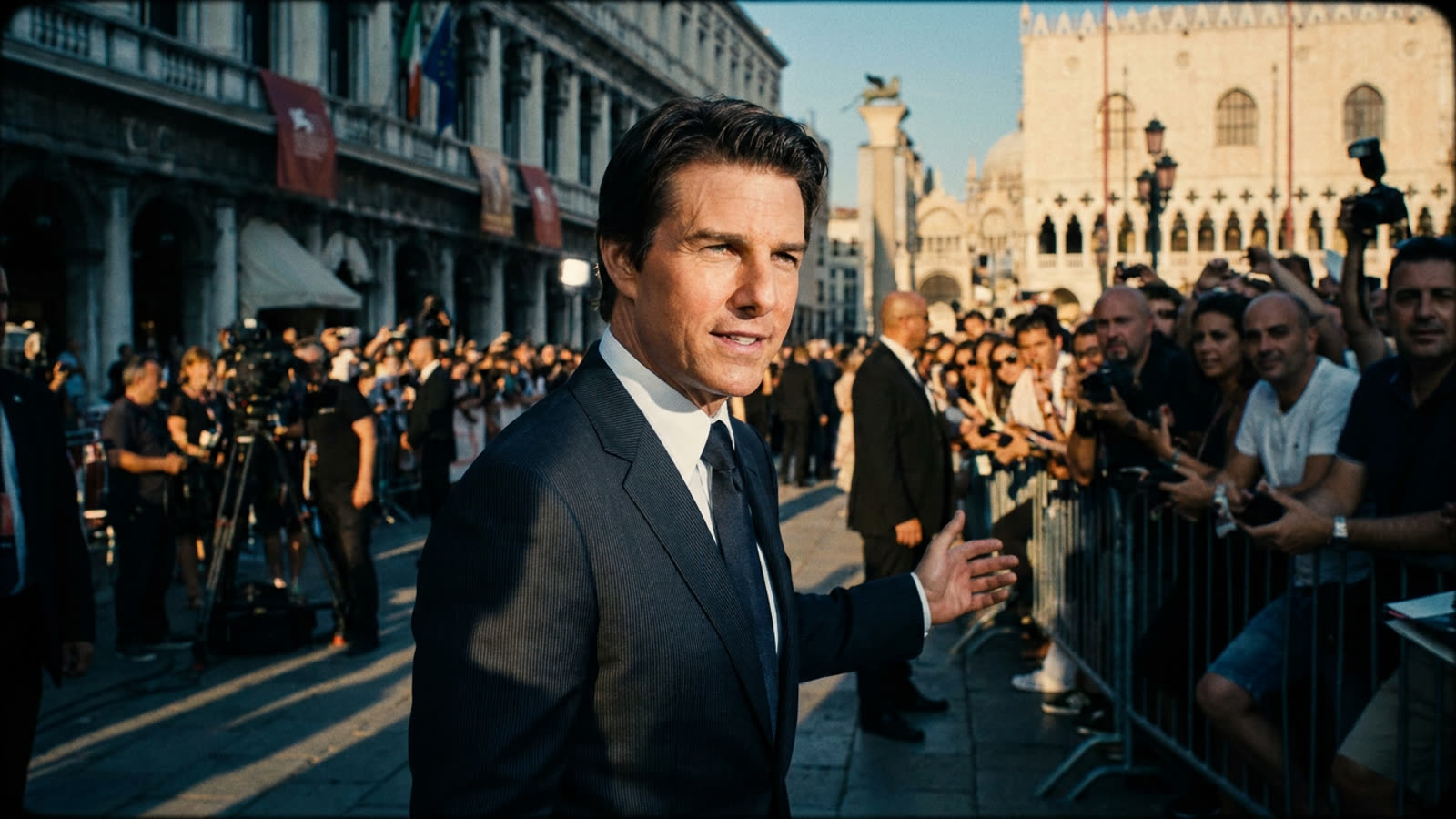
The entertainment industry spent the better part of a decade declaring the movie star dead, replaced by intellectual property and algorithmic recommendations. Then Tom Cruise kept making Mission: Impossible films, and everyone quietly agreed to pretend the eulogy never happened.
Cruise's summer visibility—whether promoting projects, spotted at sporting events, or simply existing in the public consciousness—serves as an annual reminder of a business model that theoretically shouldn't work anymore. He demands budgets north of $200 million, insists on practical stunts that inflate insurance costs to obscene levels, and refuses to cede creative control to the franchise machinery that has consumed his contemporaries. Studios pay it all without meaningful negotiation.
The arithmetic of irreplaceability
The calculus is brutally simple: Cruise films perform internationally in ways that justify their bloated production costs. While American audiences have largely migrated to streaming, global theatrical markets—particularly in Asia, the Middle East, and Latin America—still respond to the promise of Cruise hanging off aircraft or sprinting through explosions. His films don't just open; they hold, often running in theaters for months in markets where Hollywood's superhero fatigue set in years ago.
This makes him less a movie star in the traditional sense and more a one-man hedge against theatrical extinction. Paramount's entire release strategy has effectively organized itself around his production schedule for the past decade.
The succession problem nobody discusses
Hollywood's awkward secret is that it has failed to develop a replacement. The actors who emerged in the streaming era—talented as many are—lack the ineffable quality that makes international audiences leave their homes for a cinema. The Marvel system deliberately suppressed individual star power in favor of brand continuity. The result is an industry that has optimized for everything except the thing that built it.
Cruise understood this before the studios did. His insistence on theatrical exclusivity, his refusal to let his films debut on streaming platforms, his willingness to delay releases during the pandemic rather than accept a hybrid model—all of it looked like ego at the time. It was strategy.
Our take
The Tom Cruise phenomenon isn't really about Tom Cruise. It's about an industry that spent years convincing itself that content was fungible, that stars were replaceable, that algorithms could manufacture what charisma once provided. Cruise's continued dominance is less a testament to his talents—considerable though they are—than an indictment of an entertainment complex that forgot how to create what he represents. Every summer he remains relevant is another year Hollywood admits it has no idea how to build the next one.