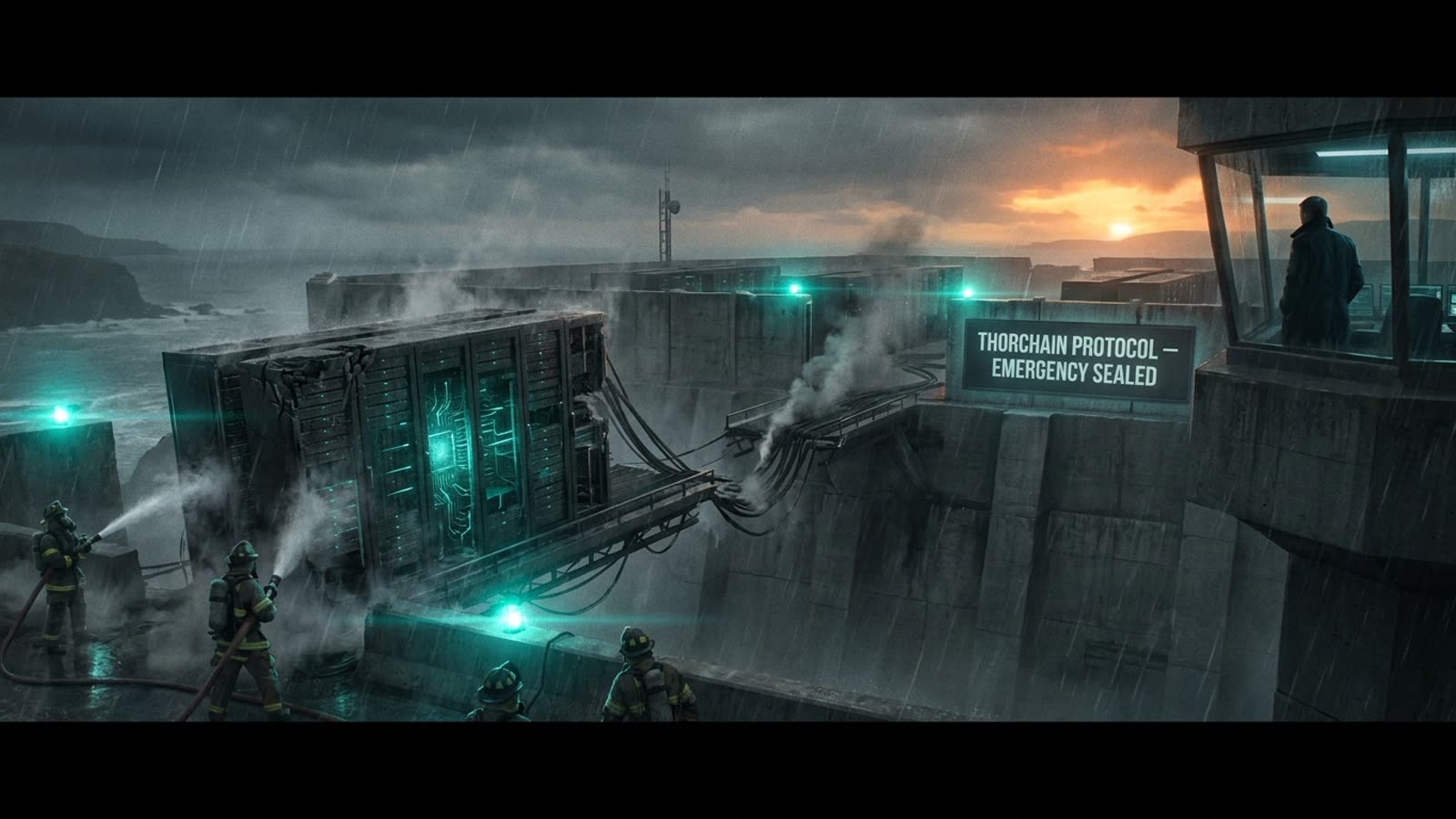
Cross-chain liquidity protocol Thorchain froze all trading and signing operations on Friday after an attacker systematically drained approximately $10.8 million across Bitcoin, Ethereum, Binance Smart Chain, and Base networks. The RUNE token dropped 12% in immediate response, and the protocol remains offline as developers assess the damage.
This is not Thorchain's first catastrophic exploit—the protocol suffered multiple attacks in 2021 totaling over $13 million—but the timing is particularly awkward. Cross-chain infrastructure has been positioned as the connective tissue of a maturing multi-chain crypto ecosystem, and Thorchain has been among the most ambitious projects attempting to solve the interoperability problem without relying on centralized custodians.
The attack vector
Details remain sparse as the team conducts its postmortem, but the cross-chain nature of the exploit—spanning four distinct networks simultaneously—suggests either a vulnerability in Thorchain's core signing mechanism or a sophisticated attack on its validator set. Unlike single-chain protocols where exploits are contained, cross-chain systems inherit the security assumptions of every network they touch. An attacker who finds a weakness in the bridge logic can often drain assets across the entire connected ecosystem in a single coordinated strike.
The protocol's architecture relies on a network of node operators who collectively manage liquidity pools and validate cross-chain swaps. This design trades the security guarantees of individual blockchains for the flexibility of trustless asset movement—a bargain that looks increasingly expensive when exploits occur.
The broader pattern
Bridge exploits have become crypto's most reliable source of nine-figure losses. The Ronin bridge hack ($625 million), Wormhole ($320 million), and Nomad ($190 million) demonstrated that cross-chain infrastructure represents concentrated points of failure in an otherwise decentralized system. Thorchain's latest incident is smaller in absolute terms but reinforces the pattern: the protocols attempting to solve blockchain fragmentation are also the most attractive targets.
The fundamental tension is architectural. Blockchains achieve security through isolation—each network validates only its own state. Bridges must somehow verify state across multiple chains without introducing trusted intermediaries, a problem that has proven resistant to elegant solutions. Every approach involves tradeoffs between decentralization, capital efficiency, and attack surface.
Our take
Thorchain deserves credit for pausing operations quickly and transparently, but the protocol's recurring security incidents suggest the cross-chain problem may be harder than its proponents acknowledge. The crypto industry has spent years promising seamless interoperability between chains, yet the bridges built to deliver that vision keep collapsing under adversarial pressure. At some point, the market will need to decide whether trustless cross-chain infrastructure is a solvable engineering challenge or a category error—an attempt to have decentralization's benefits without accepting its constraints.