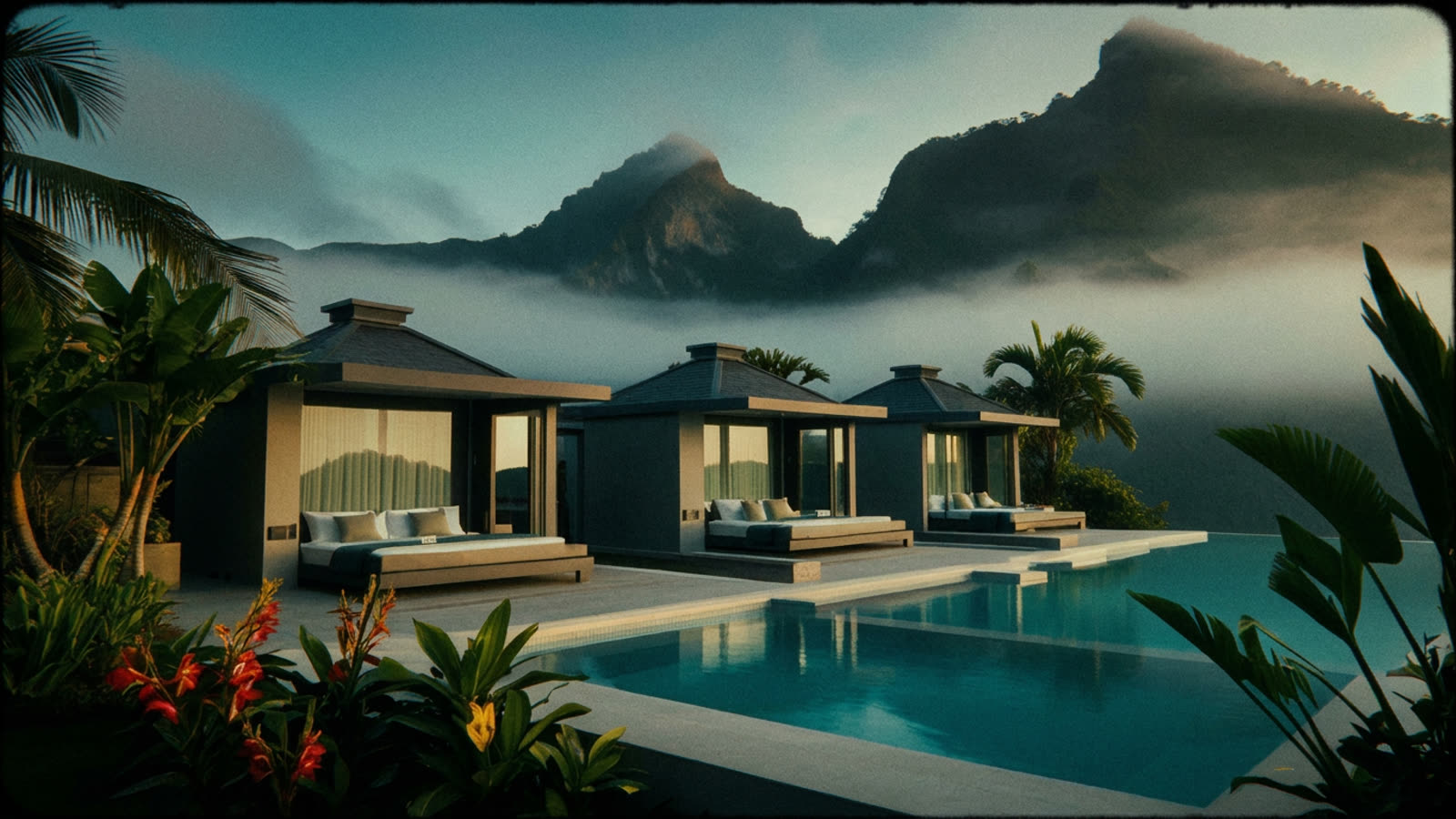
The most expensive thing you can buy is nothing at all.
This is the paradox animating a small but influential corner of the luxury market, where the pitch is not a rare experience but the systematic removal of experience itself. No Wi-Fi, no activities, no curated itineraries — just the radical proposition that wealthy people might benefit from sitting quietly in a room.
The economics of emptiness
The business model is elegantly perverse. Properties in remote locations — a former monastery in Umbria, a converted fishing station in the Faroe Islands, a silent retreat compound in rural Japan — charge rates that would be competitive with five-star urban hotels, then provide aggressively less. Guests receive plain rooms, simple meals, and the implicit understanding that they will not be entertained. The staff's primary function is to ensure you have nothing to do and no way to escape the condition.
What makes this commercially viable is the clientele's relationship with time. For people whose professional lives are defined by constant optimization — the relentless pursuit of efficiency, the compression of every idle moment into productive use — emptiness becomes genuinely scarce. They have optimized themselves into a corner where doing nothing requires elaborate logistical support and considerable expense.
The philosophical underpinning
The trend draws on various intellectual traditions without fully committing to any of them. There are echoes of Zen Buddhism's emphasis on presence, of the Stoic practice of voluntary discomfort, of the Christian contemplative tradition. But the contemporary version is notably secular and notably expensive, which changes the character of the exercise entirely.
What's being purchased is not enlightenment but permission — the social cover to step away from the productivity imperative without appearing lazy or unambitious. The high price tag paradoxically legitimizes the inactivity. Doing nothing for free might suggest depression or failure; doing nothing at considerable cost suggests sophistication and self-awareness.
The deeper irony
The entire phenomenon is, of course, a form of consumption dressed as its opposite. Guests research these retreats, compare options, book flights, pack bags, and return home with stories to tell at dinner parties. The experience of emptiness becomes another line item in the experiential portfolio, another thing done and documented, even if the documentation is deliberately understated.
This is not a criticism so much as an observation about the difficulty of escaping consumer logic from within consumer culture. The desire for nothing is genuine; the execution is inevitably compromised by the structures that make it possible.
Our take
There is something both absurd and poignant about paying handsomely to experience what previous generations called "a weekend." But the market rarely lies about what people actually want, and the willingness to spend significant sums on structured boredom suggests a real deficit in contemporary life. The luxury industry has always been in the business of selling solutions to problems it helped create. This particular solution — expensive emptiness — may be the most honest product it has ever offered.