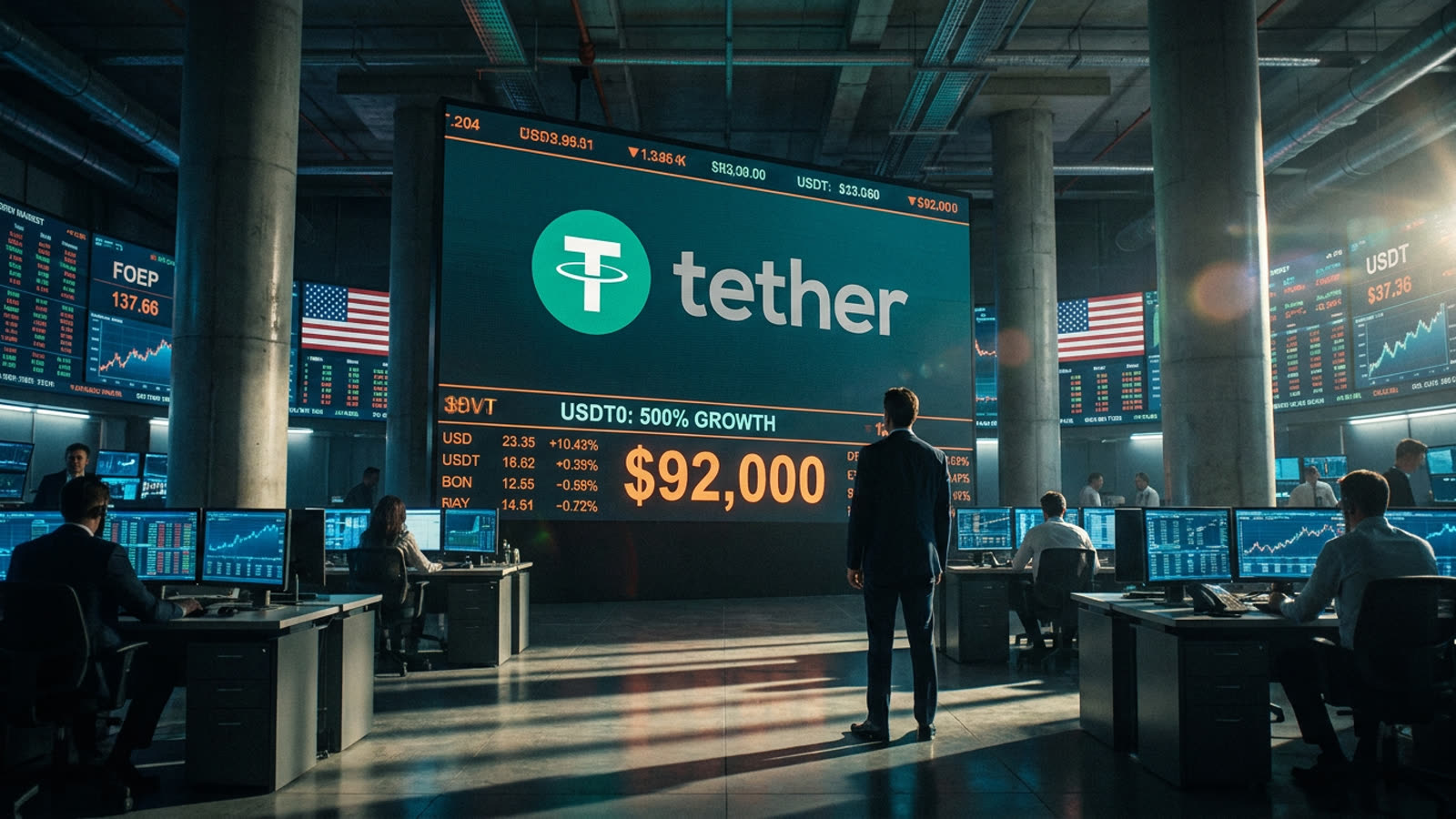
Tether has spent years perfecting the art of being everywhere except where regulators can easily reach it. Now, with its US-focused stablecoin USDT0 posting a 500% growth rate over the past month, the company appears to be testing whether it can finally play nice with American authorities without sacrificing the offshore empire that made it crypto's most indispensable infrastructure.
The growth sounds impressive until you examine the denominator. USDT0 remains a fraction of Tether's roughly $140 billion global USDT supply, making the percentage gain more a statement of intent than a shift in market structure. The token, designed to comply with anticipated US stablecoin legislation, represents Tether's hedge against a regulatory future where the company's traditional opacity becomes an existential liability rather than a competitive advantage.
The compliance pivot
Tether's domestic push arrives as Congress inches toward comprehensive stablecoin rules that would require issuers to maintain transparent reserves, submit to regular audits, and potentially obtain banking charters. Circle's USDC, already positioned as the compliance-first alternative, holds roughly $33 billion in circulation and has cultivated relationships with traditional finance that Tether has historically avoided.
The strategic logic is straightforward: if American regulation is coming regardless, better to have a compliant product ready than to cede the entire domestic market to competitors. USDT0 allows Tether to maintain its existing USDT infrastructure for international markets while building a separate, auditable product for US users and institutions increasingly wary of regulatory risk.
The trust deficit
Tether's challenge extends beyond product development. The company has spent years deflecting questions about its reserve composition, settling with the New York Attorney General in 2021 over claims it misrepresented its backing, and operating from jurisdictions chosen more for their light regulatory touch than their financial credibility. Converting that history into institutional trust requires more than launching a new token with better documentation.
The 500% growth rate, while attention-grabbing, likely reflects early adoption by crypto-native users testing the product rather than the institutional inflows that would signal genuine market acceptance. Banks, asset managers, and payment companies considering stablecoin integration tend to move slowly and prioritize counterparty risk above yield or convenience.
Our take
Tether building a US-compliant stablecoin is the crypto equivalent of a successful tax haven suddenly applying for OECD membership—technically possible, strategically rational, and deeply awkward for everyone involved. The company's offshore dominance was never accidental; it was the product of deliberate choices that prioritized growth over transparency. Whether American regulators and institutions will accept Tether's compliance-era reinvention, or whether the company's history becomes an insurmountable obstacle, will determine whether USDT0's impressive growth rate ever translates into meaningful market share. The early numbers suggest ambition. The structural challenges suggest patience.