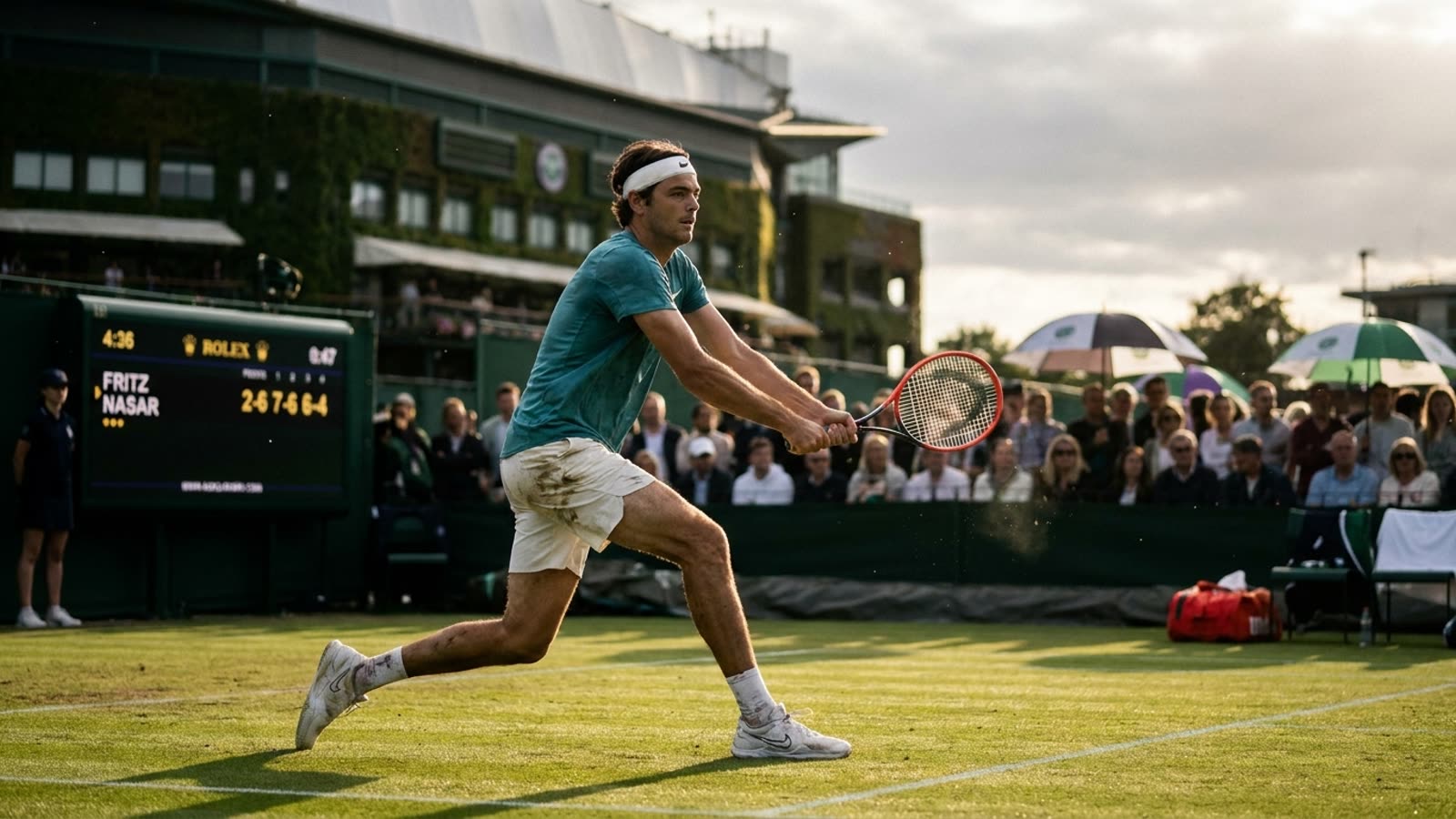
For years, Taylor Fritz has been the American men's tennis player most likely to succeed—and most likely to disappoint in equal measure. Ranked consistently in the top ten, capable of beating anyone on his day, yet somehow always falling short when the stakes climbed highest. At Wimbledon 2026, something feels different. Fritz is advancing through the draw with the quiet confidence of a man who has stopped trying to prove himself and started simply playing.
The clothing helps. Fritz has arrived at the All England Club looking like he raided a particularly tasteful corner of Ralph Lauren's archive—all cream linens and navy accents, the kind of understated elegance that makes most tennis fashion look like it was designed by a committee of energy drink executives. It is, admittedly, a superficial observation. But tennis has always been a sport where presentation matters, where the greats carry themselves with a certain inevitability before they even strike a ball. Fritz, at 28, has finally found that carriage.
The game beneath the garments
More substantively, Fritz's serve—always his primary weapon—has reached a new level of precision. His first-serve percentage in the opening rounds sits above 70%, and he's winning an even higher percentage of those points. The flat backhand that once betrayed him under pressure has developed a new reliability, staying low on grass and forcing opponents into uncomfortable positions. He is not reinventing himself; he is refining what was already there.
The American men's drought at Grand Slams now stretches back over two decades to Andy Roddick's 2003 US Open triumph. Fritz has been the most credible threat to end it for several years, reaching a US Open final and multiple Slam semifinals. Each time, something has gone wrong—a service game dropped at the wrong moment, a tiebreak lost to nerves, a body that refused to cooperate. The question at Wimbledon is whether 2026 represents a genuine breakthrough or merely another chapter in a familiar story.
The draw opens
Fritz's path through the bottom half of the bracket has been favorable but not embarrassingly so. He has dispatched competent opponents without dropping a set, which is precisely what top seeds are supposed to do and what Fritz has not always managed. The second week will bring stiffer tests—likely including a quarterfinal against a resurgent European clay-courter still finding his grass legs, and a potential semifinal against one of the established elite.
What matters is that Fritz appears, for once, to be enjoying himself. The pressure of being America's great tennis hope has weighed visibly on him in past Slams. This fortnight, he seems lighter, more willing to let points go when they go against him, more present in the moment rather than catastrophizing about what might come next.
Our take
Tennis fashion commentary is usually filler, but Fritz's Wimbledon wardrobe tells a real story: he has stopped auditioning for greatness and started assuming it. Whether that translates to a trophy remains uncertain—the final week of a Slam is a different tournament entirely, and Fritz has stumbled there before. But the American looks, for the first time, like a man who believes he belongs in a Wimbledon final. That belief, more than any outfit, is what wins championships.