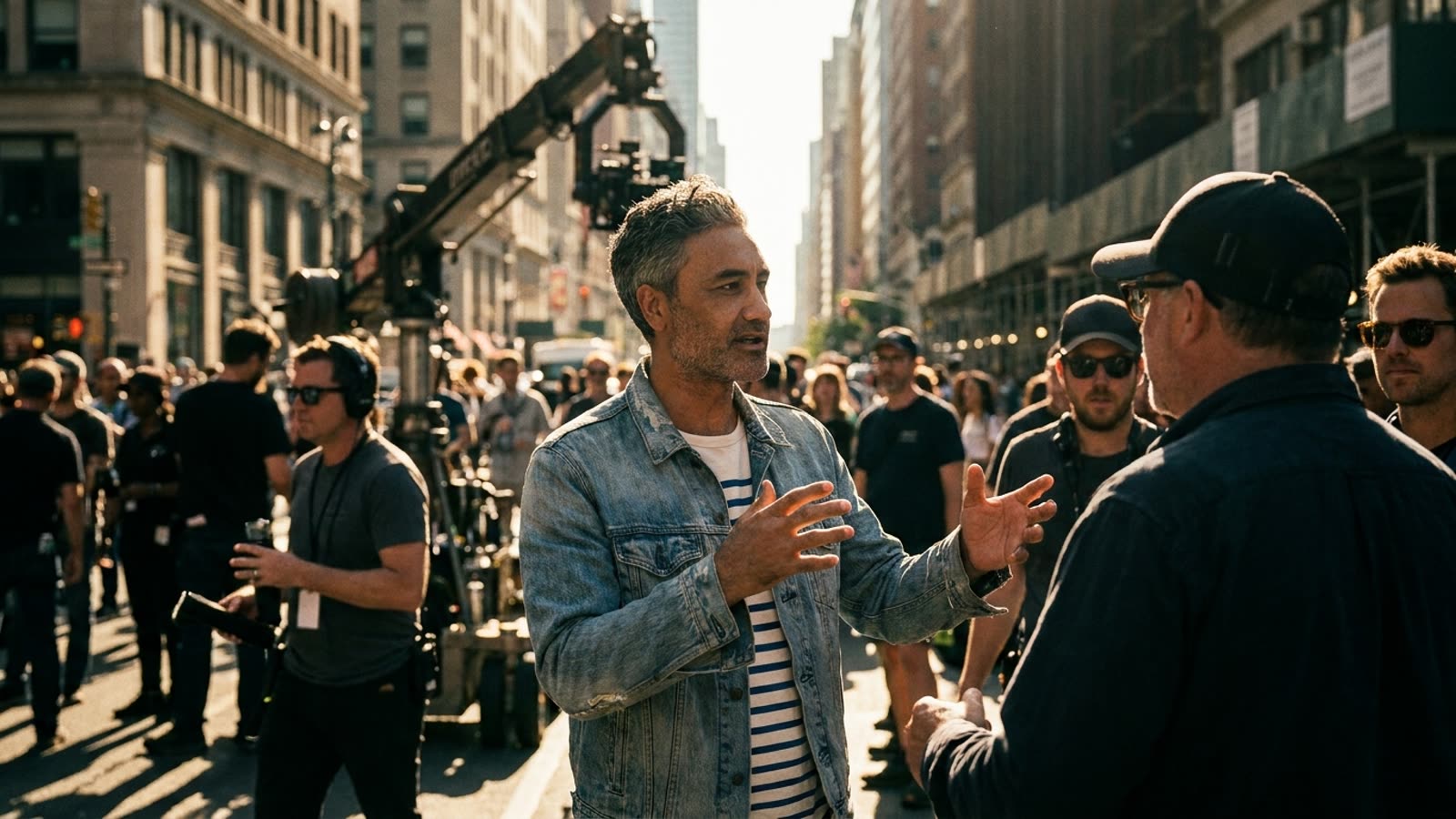
There is a particular brand of cognitive dissonance that only auteurs can pull off with a straight face: denouncing a technology while making a prestige picture about it. Taika Waititi, the Oscar-winning writer-director whose comic sensibility has turned everything from Nazi Germany to Thor into vehicles for deadpan absurdism, is now doing exactly that with Klara and the Sun, his adaptation of Kazuo Ishiguro's 2021 novel starring Jenna Ortega and Amy Adams.
In interviews this week, Waititi acknowledged that AI in filmmaking is "probably inevitable" but dismissed the practice of typing prompts to generate movies as creatively bankrupt. "It's boring and lame," he said, with the kind of blunt dismissiveness that has made him a reliable quote machine. The irony, of course, is that Klara and the Sun is set in a near-future world where AI companions are marketed to lonely children—a premise that requires Waititi to render artificial consciousness with enough empathy to carry a two-hour runtime.
The Ishiguro problem
Adapting Ishiguro is notoriously treacherous. His novels operate on emotional frequencies that resist cinematic translation; Never Let Me Go became a handsome, muted film that struggled to replicate the book's devastating understatement. Klara and the Sun presents an even thornier challenge: its narrator is an "Artificial Friend" whose limited perspective is the entire point. Waititi has cast Ortega as Klara, a choice that suggests he's betting on her post-Wednesday stardom to humanize a character who is, by design, not quite human. Adams plays the mother of Klara's owner, a role that in the novel is defined by grief, class anxiety, and moral compromise.
Whether Waititi's irreverent touch suits Ishiguro's restrained melancholy is an open question. His best work—Jojo Rabbit, What We Do in the Shadows—succeeds by finding absurdity in darkness. Ishiguro's darkness is quieter, more diffuse, and rarely played for laughs.
Hollywood's AI reckoning
Waititi's comments land at a moment when the industry is still sorting out its relationship with generative tools. The 2023 strikes produced contract language limiting AI's role in writing and performance, but the technology has advanced faster than the guardrails. Studios are quietly experimenting with AI-assisted pre-visualization and script analysis; actors are licensing their likenesses for digital resurrection. Waititi's position—AI is inevitable but artistically hollow—is the emerging consensus among filmmakers who want to sound thoughtful without sounding Luddite.
What makes his stance interesting is that Klara and the Sun is, at its core, a story about whether artificial beings can possess something like a soul. If Waititi believes AI-generated art is inherently soulless, his film will need to argue that Klara is the exception—or that her soulfulness is precisely what makes her tragic.
Our take
Waititi is one of the few directors who could make this material funny without making it cynical, but the tonal risk is enormous. Ishiguro's novel earns its emotional payoff through accumulation and restraint; Waititi's instincts run toward punctuation and surprise. If he pulls it off, Klara and the Sun could be the rare AI film that treats its subject with neither techno-utopianism nor dystopian dread—just the melancholy of a machine that wants to be loved. If he doesn't, it will be another case of a gifted filmmaker mistaking proximity to important themes for having something important to say.