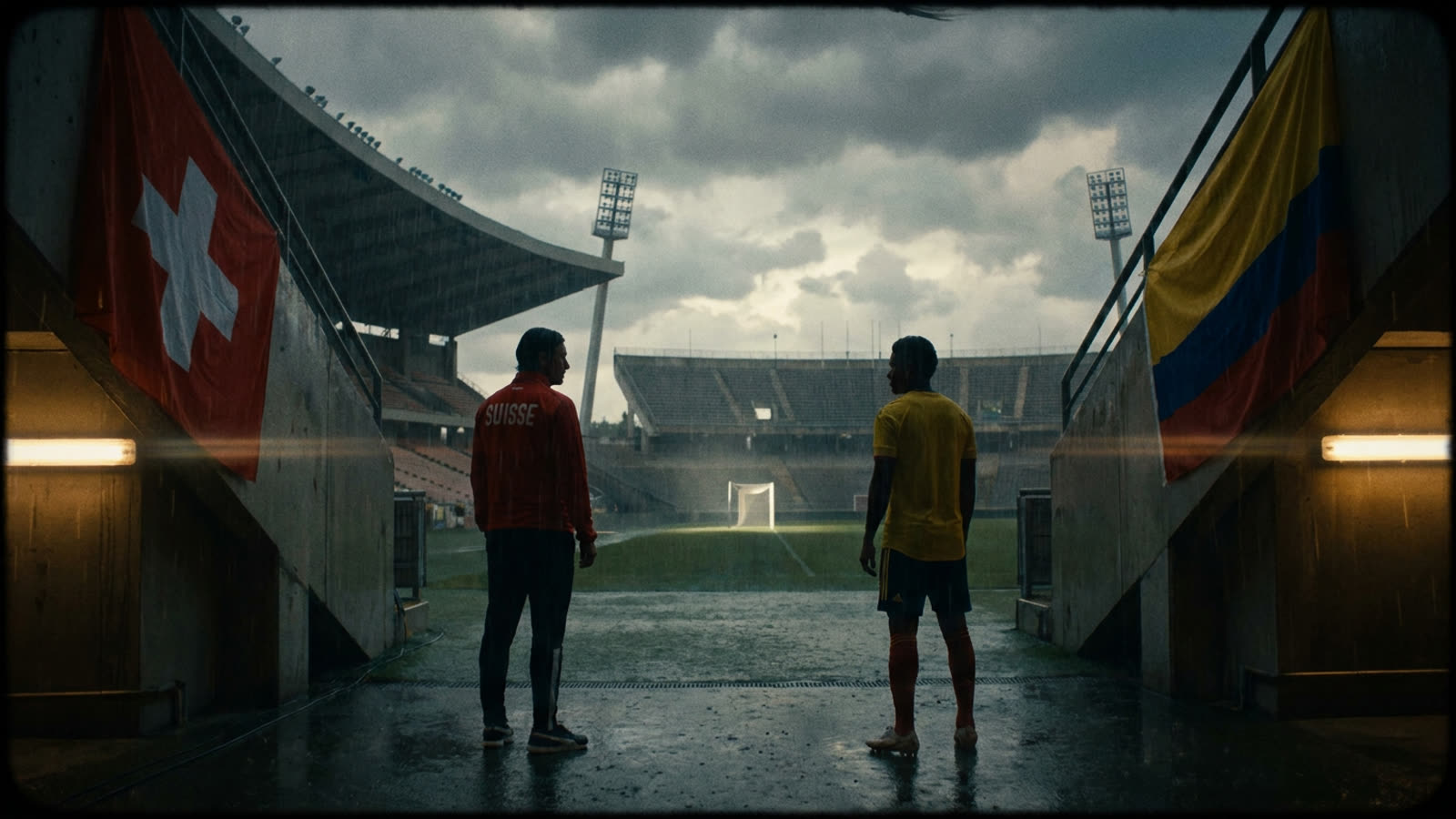
Colombia arrived at this World Cup as the team nobody wanted to draw—a side that had blended South American flair with European discipline, unbeaten in qualifying and riding a generation of talent that seemed destined for a deep run. They left on Sunday, eliminated by a Switzerland team that treated the Round of 16 like a chess match and played it better.
The Swiss victory was not a smash-and-grab. It was a clinic in tournament football: compact defensive blocks, quick transitions, and the ruthless exploitation of Colombia's one structural weakness—their tendency to commit too many bodies forward on set pieces. Switzerland punished them twice from counter-attacks following Colombian corners, a tactical vulnerability that Los Cafeteros' coaching staff had somehow failed to address across six matches.
The Swiss blueprint
Murat Yakin's Switzerland has become the tournament's great neutralizer. Against Germany in the group stage, they absorbed pressure and struck on the break. Against Italy, they suffocated the midfield until the Azzurri looked lost in their own half. Now Colombia joins the list of sides that believed they could impose their will on the Swiss and discovered, too late, that Yakin's men simply do not allow it.
The key has been Granit Xhaka's positioning. Playing as a deep-lying orchestrator rather than a box-to-box presence, the 33-year-old has become the metronome that controls Switzerland's rhythm. When opponents press high, he drops between the center-backs. When they sit deep, he advances to the edge of the area. Colombia's midfield spent ninety minutes chasing shadows.
What went wrong for Colombia
Néstor Lorenzo's side came in with a clear identity: width, pace, and the creative genius of their attacking midfielders. But Switzerland denied them the wide spaces they craved, forcing play through the center where the Swiss were waiting in numbers. James Rodríguez, so brilliant in the group stage, found himself double-marked whenever he received the ball. Luis Díaz was isolated on the left, reduced to hopeful dribbles against two defenders.
The Colombian press, usually so intense, looked exhausted by the hour mark—a consequence, perhaps, of Lorenzo's decision to play his strongest eleven in all three group matches rather than rotating for the knockout rounds. Switzerland, who had rested key players against Scotland, looked fresher when it mattered.
Our take
Switzerland will not win this World Cup. They lack the individual quality to break down the truly elite sides when those sides decide to park the bus. But they have proven, once again, that they are the most dangerous draw in any bracket—a team that forces opponents to play their game, not theirs. Colombia learned that lesson the hard way. Whoever draws Switzerland in the quarterfinals should be taking notes.