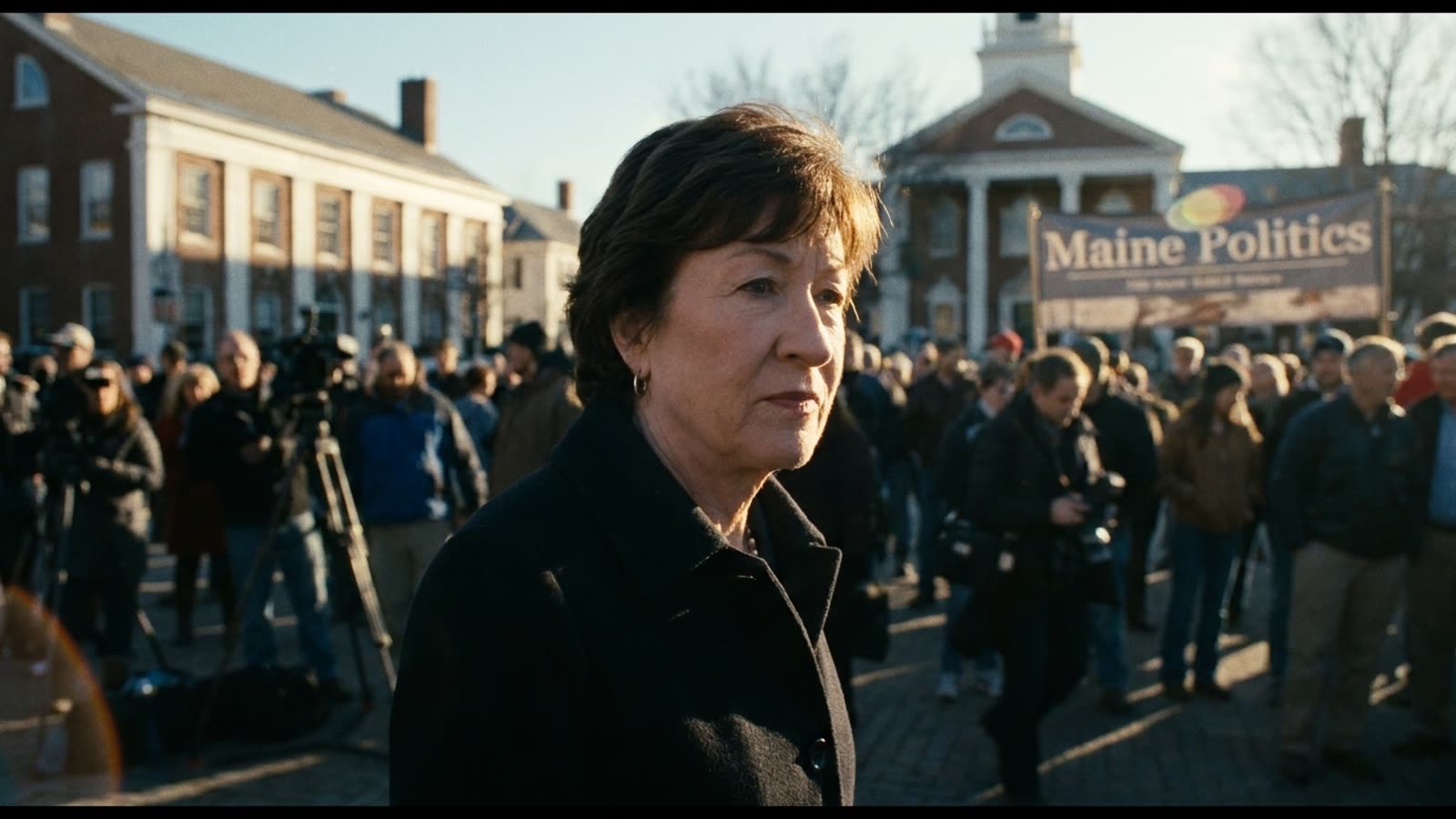
For two decades, Susan Collins perfected the art of the anguished pause. She would furrow her brow, express concern, request more information, and then—more often than not—vote with her party while maintaining the affect of independence. It worked in Maine, a state that prizes its contrarian streak, through cycles that should have ended her: the Kavanaugh confirmation, the first Trump impeachment, the pandemic. On Tuesday, it stopped working.
Collins's defeat to Democratic state Senator Mark Lawrence marks the extinction of a species: the New England Republican moderate. When she leaves office in January, not a single Republican will hold a Senate seat or governorship anywhere in the six-state region. The party of Lincoln, which once dominated Yankee politics, has been reduced to scattered state legislators and town selectmen.
The mathematics of moderation
Collins won her 2020 race by nearly nine points even as Joe Biden carried Maine by the same margin—a ticket-splitting achievement that seemed to validate her brand. But 2026 presented different arithmetic. Trump's approval in Maine had cratered to 31 percent by October, dragged down by the Iran conflict and inflation that never quite broke. More critically, the state's independent voters—roughly a third of the electorate—had stopped believing Collins's independence was anything more than performance.
Exit polls showed Lawrence winning independents by 22 points, a catastrophic swing from Collins's 2020 margins. Her vote to confirm Robert F. Kennedy Jr. as Health Secretary, despite expressing "serious reservations," became a synecdoche for her entire career: the concern, the deliberation, the ultimate capitulation.
The moderate's dilemma
Collins's defeat illuminates a structural problem for whatever remains of the Republican center. To survive a primary, she needed Trump's base; to win a general, she needed distance from Trump. For years, she managed this by emphasizing constituent services, bipartisan legislation on narrow issues, and the sheer power of incumbency. But the Iran war collapsed the space for ambiguity. Voters who opposed the conflict saw her procedural objections as hollow; voters who supported it saw her as insufficiently loyal.
The playbook that Lisa Murkowski used in Alaska—losing a primary but winning a write-in general—was never available in Maine, which lacks Alaska's unique political culture. Collins was trapped between a base that demanded fealty and a general electorate that demanded independence, with no room to satisfy either.
Our take
Susan Collins was not, in the end, a moderate. She was a politician with moderate affect who voted with her party on virtually every consequential matter while maintaining plausible deniability through expressions of discomfort. The strategy worked until it didn't, and its failure says less about Collins specifically than about the impossibility of her position. The Republican Party has become a institution that punishes deviation and rewards loyalty, while the electorates in blue and purple states have become allergic to that loyalty. Collins tried to exist in both worlds. Maine's voters finally forced her to choose, and then chose for her.