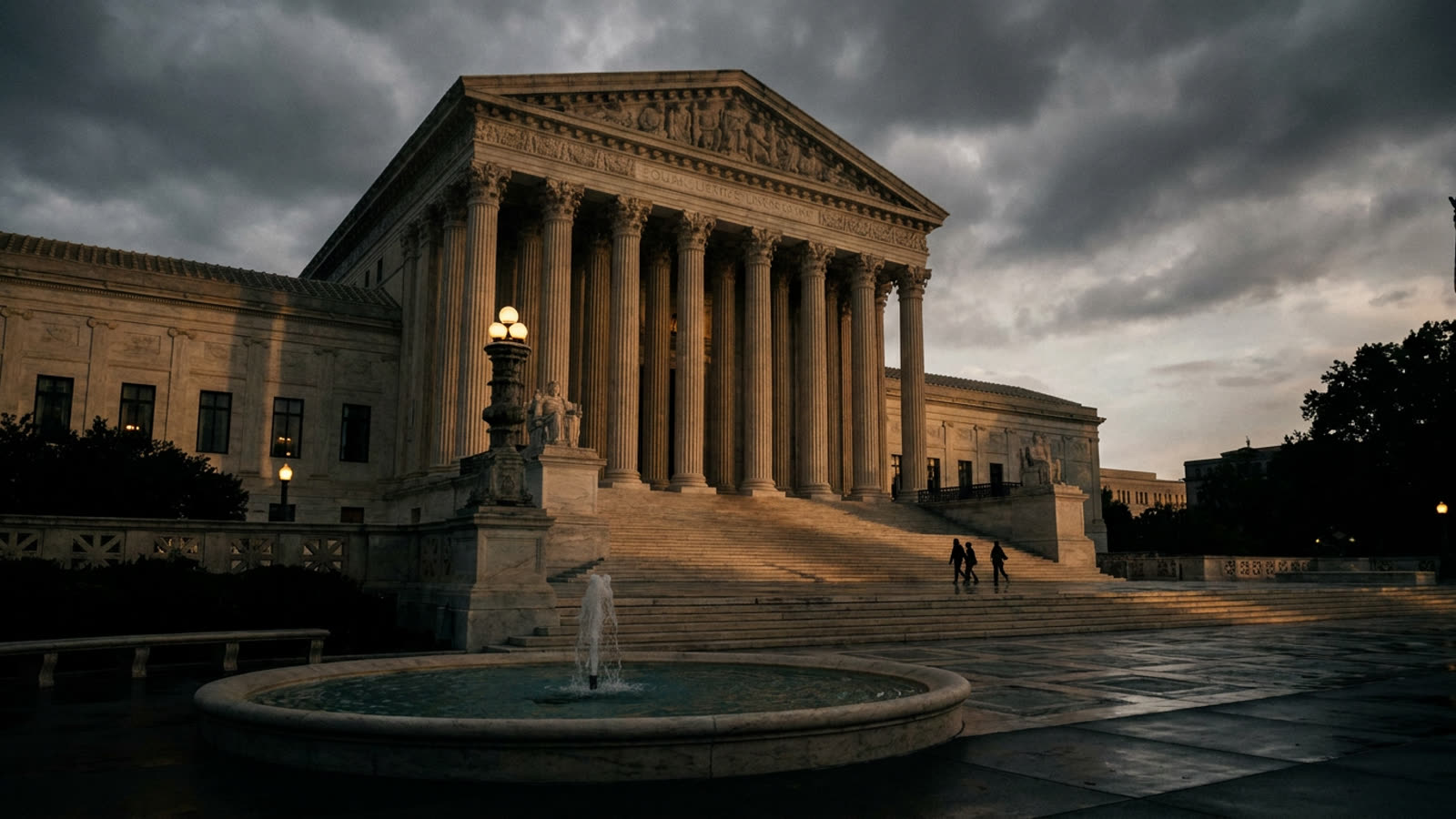
The Supreme Court enters its final decision days of the 2025-26 term this week with a docket that reads like a stress test for American institutions—and a bench that increasingly resembles the fractured polity it serves. Cases touching immigration enforcement, administrative agency power, and the boundaries of executive authority await resolution, and the justices appear no closer to agreement than when oral arguments concluded months ago.
This is not dysfunction. It is, in its way, the system working as designed—or at least as it has evolved. A court that reaches easy consensus on hard questions would be either intellectually dishonest or operating in a country without genuine disagreement. The current court is neither.
The cases that matter
The outstanding docket includes challenges to federal agency rulemaking authority that could reshape how the executive branch governs, disputes over state enforcement of immigration law that pit federalism against national security, and at least one case testing the boundaries of presidential immunity in contexts the founders never imagined. Each has produced unusual coalitions in lower courts and generated the kind of amicus brief avalanche that signals genuine uncertainty about outcomes.
The court's recent pattern suggests these decisions will arrive with multiple concurrences and dissents, opinions that agree on outcome but not reasoning, and perhaps a plurality decision or two that leaves lower courts guessing about the actual rule of law. This is the new normal for a tribunal that has lost the institutional habit of speaking with one voice.
What the divisions reveal
The court's fractures do not map neatly onto the political categories that dominate cable news. Chief Justice Roberts continues his project of institutional preservation, sometimes joining unexpected coalitions to avoid sweeping rulings. Justice Barrett has emerged as a genuinely unpredictable vote, more interested in methodological consistency than ideological loyalty. Justice Jackson's dissents have grown sharper, but her occasional agreements with conservative colleagues on narrow procedural grounds suggest a jurist still finding her voice.
The real division is not left versus right but institutionalist versus maximalist—those who believe the court should decide as little as necessary versus those who see each case as an opportunity to reshape doctrine. This tension predates the current composition and will outlast it.
Our take
Americans who follow the court only through headlines will see this week's decisions as political events, wins and losses for competing teams. That framing misses what is actually interesting: a nine-member body trying to apply eighteenth-century text to twenty-first-century problems, doing so in public, and disagreeing honestly about how. The court's legitimacy does not depend on unanimity. It depends on reasoning that can be examined, criticized, and—in the fullness of time—overruled. A fractured bench that shows its work is preferable to a unified one that hides the ball.