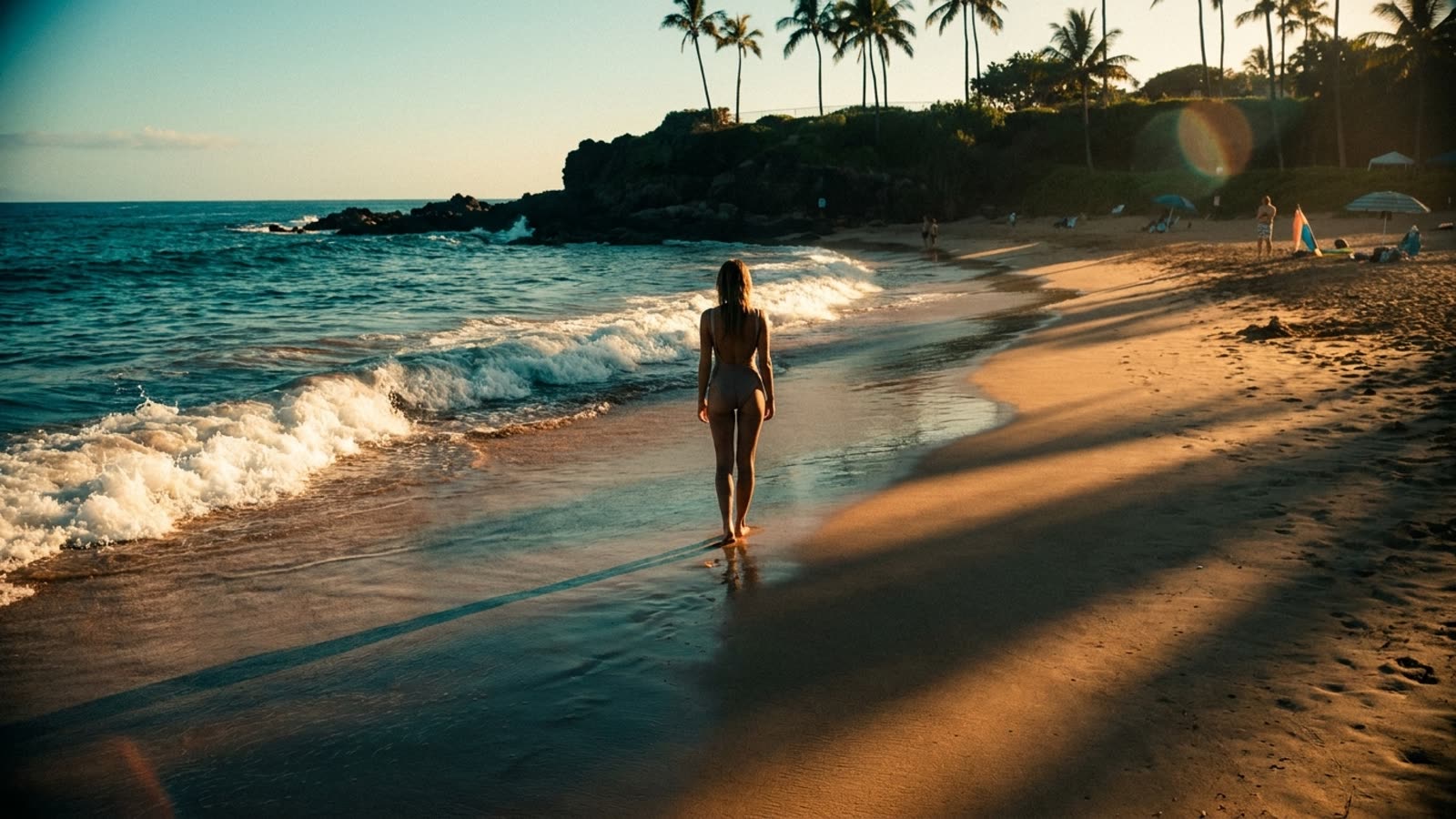
The photographs trickling out of celebrity summer retreats this June share a curious quality: they look expensive in a way that has nothing to do with the swimwear. The lighting is natural, the skin is bronzed but not orange, and the poses recall Slim Aarons more than Instagram circa 2019. After half a decade of ring lights and FaceTune, the celebrity industrial complex has rediscovered the sun.
This is not accidental. The shift toward what stylists are quietly calling "heritage summer" represents a calculated pivot by publicists and image-makers who have watched the backlash against hyper-edited content reach critical mass. When audiences can spot AI-smoothed skin from across a timeline, authenticity—or its convincing simulation—becomes the new currency.
The aesthetic economy of looking effortless
The production values behind a "candid" celebrity beach shot now rival those of a fragrance campaign. Photographers specializing in paparazzi-style imagery report that bookings for controlled "surprise" shoots in coastal locations have doubled since last summer. The goal is paradoxical: to appear unguarded while being meticulously art-directed.
The swimwear itself tells the story. Gone are the neon cutouts and logo-heavy pieces that dominated the pandemic-era thirst trap. In their place: high-waisted silhouettes, earth tones, and vintage-adjacent one-pieces that photograph as timeless rather than trendy. Brands like Hunza G and Matteau, whose aesthetic skews toward the understated, report waiting lists extending into autumn.
Why now, and why it matters
The timing aligns with broader cultural exhaustion. The maximalist, hyper-curated celebrity image—all contouring, all angles, all the time—reached its logical endpoint somewhere around 2024. Audiences, particularly younger ones who grew up with filters as a default, began expressing preference for content that felt less produced. TikTok's "de-influencing" trend was the canary; the celebrity beach photo is the confirmation.
There's also a commercial logic. Luxury brands courting the quiet-luxury consumer want ambassadors who project ease rather than effort. A celebrity photographed looking genuinely relaxed—skin imperfect, hair salt-textured, smile unforced—sells a lifestyle that the glossy perfection of earlier eras cannot. The aspiration has shifted from "I want to look like her" to "I want to feel like her."
The geography of the moment
Location scouting has become its own art form. The Hamptons remain reliable but are increasingly read as predictable. The Amalfi Coast carries connotations of new money trying too hard. The emerging sweet spots: Portugal's Comporta region, Greece's lesser-known islands, and—for those committed to the bit—the rocky, unglamorous beaches of the British coast, where looking good requires actual effort.
Malibu, of course, never goes out of style, but even there the aesthetic has shifted. The preferred backdrop is no longer the pristine private beach but the slightly weathered public stretch—a signal that the celebrity in question is of the people, or at least wants to appear so.
Our take
The summer 2026 celebrity image represents something genuinely interesting: an industry course-correcting in real time. Whether the unfiltered look is any more "authentic" than what came before is almost beside the point. What matters is that the market has spoken, and it wants its fantasies served with a side of plausibility. The celebrity beach photo, that most durable of tabloid genres, has evolved once again—and for once, the evolution feels like progress.