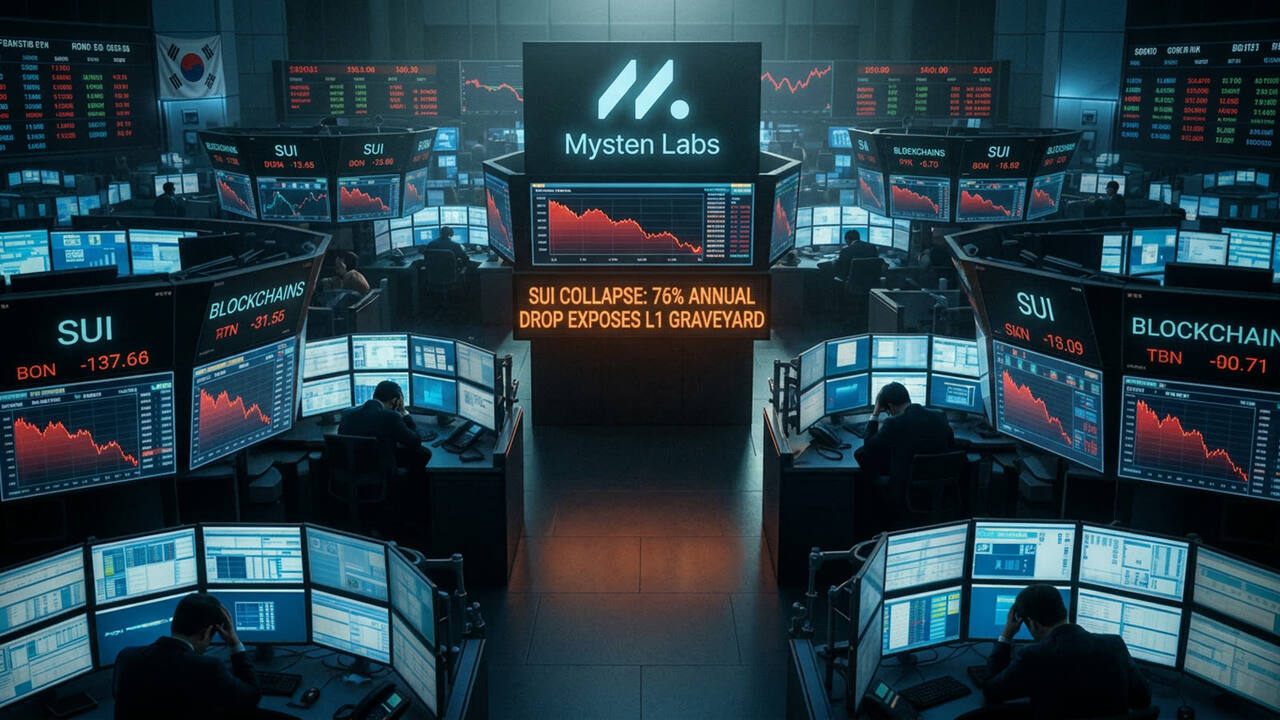
The venture capital class spent years and billions of dollars betting that the world needed more Layer-1 blockchains. Sui, the Move-language chain built by former Meta engineers at Mysten Labs, was supposed to be the proof point — a technically superior alternative to Solana and Ethereum that would finally deliver on the promise of scalable, user-friendly decentralized infrastructure. Instead, SUI is trading below 80 cents, down 8% in the past day and more than 76% over the past year, making it one of the worst-performing major crypto assets of the cycle.
The collapse is not a bug. It is a feature of a market that has run out of patience for chains that exist primarily as tokens rather than as functioning ecosystems.
The funding-to-traction gap
Mysten Labs raised more than $300 million from blue-chip investors including Andreessen Horowitz, FTX Ventures (before its implosion), and Binance Labs. The pitch was compelling: the team had built the Diem blockchain at Meta before regulators killed it, and they were bringing that expertise to a permissionless environment. Sui launched its mainnet in May 2023 to considerable fanfare.
Two years later, the chain's total value locked hovers in the low hundreds of millions — respectable for a mid-tier DeFi ecosystem, but nowhere near the numbers that would justify a multi-billion-dollar fully diluted valuation. The problem is not technical. Sui's parallel transaction processing is genuinely innovative. The problem is that innovation alone does not create network effects, and network effects are the only moat that matters in crypto.
The Layer-1 oversupply crisis
Sui is not suffering alone. The broader altcoin market has been in freefall, with Avalanche, Polkadot, and even Solana — the presumptive winner of the alternative Layer-1 wars — trading at multi-year lows relative to Bitcoin. The market is sending a clear message: there are too many blockchains and not enough users who care about the differences between them.
Ethereum's Layer-2 ecosystem has absorbed much of the demand that might otherwise have flowed to alternative Layer-1s. Why migrate to a new chain when you can get cheaper transactions on Arbitrum or Base while retaining Ethereum's security guarantees? The question has no good answer, and Sui's price reflects that uncomfortable reality.
Unlocks and the overhang problem
Sui's tokenomics compound the pain. A substantial portion of the token supply remains locked and scheduled for release over the coming years, creating persistent sell pressure as early investors and team members hit their vesting cliffs. In a bull market, new demand can absorb these unlocks. In a market where retail has largely abandoned altcoins for Bitcoin and memecoins, the unlocks become a slow-motion liquidation event.
Our take
Sui may yet find its footing. The team is technically competent, the chain works as advertised, and crypto markets are nothing if not cyclical. But the current price action is a referendum on the entire venture-backed Layer-1 thesis, and the verdict is harsh. The next crypto cycle, whenever it arrives, will likely be led by chains that already have users — not chains that are still searching for them. Mysten Labs has money in the bank and time to figure it out. What it does not have is a market that believes the answer to crypto's problems is yet another blockchain.