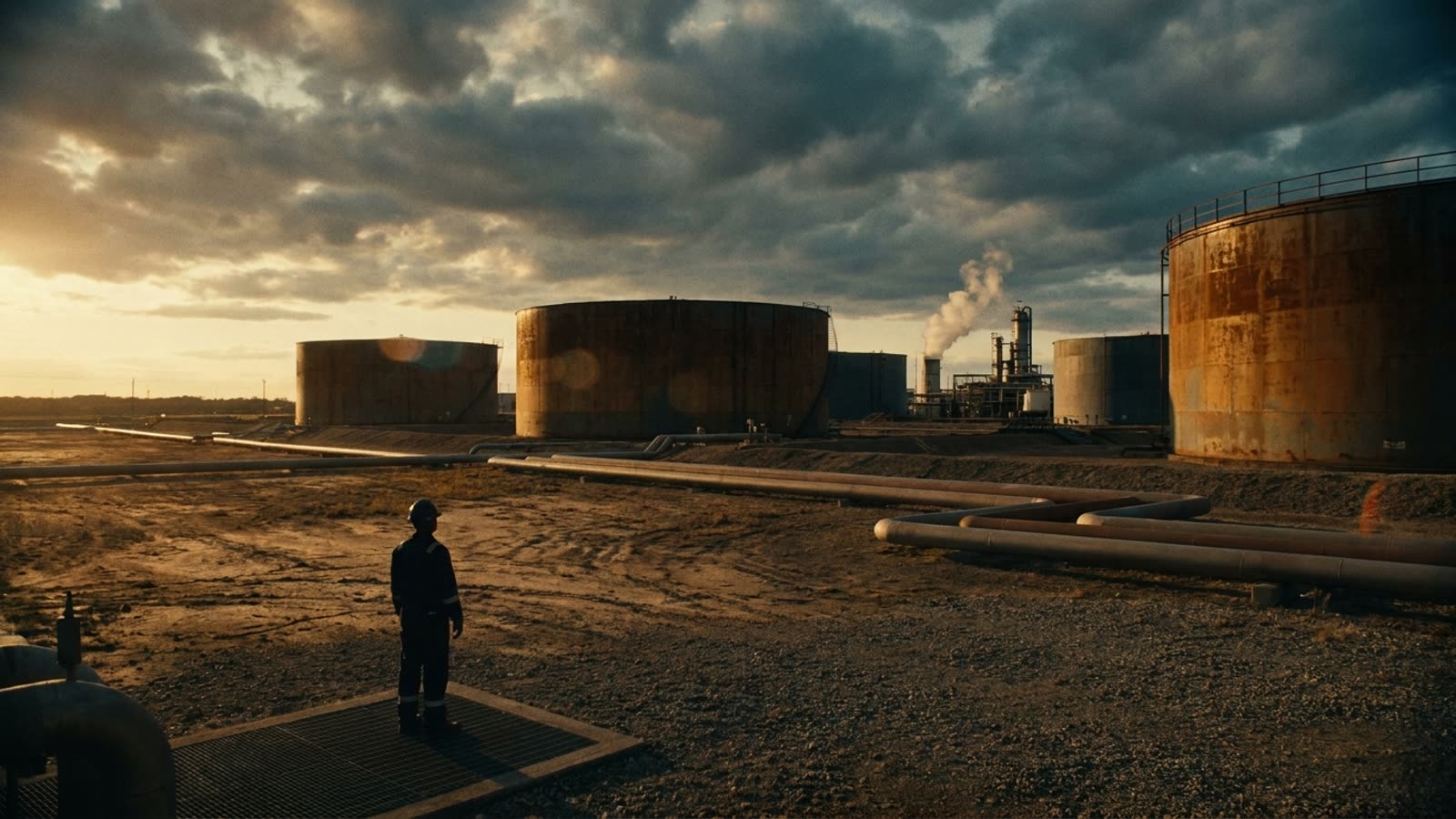
The United States is running down its rainy-day oil fund at precisely the moment the weather forecast calls for storms. The Strategic Petroleum Reserve, that Cold War relic buried in Louisiana and Texas salt caverns, now holds roughly 350 million barrels—less than half its 2010 peak and the lowest level since Ronald Reagan's first term. The Biden administration drew it down aggressively to tame gasoline prices after Russia's invasion of Ukraine; the subsequent administrations have shown little appetite for the politically thankless work of buying it back up.
This would be a manageable irony if the world were calm. It is not. The recent Iran-US ceasefire framework, still awaiting final approval, emerged precisely because Strait of Hormuz transit had become genuinely precarious. Oil prices spiked on war fears just weeks ago. The SPR exists for exactly these scenarios, and America has been spending its insurance policy like a checking account.
The arithmetic of depletion
At current levels, the reserve could replace roughly 18 days of total US oil imports—down from over a month's worth a decade ago. The Department of Energy has authorization to refill the caverns, but doing so means purchasing crude on the open market, which pushes prices up and annoys voters. Every administration since 2022 has promised replenishment "when conditions are favorable." Conditions, it turns out, are never favorable enough.
The math is punishing. Buying back 300 million barrels at today's prices would cost north of $25 billion. Congress has shown zero enthusiasm for appropriating that sum, and the executive branch has limited discretion to act unilaterally. Meanwhile, the caverns themselves are aging; some require maintenance that further reduces effective capacity.
Why it matters beyond energy nerds
The SPR is not merely an oil buffer—it is a foreign-policy tool. When OPEC tested American resolve in the 1970s, the reserve's creation was part of the response. When Saddam Hussein invaded Kuwait, coordinated SPR releases helped stabilize markets. The reserve's mere existence deters adversaries from weaponizing supply disruptions, because they know America can absorb the blow.
That deterrent weakens as the stockpile shrinks. Saudi Arabia and Russia both understand the math. So does Iran. A half-empty reserve invites precisely the kind of supply brinkmanship it was designed to prevent. The recent Hormuz tensions offered a preview: markets moved sharply on relatively modest threats, in part because traders know America's cushion is thinner than it used to be.
Our take
Refilling the SPR is boring, expensive, and offers no ribbon-cutting opportunities. It is also one of the most straightforward investments in national resilience available to any administration. The current posture—hoping oil stays cheap long enough to buy back what was sold, while never quite getting around to it—is not a strategy. It is wishful thinking dressed in policy language. The next genuine supply shock will arrive eventually, and when it does, 350 million barrels will feel very small indeed.