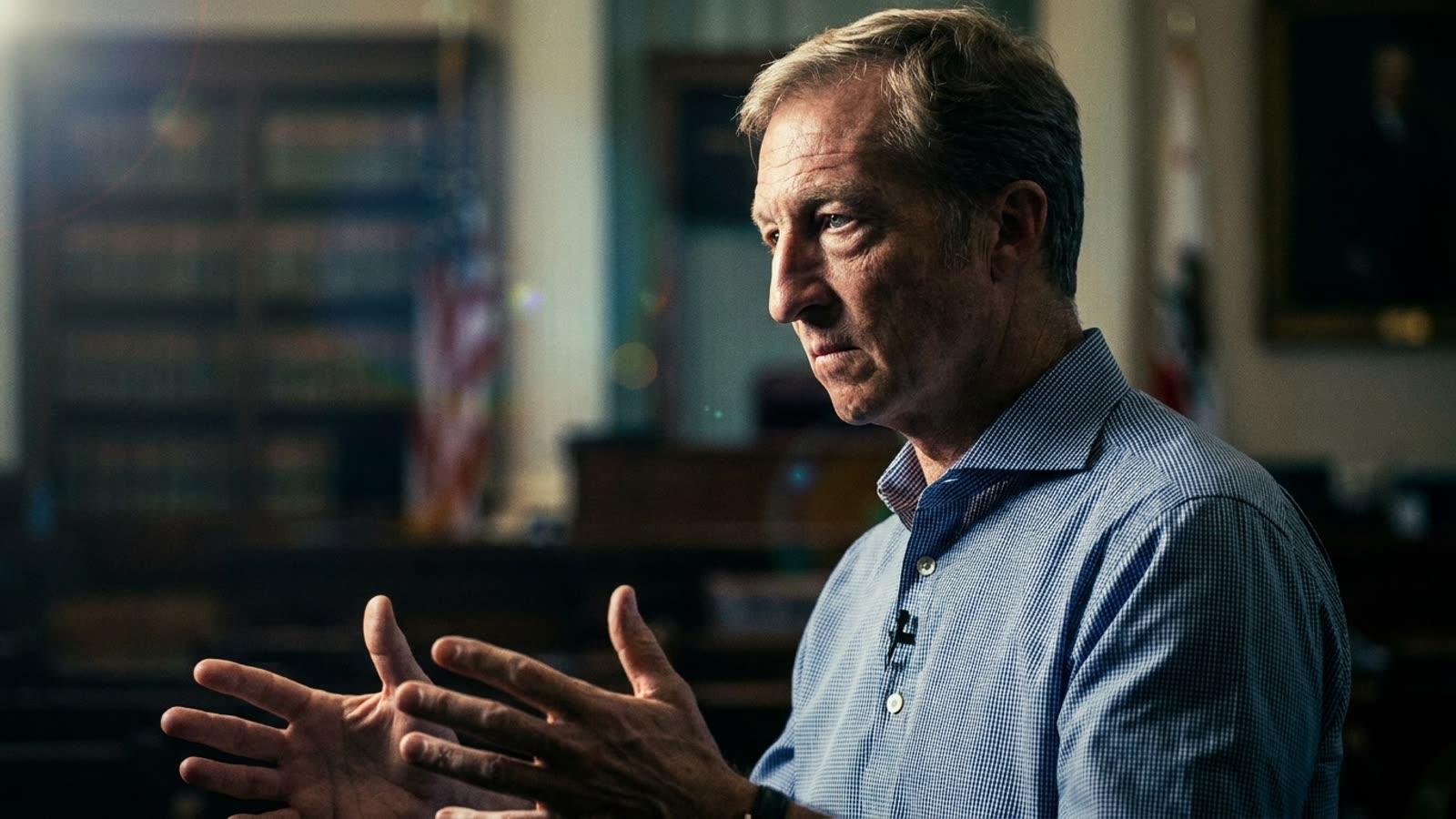
When a billionaire climate activist accuses another billionaire of orchestrating a "right-wing takeover of media," the temptation is to file it under performative outrage and move on. But Tom Steyer's intervention in the Paramount-Warner Bros. Discovery merger conversation—specifically his call for California's Attorney General to block David Ellison from owning CNN—touches a nerve that extends well beyond Democratic primary positioning.
Steyer's core claim is straightforward: the combined entity would place one of America's most influential news networks under the control of someone whose political sympathies skew conservative, at a moment when trust in media institutions is already fractured along partisan lines. Whether Ellison's ownership would actually transform CNN's editorial direction is speculative; what's less speculative is that media consolidation has historically produced fewer voices, not more ideological diversity.
The legal problem with Steyer's solution
Calling for a state-level lawsuit to block a merger on ideological grounds is, charitably, a stretch. Antitrust law concerns market concentration and consumer harm, not the political leanings of prospective owners. California's Attorney General could theoretically challenge the deal on competition grounds—the combined company would control a formidable share of streaming content and theatrical distribution—but Steyer's framing suggests he wants the state to function as a viewpoint regulator. Courts have shown little appetite for that role, and for good reason.
The Hollywood subtext
Steyer also touched on tax credits as "only part of the Hollywood solution," a nod to the industry's ongoing exodus from California and the state's halting efforts to retain production jobs. It's a savvy pivot for a gubernatorial candidate: link media ownership anxiety to bread-and-butter employment concerns, and suddenly you're speaking to both coastal progressives and union households in the Central Valley. Whether Steyer has a coherent industrial policy beyond the soundbite remains to be seen.
Why this matters beyond California
The Paramount-Warner merger, if consummated, would create a content behemoth at a time when streaming economics are forcing brutal consolidation across the industry. Disney, Netflix, and the combined Warner-Paramount would effectively constitute an oligopoly in premium scripted content. The question of who owns CNN is, in some ways, a sideshow—the deeper issue is whether three or four companies will soon control the majority of what Americans watch, and what that means for cultural production writ large.
Our take
Steyer is grandstanding, but he's grandstanding about something real. The merger wave reshaping Hollywood is not a neutral market phenomenon; it reflects policy choices about antitrust enforcement, tax incentives, and the tolerance for concentrated private power over public discourse. Dismissing Steyer as a gadfly misses the point. The better question is why so few other politicians are willing to say anything at all.