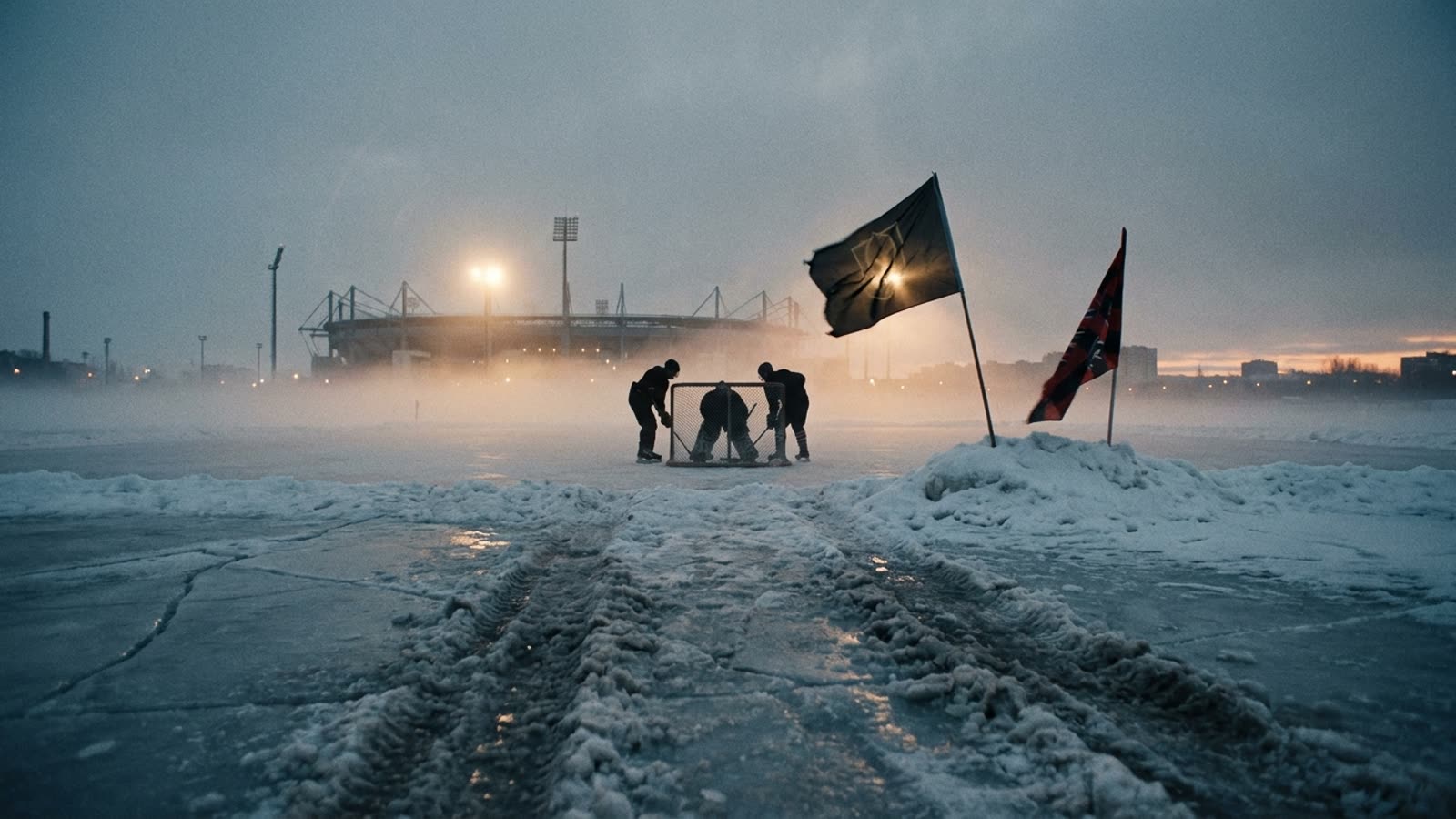
The Stanley Cup Final opened Tuesday night with Vegas hosting Carolina, a sentence that would have read as satire in 1995. The Golden Knights, who did not exist until 2017, face the Hurricanes, a franchise that fled Hartford three decades ago and spent years as a punchline before becoming one of hockey's most consistently excellent organizations. That these two teams are playing for Lord Stanley's mug is not an accident of bracket chaos—it is the logical endpoint of the NHL's deliberate southern and western expansion strategy.
The league office must be thrilled. Commissioner Gary Bettman has spent his tenure evangelizing hockey to markets where ponds do not freeze, and here is the validation: two Sun Belt-adjacent franchises, neither with a single player who grew up skating on a backyard rink in their team's city, battling for the sport's oldest trophy.
The Vegas model matures
The Golden Knights reached the Cup Final in their inaugural season, which everyone dismissed as a fluke born of generous expansion-draft rules and the emotional aftermath of the Route 91 shooting. Eight years later, the fluke has calcified into a dynasty-adjacent operation. Vegas has now appeared in three Cup Finals, winning once, and has missed the playoffs exactly once. General manager Kelly McCrimmon has mastered the art of the mid-season acquisition without mortgaging the future, and coach Bruce Cassidy has built a system that survives significant roster turnover.
What Vegas lacks is organic hockey culture—the rinks full of eight-year-olds dreaming of wearing the home sweater. What it has instead is money, a state with no income tax, and a front office that treats free agency like a casino comp: everyone leaves happy, but the house always wins.
Carolina's quieter revolution
The Hurricanes' path is less glamorous but arguably more instructive. Owner Tom Dundon bought a moribund franchise in 2018 and installed Rod Brind'Amour, the captain of their 2006 championship team, as coach. The results have been relentless: seven consecutive playoff appearances, a culture of defensive suffocation, and a prospect pipeline that keeps restocking the shelves.
Carolina's model is sustainability over spectacle. They do not sign the biggest names; they develop them or acquire them cheaply and extract maximum value. It is the hockey equivalent of Moneyball, except the nerds wear Carhartt and the analytics department has a Southern accent.
Our take
This series is a referendum on two visions of hockey's future, and both visions involve ignoring the sport's frozen-pond mythology. Vegas proves you can buy relevance overnight if you spend wisely. Carolina proves you can build it slowly in a market that does not care, as long as you are patient and ruthless. The game itself will be compelling—both teams play fast, physical hockey with excellent goaltending—but the subtext is what matters. The NHL's center of gravity has shifted, and it is not shifting back. Somewhere, a Hartford Whalers fan is weeping into a Brass Bonanza vinyl, and Gary Bettman is smiling.