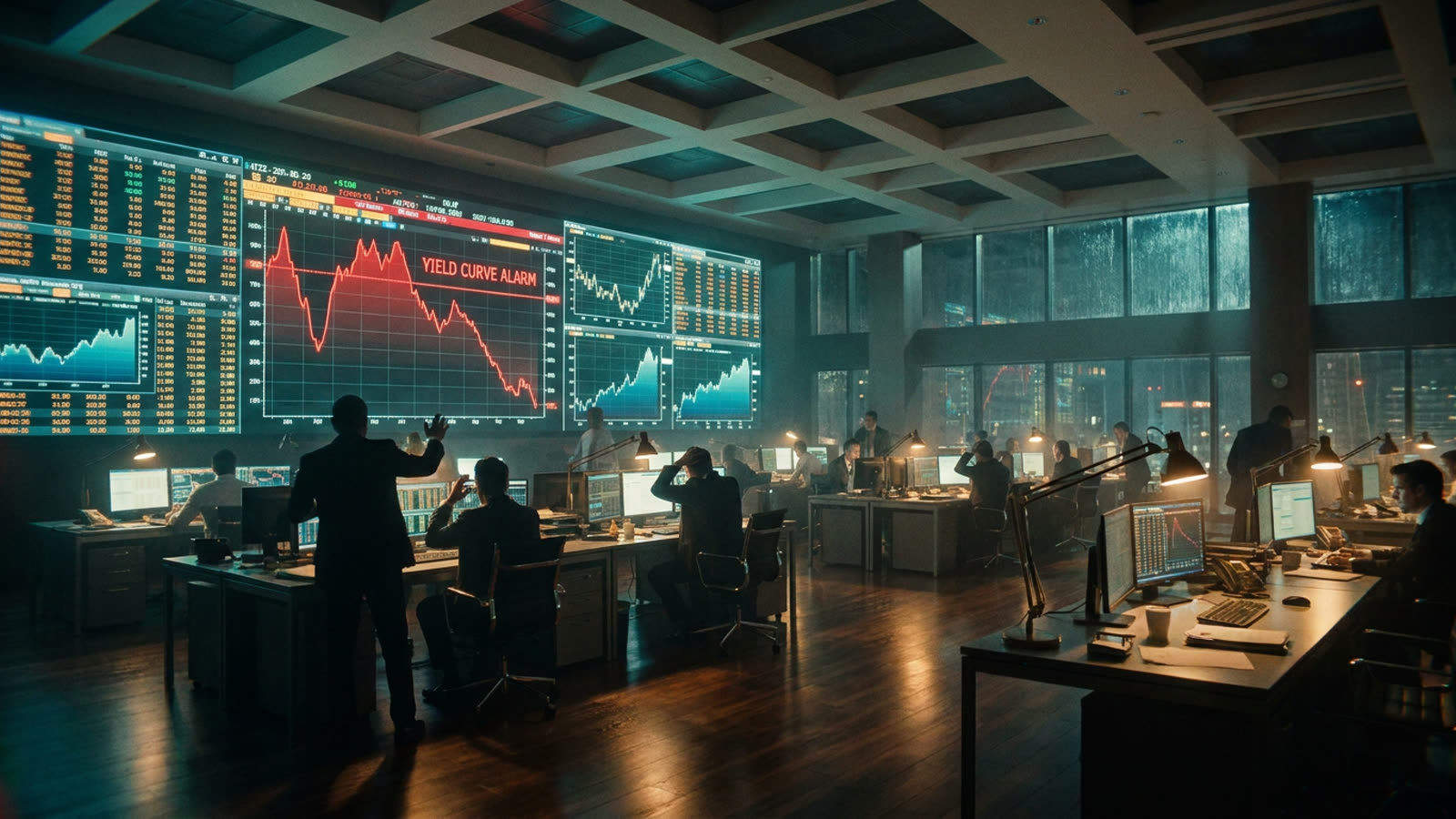
Most economic problems come with their own solutions, at least in theory. Recession? Cut rates, boost spending, wait for recovery. Inflation? Raise rates, cool demand, endure the adjustment. The playbook exists because these conditions, however painful, respond to treatment. Stagflation does not. It is the economic equivalent of an autoimmune disorder, where the medicine for one symptom aggravates the other, and policymakers find themselves trapped in a room with no good exits.
The term itself—a portmanteau of stagnation and inflation—entered the lexicon in the 1960s, coined by British politician Iain Macleod to describe what economists had long considered impossible. The prevailing Keynesian consensus held that inflation and unemployment moved in opposite directions, a relationship enshrined in the Phillips Curve. High inflation meant an overheating economy with plenty of jobs; high unemployment meant slack demand and falling prices. You could have one or the other, but not both simultaneously. The 1970s proved this assumption catastrophically wrong.
The anatomy of a contradiction
Stagflation emerges when supply shocks collide with structural economic weaknesses. The textbook case remains the oil crises of the 1970s, when OPEC's embargo and subsequent price increases sent energy costs spiraling while simultaneously choking economic output. Businesses faced higher input costs they could not absorb, so they raised prices and cut workers. Consumers had less money and paid more for everything. The economy contracted while inflation accelerated—the nightmare scenario that was not supposed to happen.
What made the period so agonizing was the inadequacy of conventional responses. The Federal Reserve under Arthur Burns initially tried to stimulate growth, fearing unemployment more than inflation. This only embedded inflationary expectations deeper into the economy. Workers demanded higher wages to keep pace with rising prices, businesses raised prices to cover higher wages, and the spiral fed itself. By the time Paul Volcker took the Fed's helm and applied the brutal medicine of double-digit interest rates, the cure required inducing a severe recession—the very thing policymakers had been trying to avoid.
Why the ghost still haunts
Central bankers today operate with stagflation as their institutional trauma. The hard-won lesson of the Volcker era was that credibility matters more than comfort: once inflation expectations become unanchored, restoring them demands pain that dwarfs what prevention would have cost. This explains why modern central banks react so aggressively to inflation signals even when growth looks fragile. They are not being callous; they are being haunted.
The conditions for stagflation recurrence are not exotic. Any sustained supply shock—energy disruption, pandemic-induced bottlenecks, agricultural collapse from climate events—can trigger the same dynamics. The question is whether policymakers recognize the threat early enough to avoid the 1970s pattern of denial, delay, and eventual overreaction. History suggests this recognition is harder than it sounds, because stagflation's early stages look like ordinary inflation that might resolve itself.
Our take
Stagflation is less a specific economic event than a permanent possibility, the dark matter of macroeconomics that shapes policy even when invisible. For ordinary people, the practical lesson is simpler and grimmer: when prices rise while jobs disappear, there is no cavalry coming. The tools that fix normal recessions make stagflation worse, and the tools that fix normal inflation make recessions deeper. Understanding this is not pessimism; it is the kind of clear-eyed realism that distinguishes people who navigate economic turbulence from those who are merely buffeted by it.