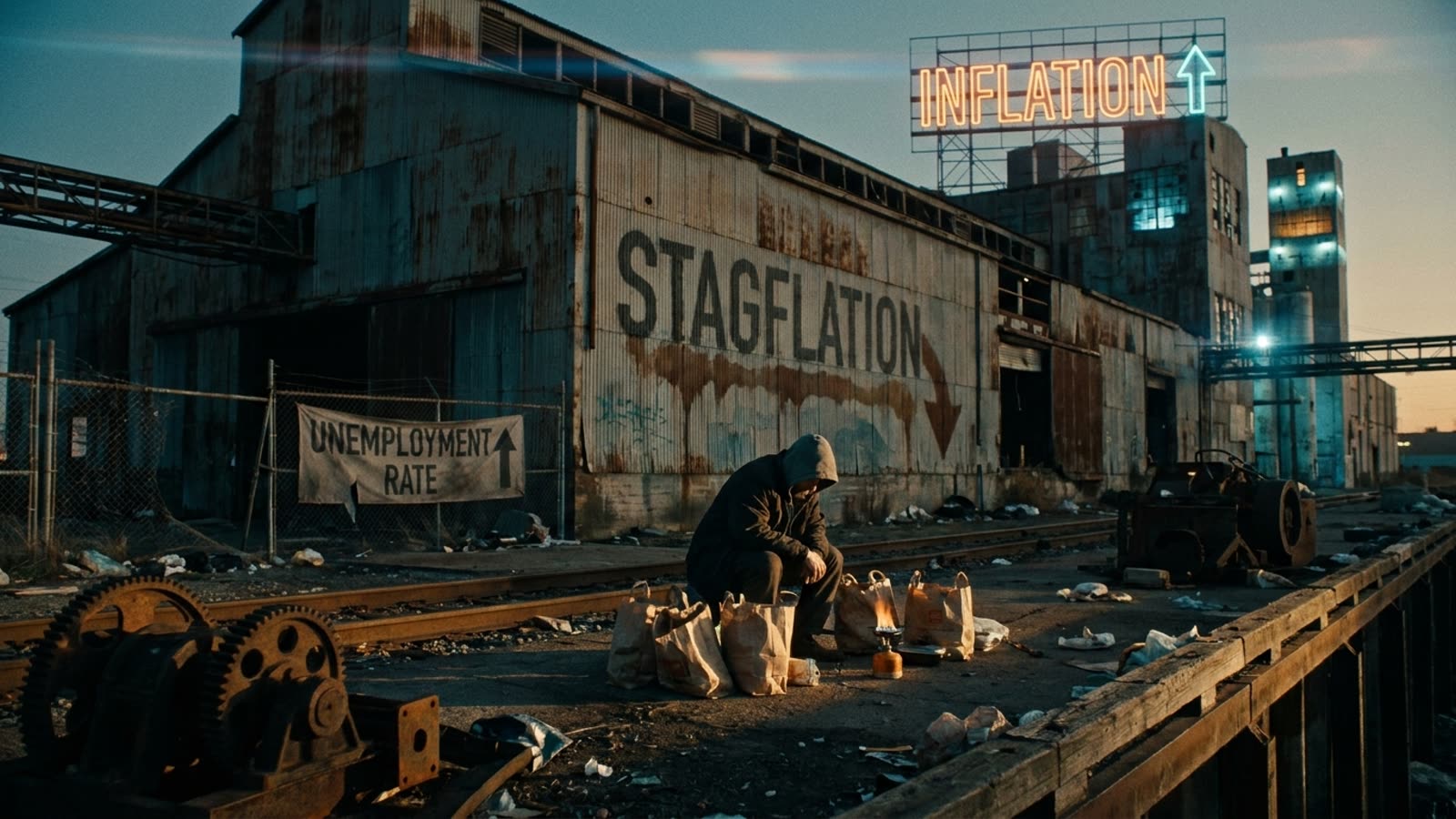
Most economic problems come with obvious solutions, even if implementing them proves politically difficult. Recession? Cut rates, boost spending. Inflation? Raise rates, cool demand. The playbook is well-thumbed. But stagflation—the toxic combination of economic stagnation, high unemployment, and persistent inflation—offers no such comfort. It is the economic equivalent of a patient presenting with both hypothermia and fever, where the treatment for one condition worsens the other.
The term itself was coined by British politician Iain Macleod in 1965, describing the UK's peculiar economic malaise. But stagflation entered the global vocabulary during the 1970s, when oil embargoes and supply disruptions taught the world that the Phillips Curve—the supposed inverse relationship between inflation and unemployment—could break down spectacularly.
Why the standard tools fail
Central banks operate with essentially one instrument: interest rates. When inflation runs hot, they raise rates to suppress demand. When unemployment rises, they cut rates to stimulate borrowing and investment. This works beautifully when the economy faces one problem at a time. Stagflation presents both simultaneously, and the medicine for one disease poisons the patient in another way.
Raise rates to fight inflation, and you crush an already-weak economy, pushing unemployment higher. Cut rates to stimulate growth, and you pour fuel on inflationary fires. Fiscal policy faces similar constraints. Government spending might boost employment but risks accelerating price increases. Austerity might cool inflation but deepens the recession.
The 1970s demonstrated this trap vividly. The Federal Reserve oscillated between fighting inflation and fighting recession, achieving neither goal convincingly. It took Paul Volcker's brutal rate hikes in the early 1980s—deliberately inducing a severe recession—to finally break inflation's back. The cure worked, but the patient nearly died on the operating table.
The supply-side dimension
Classic demand-driven inflation responds to monetary tightening because higher rates reduce spending. But stagflation often emerges from supply shocks—oil embargoes, pandemic disruptions, trade wars—that raise costs regardless of demand levels. When a factory cannot get components or fuel prices triple overnight, raising interest rates does nothing to address the underlying constraint.
This distinction matters enormously for policy. Demand inflation is a fever; you cool it down. Supply inflation is a broken bone; cooling does nothing useful. The 1970s oil shocks were supply problems that monetary policy could not directly solve. Central banks found themselves fighting symptoms while the disease raged unchecked.
Modern economies face similar vulnerabilities. Global supply chains, while efficient, create transmission mechanisms for shocks. A drought in one hemisphere, a war in another, or a pandemic anywhere can ripple through interconnected systems in ways that resemble the 1970s more than the relatively stable decades that followed.
Our take
Stagflation remains rare precisely because it requires a perfect storm of conditions: supply disruptions severe enough to raise prices, demand weakness deep enough to stall growth, and policy mistakes significant enough to let both persist. But rarity is not impossibility. The lesson of the 1970s is that economic orthodoxy can fail, that the comfortable trade-offs policymakers rely upon can vanish, and that sometimes there are no good options—only less catastrophic ones. Understanding stagflation is not pessimism; it is preparation for the moments when the playbook offers no answers.