The idea of orbital data centers has floated around tech circles for years, buoyed by vague promises of unlimited solar power, natural cooling, and freedom from terrestrial regulation. Google has now done the math, and the conclusion is quietly devastating for anyone hoping to escape Earth's constraints anytime soon.
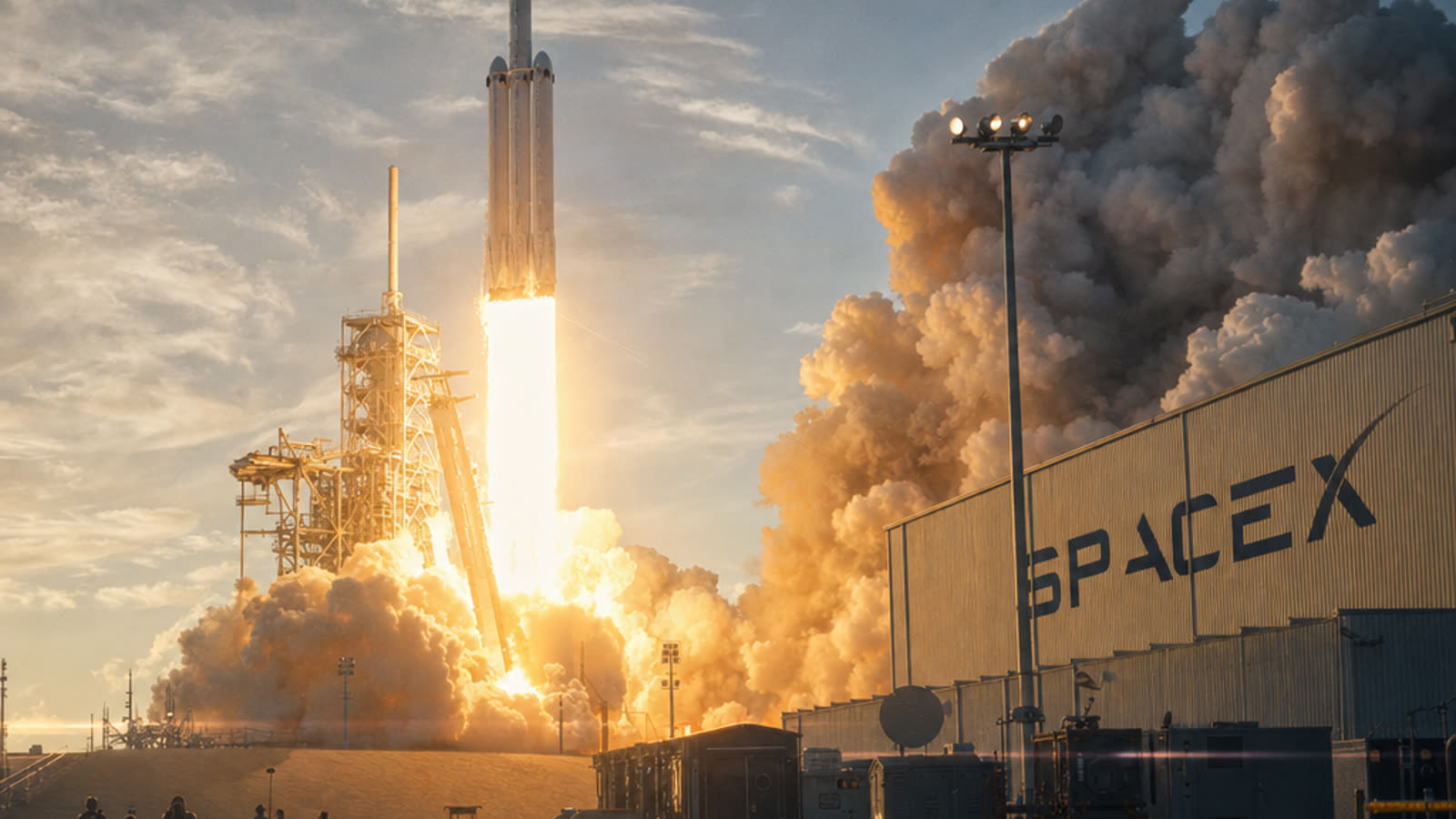
According to Google's infrastructure team, SpaceX's Starship—the largest rocket ever built and the centerpiece of Elon Musk's interplanetary ambitions—would need to complete approximately 1,800 successful launches before space-based data centers could achieve cost parity with their ground-based equivalents. That figure accounts for the mass of computing hardware, cooling systems, power generation equipment, and the ongoing resupply missions necessary to maintain operations in low Earth orbit.
The physics of wishful thinking
The appeal of space data centers is intuitive: constant sunlight for solar power, the vacuum of space for passive cooling, and no neighbors to complain about noise or water usage. But intuition collides with orbital mechanics rather quickly. Every kilogram sent to space currently costs thousands of dollars, even with Starship's promised reductions. A single hyperscale data center on Earth weighs hundreds of thousands of tons. The arithmetic is unforgiving.
Google's analysis reportedly factors in Starship's theoretical fully reusable economics—around $10 million per launch at scale—and still arrives at a number that would take decades to achieve at current launch cadences. SpaceX managed roughly 100 launches across all its vehicles in 2025. Scaling to 1,800 Starship flights represents an industrial mobilization without precedent in spaceflight history.
Why the conversation persists
Despite the numbers, the concept refuses to die. AI's insatiable demand for compute has made data center siting increasingly contentious. Communities resist the water consumption, noise, and grid strain. Regulators scrutinize energy sources. Some in the industry genuinely wonder whether escaping Earth's constraints might eventually prove cheaper than navigating its politics.
Microsoft has explored underwater data centers. Amazon has faced backlash over secretive facility expansions. The pressure to find new solutions is real, even if the orbital option remains fantasy-grade for now.
Our take
Google's analysis is less a roadmap than a reality check dressed in engineering notation. Space data centers may arrive someday—perhaps in a future where Starship launches are as routine as container ship departures—but that future is measured in decades, not product cycles. For now, the AI industry's infrastructure challenges will be solved the old-fashioned way: on the ground, amid the politics, one contentious zoning meeting at a time. The sky is not yet the limit; it is merely the ceiling.