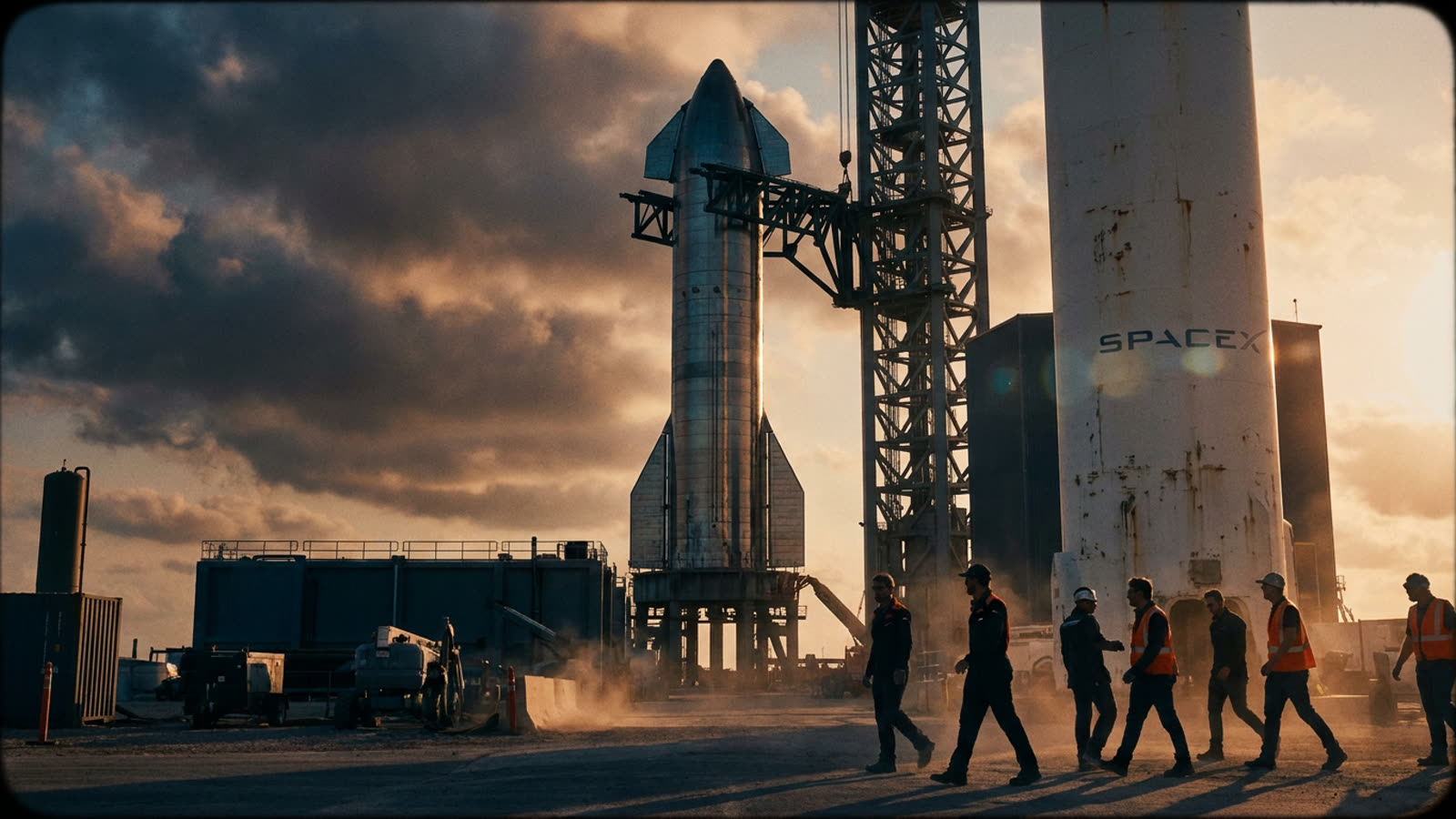
The most anticipated technology IPO since Nvidia's 1999 debut is shaping up to be less a shareholder offering than a crowdfunding campaign for interplanetary ambition. SpaceX's forthcoming public listing, expected to value the company at $1.75 trillion, will feature a governance structure so tilted toward founder control that it makes Meta's dual-class shares look like a New England town meeting.
Investors are being asked to accept not merely weak voting rights but a compensation package for Elon Musk that explicitly links his payout to milestones in Mars colonization—a business objective that generates zero revenue and exists primarily in PowerPoint renderings and science fiction. The market, apparently, is fine with this.
The governance vacuum
SpaceX's offering documents reportedly establish a share structure that concentrates voting power so heavily in Musk's hands that outside shareholders will have essentially no mechanism to influence corporate strategy, board composition, or executive pay. This is not unusual for founder-led tech companies at IPO—Snap went public with non-voting shares in 2017—but the scale here is unprecedented. At $1.75 trillion, SpaceX would enter the market as one of the ten most valuable companies on Earth, with public shareholders holding economic exposure but little else.
The message to institutional investors is blunt: you are buying a financial instrument, not a stake in corporate governance. Pension funds and index managers, who have spent the past decade demanding better shareholder rights, are expected to participate anyway. The alternative—missing ownership in the dominant force in commercial launch services—is apparently worse than accepting feudal terms.
Mars as a compensation metric
More striking than the governance structure is the pay package. Musk's compensation will reportedly include tranches tied to achieving specific objectives in SpaceX's Mars program, a venture that has no customers, no regulatory framework, and no realistic revenue model within the next decade. The company's actual cash-generating businesses—Starlink's satellite internet and Falcon 9's launch services—are profitable and growing. But the IPO narrative centers on the loss-making, speculative, civilizationally ambitious project that Musk has always described as his true purpose.
This is unusual corporate finance. Public companies occasionally tie executive pay to moonshot R&D goals, but those goals typically involve products that might one day generate returns for shareholders. Mars colonization, by contrast, is framed by Musk as a species-level insurance policy, not a business. Investors are being asked to fund it anyway, with their own compensation—dividends, buybacks, reinvestment in terrestrial operations—potentially subordinated to rocket fuel for the red planet.
Why the market will say yes
The rational case for participation is straightforward: SpaceX has a near-monopoly on Western commercial launch, Starlink is growing toward 10 million subscribers, and the U.S. government is an increasingly captive customer. The irrational case is that Musk's companies trade on narrative momentum as much as fundamentals, and being outside the tent when the stock begins trading carries career risk for fund managers.
There is also a simpler explanation. After two decades of founder-worship in Silicon Valley, the investment community has internalized the idea that visionary control produces superior returns. The evidence for this is mixed—WeWork and Theranos had visionary founders too—but the counterexamples that matter (Amazon, Tesla, Meta) loom larger in institutional memory. SpaceX is betting that investors will pattern-match to the successes.
Our take
This IPO is a referendum on whether public markets have any remaining appetite for shareholder rights when the alternative is missing a generational company. The answer, clearly, is no. Musk has spent years demonstrating that he views outside investors as passengers, not partners, and the $1.75 trillion valuation suggests the market has accepted the terms. Whether this is rational capital allocation or collective capitulation to a compelling story depends on your time horizon—and your faith that Mars will eventually matter to someone other than Elon Musk.