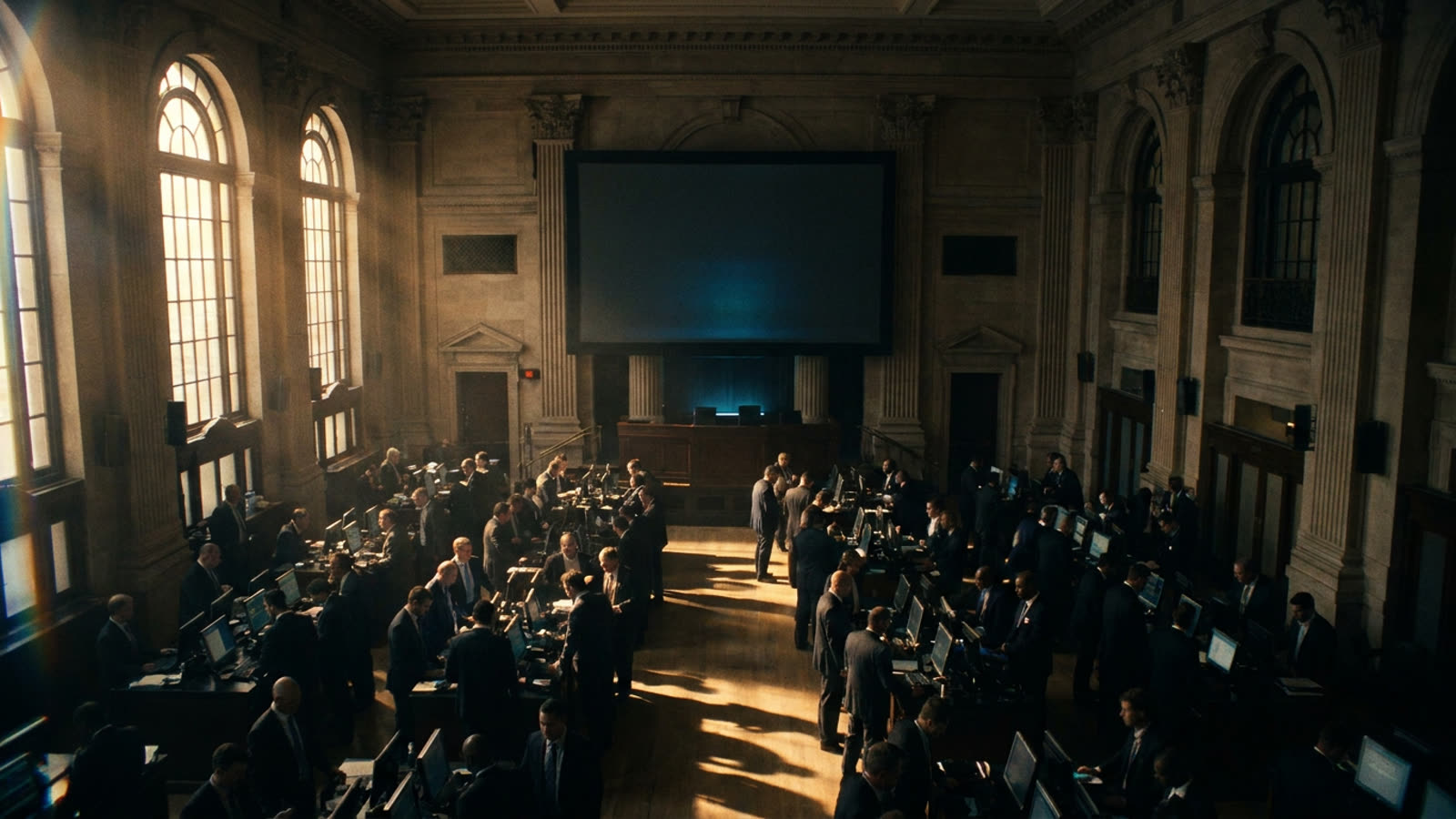
The most anticipated IPOs of the decade are stuck in a waiting room of their own making.
SpaceX, valued north of $350 billion in private trades. Stripe, commanding somewhere around $70 billion after its painful 2023 down-round. OpenAI, Anthropic, and a constellation of AI firms whose valuations have been set by venture capitalists competing to write the largest checks. These companies have everything public markets claim to want: growth, technological moats, category dominance. What they may not have is a price that works for everyone.
The private-market trap
The problem is structural. Private valuations are set by a small number of sophisticated investors who can afford to wait years for liquidity. Public markets are less patient and considerably less forgiving. When Instacart went public in 2023 at a fraction of its private peak, it wasn't because the grocery delivery business had fundamentally changed—it was because public investors applied different math.
For SpaceX, the calculus is especially fraught. The company's valuation implies a future where it dominates satellite internet, commercial spaceflight, and eventually Mars colonization. That may all come true. But public markets tend to discount science-fiction timelines more aggressively than Sequoia does.
The AI complication
Artificial intelligence companies face a variant of the same problem. Their valuations rest on the assumption that current revenue run-rates are rounding errors compared to what's coming. OpenAI reportedly generated several billion in revenue last year, but its valuation—rumored to exceed $150 billion—prices in a future where it captures a meaningful share of global software spending.
Public investors have shown they'll pay up for AI exposure; Nvidia's market cap proves that. But they've also shown brutal efficiency at distinguishing between companies that sell shovels and companies that merely dig. The AI application layer remains largely unproven as a business.
The Stripe paradox
Stripe occupies a different position. Its business is mature, profitable, and growing. It processes a significant share of internet commerce. By most measures, it should be the safest IPO candidate of the bunch. Yet it remains private, in part because its 2021 valuation of $95 billion set expectations that took years to walk back.
The company has reportedly explored various structures—direct listings, tender offers, even tokenized access through platforms like Kraken's parent company Payward, which announced plans this week to offer retail investors exposure to pre-IPO shares. These experiments suggest Stripe is looking for a way to go public without the traditional IPO's price-discovery violence.
Our take
The private markets spent a decade convincing themselves that staying private longer was an unalloyed good—more control, less scrutiny, patient capital. What they built instead was a pressure cooker. Employees holding illiquid equity want exits. Early investors want distributions. And the longer these companies wait, the higher the bar rises. The IPO window is open, but walking through it means accepting that the private valuations were, in many cases, aspirational fiction. That's not a market failure. That's just markets.