The Trump administration built its anti-weaponization fund as a loyalty reward mechanism disguised as justice reform, and now it's discovering that even loyalty has a price tag some Republicans won't pay.
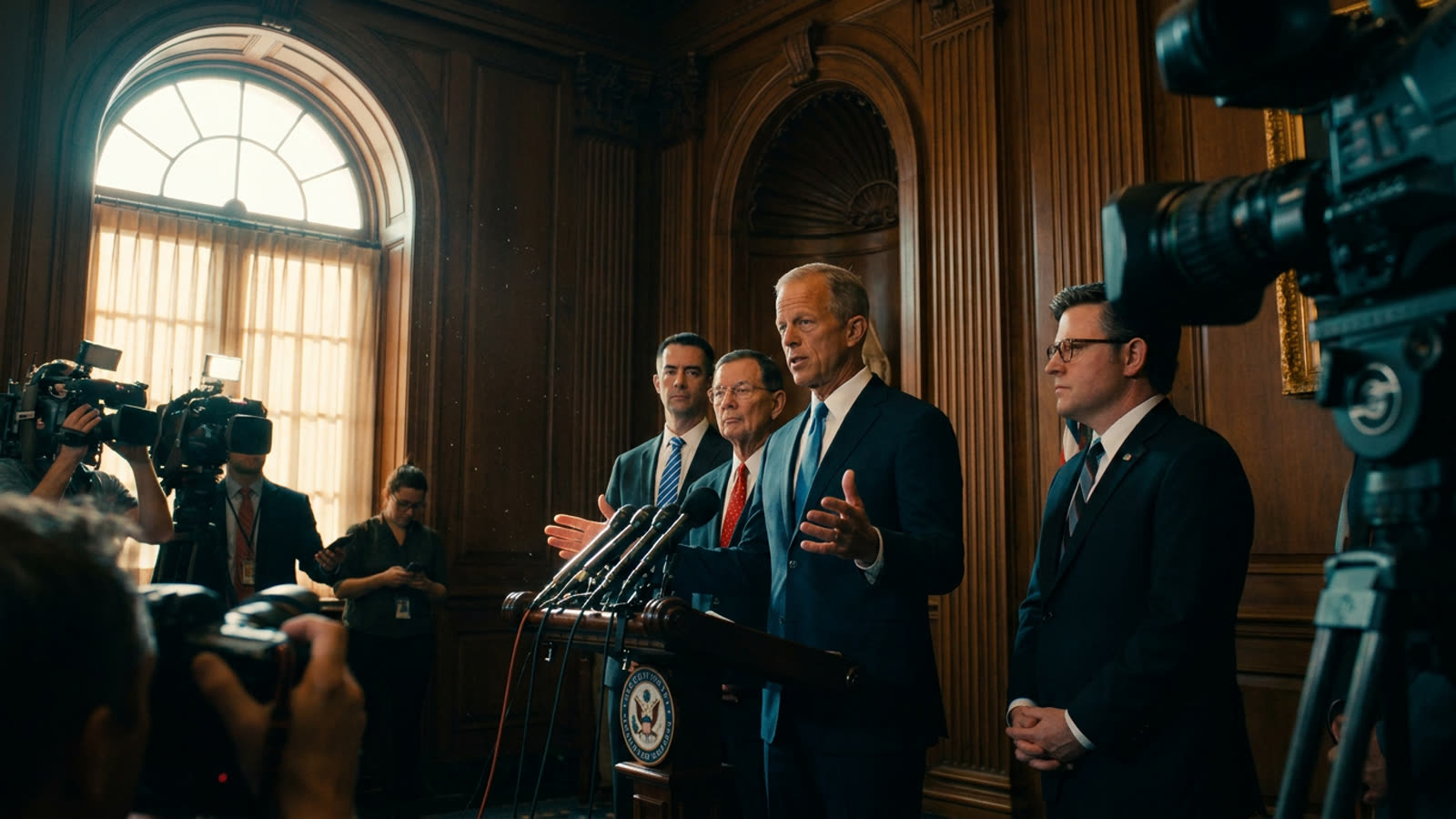
Three GOP senators—names the leadership won't publicly confirm but whose identities are Washington's worst-kept secret—have refused to vote down a Democratic motion that would strip the $1.8 billion fund from the upcoming ICE appropriations bill. The standoff has frozen Senate business for the better part of two days, with Majority Leader John Thune reportedly shuttling between offices while the White House burns through its rolodex of favors and threats.
The fund that launched a thousand grievances
The anti-weaponization fund, tucked into a supplemental appropriations package earlier this year, was designed to compensate individuals the administration deems victims of politically motivated federal prosecutions. In practice, this means Trump associates investigated during the Mueller probe, January 6th defendants, and a constellation of MAGA-adjacent figures who claim the Justice Department targeted them unfairly. The fund requires no judicial finding of wrongdoing by prosecutors—just an administrative determination by a panel appointed by the Attorney General.
Critics have called it a pardon with a cash bonus. Supporters frame it as overdue accountability for a weaponized bureaucracy. What neither side anticipated was that the fund's existence would become a leverage point for senators with entirely unrelated grievances.
The holdouts' game
The three Republican holdouts appear motivated by distinct concerns that have nothing to do with the fund itself. One reportedly wants assurances on agricultural disaster relief for his state. Another has been nursing wounds over a passed-over judicial nomination. The third—and most troublesome for leadership—seems to object to the fund on principle, viewing it as executive overreach that sets a dangerous precedent for future administrations of either party.
This last concern is not frivolous. A Democratic president could, in theory, establish a similar fund to compensate climate activists prosecuted under federal trespassing laws or immigration advocates charged during enforcement operations. The mechanism, once established, becomes available to whoever holds power.
Why the White House is stuck
The administration's problem is structural. It cannot negotiate with holdouts whose demands are public without inviting every backbencher to hold future legislation hostage. But it cannot simply roll over the dissenters without the votes, and Thune lacks them. Meanwhile, the Democratic motion needs only a simple majority to pass if Republicans remain divided, and Chuck Schumer is content to let the clock run while his opponents bleed.
The ICE funding deadline arrives in nine days. The administration has signaled it will not accept a clean appropriations bill without the anti-weaponization provision intact. Something will have to give.
Our take
The anti-weaponization fund was always more symbol than policy—a way to signal that the Trump administration would take care of its own. That it has now become an obstacle to taking care of the border enforcement apparatus the president claims to prioritize reveals the contradictions at the heart of grievance politics. You cannot govern entirely through the logic of payback without eventually discovering that everyone has a grudge, and some of them are pointed at you.