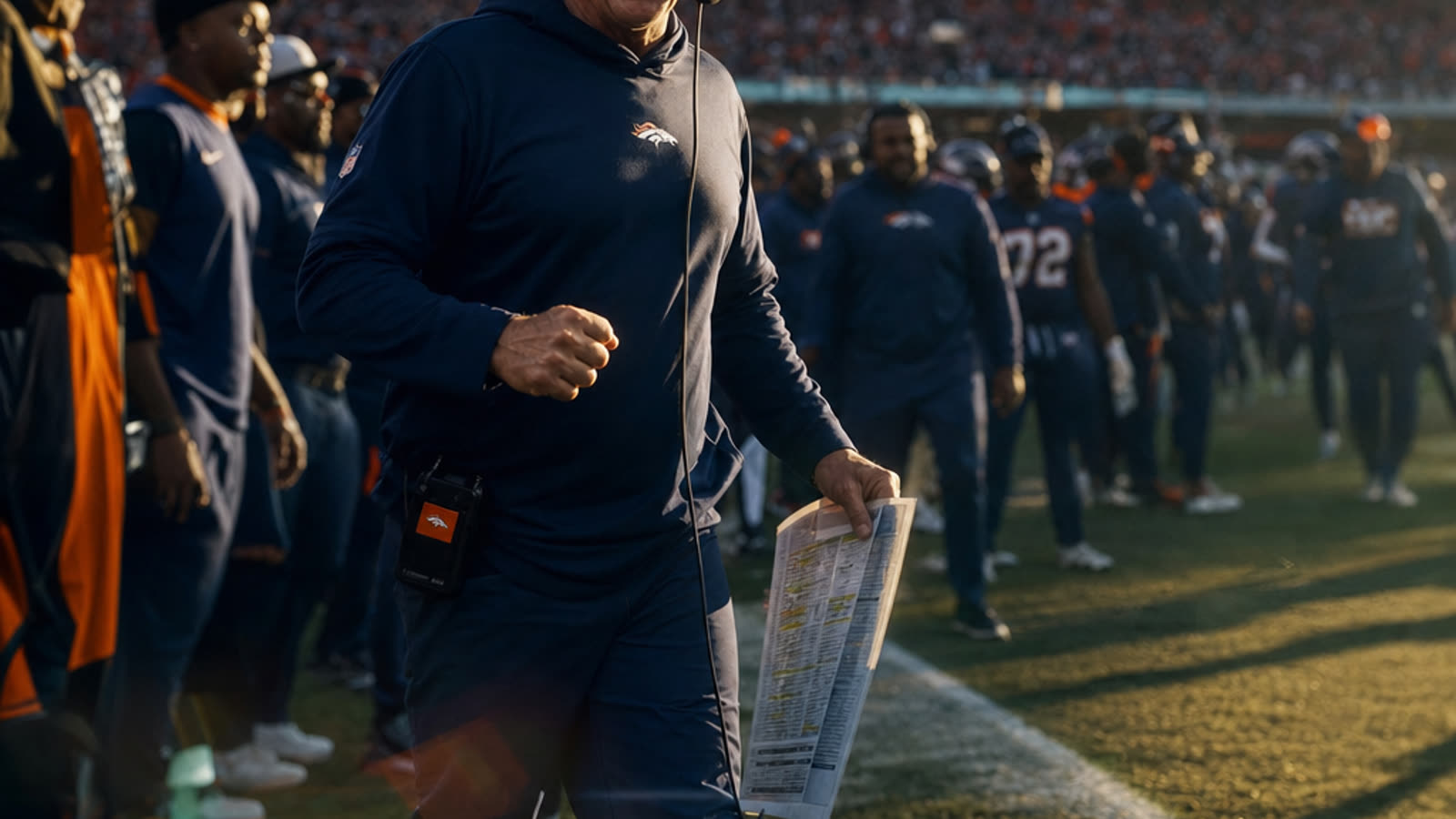
When a head coach with Sean Payton's résumé announces he is taking over play-calling from his handpicked coordinator, it is not a tweak. It is a white flag followed immediately by a declaration of war.
Payton built his legend calling plays for the New Orleans Saints, orchestrating one of the most prolific offensive stretches in NFL history alongside Drew Brees. He came out of a year's sabbatical specifically to fix the Denver Broncos, lured by the challenge of developing Bo Nix and restoring a franchise that had become synonymous with quarterback dysfunction. Handing the play sheet to Joe Lombardi—his longtime lieutenant—was supposed to free Payton to see the full field, to coach rather than call. That experiment is now officially over.
The numbers that forced the move
Denver's offense has been sputtering in ways that belie the talent on the roster. The Broncos have struggled to sustain drives, and Nix, while showing flashes, has looked like a rookie asked to execute a system without consistent rhythm. The issue is not personnel depth; it is sequencing, tempo, and the kind of situational aggression Payton made famous in New Orleans. Lombardi's more conservative approach—perhaps an attempt to protect a young quarterback—has instead exposed him by making the offense predictable.
Payton is not a man who suffers inefficiency quietly. His press conference announcing the change was vintage: matter-of-fact, devoid of blame, but unmistakably urgent. He spoke of "getting back to what we do best," which is Payton-speak for "I should have done this weeks ago."
What it means for Nix
For the rookie quarterback, this is both a lifeline and a test. Payton's play-calling is famously demanding—quick decisions, precise timing, an expectation that the quarterback sees what the coach sees. Brees thrived under it because he was Brees. Nix will now learn whether he can handle the cognitive load in real time, with Payton's voice in his ear rather than Lombardi's.
The upside is significant. Payton has a gift for designing plays that create easy completions, for building confidence through rhythm. If Nix can execute, the Broncos' offense could look like a different unit within weeks. If he cannot, Denver will know sooner rather than later whether their quarterback of the future is actually their quarterback of the future.
Our take
This is why the Broncos paid Payton like a franchise savior: not to delegate, but to dominate. The Lombardi arrangement was always a bit odd for a coach whose entire identity is built on offensive mastery. Now Payton is doing what he should have done from the start—putting his fingerprints on every snap. It is a tacit admission that the rebuild is behind schedule, but it is also the most hopeful sign Denver fans have seen this season. When Sean Payton decides to fix something personally, it usually gets fixed.