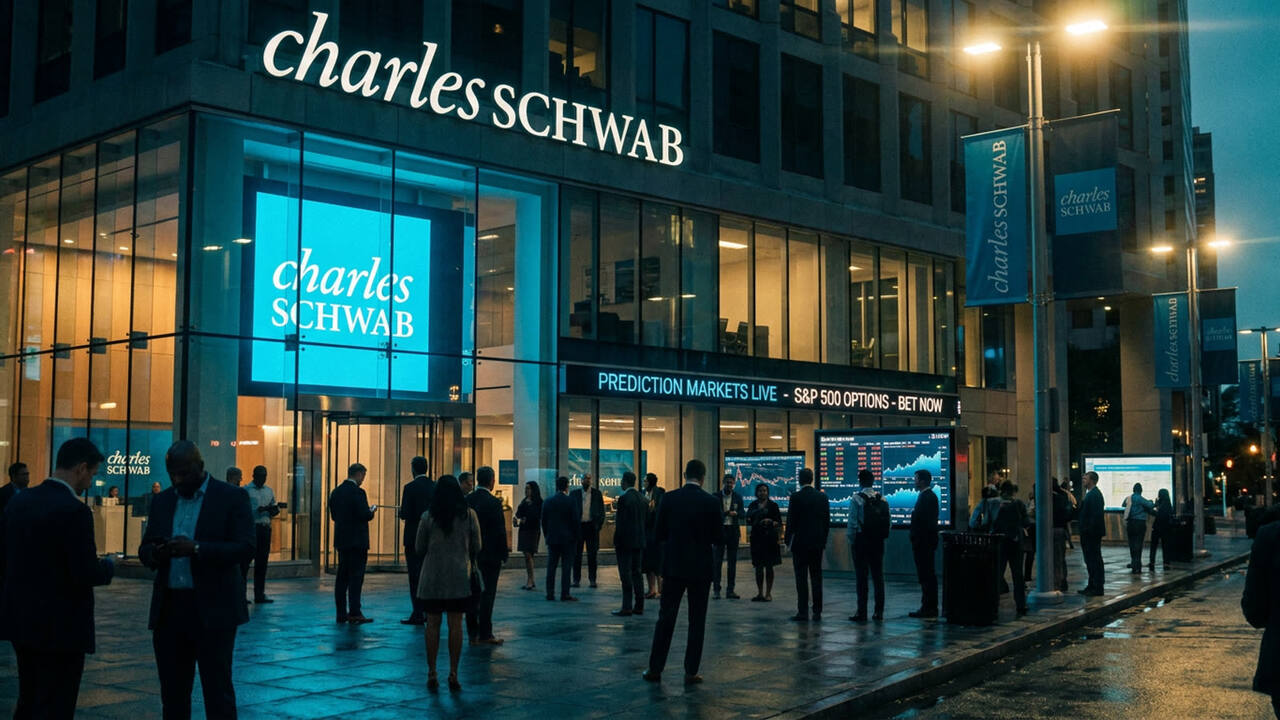
When Charles Schwab, the firm that democratized stock trading for middle America, decides to offer prediction markets, the product category has officially graduated from Polymarket novelty to legitimate asset class.
The brokerage is preparing to launch S&P 500 event-based options, according to the Wall Street Journal — contracts that let retail investors take positions on whether the index will finish above or below certain thresholds by specific dates. It's prediction markets wearing a suit and tie, structured as regulated options rather than the freewheeling crypto-native contracts that dominated the 2024 election cycle.
The mainstreaming of speculation
Schwab's move follows a remarkable twelve months for prediction markets. Polymarket's election contracts drew billions in volume and proved surprisingly accurate, outperforming traditional polls in several key races. Kalshi won its legal battle with the CFTC to offer election contracts. Robinhood launched event contracts. Now the country's largest publicly traded brokerage — with over 35 million client accounts and $9 trillion in assets — wants in.
The S&P 500 framing is clever. Rather than wading into politically charged election betting, Schwab is starting with something its clients already care about: stock market performance. These aren't exotic derivatives; they're binary options on an index that already dominates American retirement portfolios. The regulatory path is cleaner, and the customer education burden lighter.
Why now, and why Schwab
The timing reflects both competitive pressure and structural opportunity. Schwab's zero-commission model, revolutionary when introduced, is now table stakes. Every major broker offers free stock trades. Prediction markets represent a genuine product differentiator — a new revenue stream that younger investors, raised on sports betting apps and crypto speculation, actually want.
There's also a demographic calculation. Schwab's client base skews older and wealthier than Robinhood's, but those clients are dying. The firm needs products that appeal to millennials and Gen Z without alienating existing customers. Event-based options on the S&P 500 thread that needle: familiar enough for traditionalists, novel enough for the DraftKings generation.
Our take
The prediction markets discourse has oscillated between utopian ("the wisdom of crowds will solve everything") and dystopian ("we're gambling on democracy"). Schwab's entry suggests a more mundane reality: these are financial products, and financial products get adopted when regulated institutions offer them through familiar interfaces. The interesting question isn't whether prediction markets will go mainstream — Schwab just answered that — but whether the wisdom-of-crowds promise survives contact with retail investor psychology. Markets are efficient until everyone's in them.