The pattern has become grimly predictable: Russian cruise missiles and Iranian-designed drones saturate Ukrainian airspace, overwhelming Patriot batteries and NASAMS units that simply do not have enough interceptors to stop them all. The result is a systematic degradation of Ukraine's power grid, logistics hubs, and civilian morale — not because Kyiv lacks the will to fight, but because the West never delivered the ammunition its own weapons systems require.
Russia's latest wave of strikes, concentrated over the past week, has exploited this vulnerability with surgical precision. Military analysts note that Moscow has shifted from targeting frontline positions to infrastructure deep in Ukrainian territory, forcing Kyiv to expend precious interceptors on threats hundreds of kilometers from the contact line. Each Patriot missile costs roughly three million dollars and takes months to manufacture; each Shahed drone costs Iran perhaps fifty thousand dollars and can be produced at scale. The arithmetic is devastating.
The production gap nobody solved
When NATO countries pledged air-defense systems to Ukraine in 2023 and 2024, the announcements generated headlines and diplomatic goodwill. What they did not generate was a sustainable supply chain. Raytheon, the primary manufacturer of Patriot interceptors, has struggled to ramp production beyond pre-war levels, constrained by semiconductor shortages and a defense-industrial base optimized for peacetime procurement cycles. European manufacturers face similar bottlenecks. The result is a chronic mismatch: Ukraine received the launchers but not the magazines to keep them loaded.
Pentagon officials have quietly acknowledged the problem for more than a year, yet no crash production program has materialized. The Biden administration's final defense budgets prioritized shipbuilding and nuclear modernization; the current administration has shown little appetite for industrial mobilization on Ukraine's behalf. Allied capitals, meanwhile, have treated interceptor donations as one-off gestures rather than ongoing commitments.
Moscow's attritional calculus
Russian military planners appear to have internalized a simple insight: they do not need to defeat Ukrainian air defenses outright, only to exhaust them. By launching mixed salvos of cruise missiles, ballistic missiles, and cheap drones, Moscow forces Kyiv into impossible triage decisions. Protect the capital, or protect the power plants? Shield the ports, or shield the rail junctions? Every interceptor fired is one that cannot be replaced on any timeline that matters.
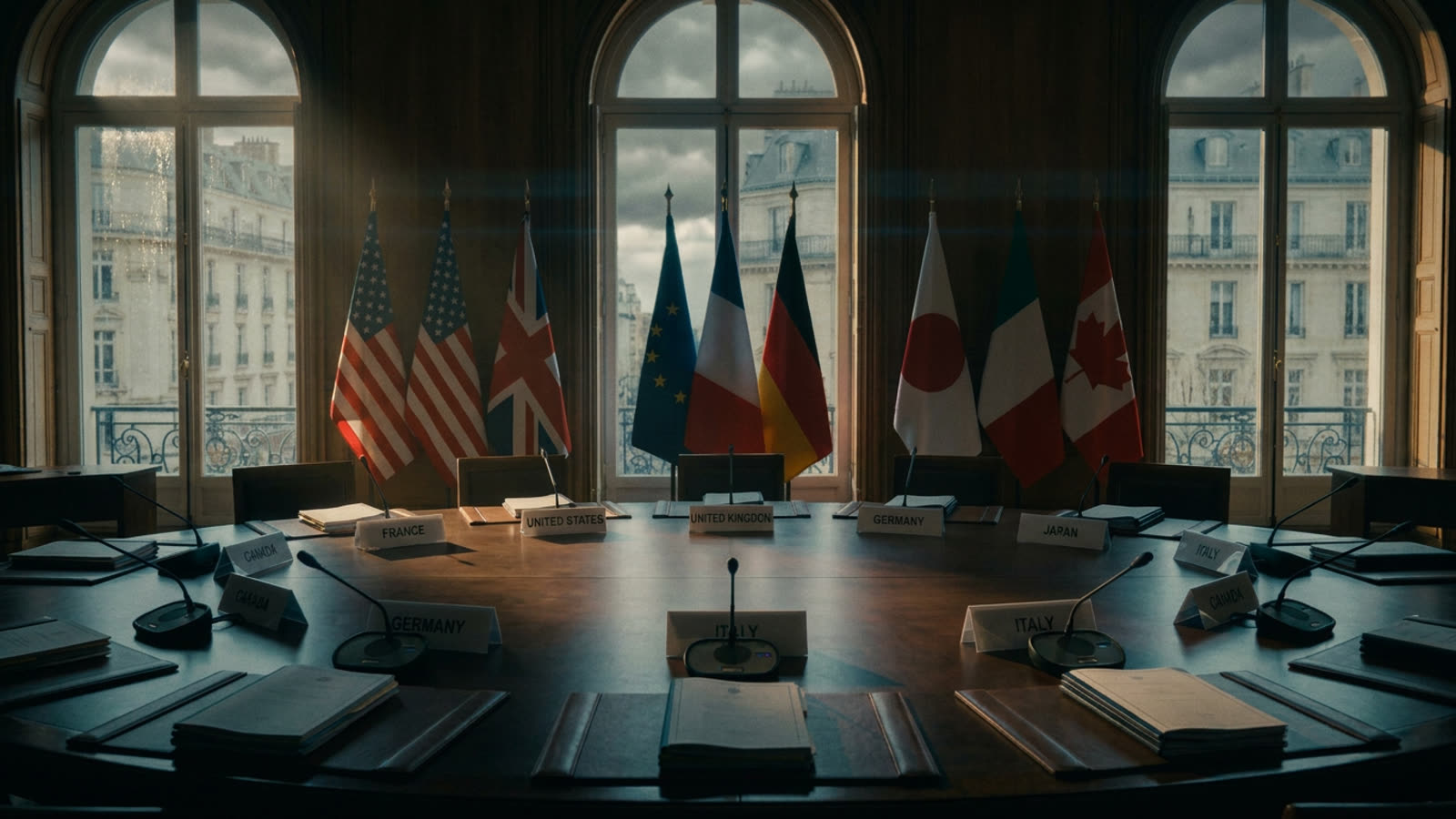
This attritional logic extends to the diplomatic realm. As Ukraine's defensive posture weakens, so does its leverage in any future negotiation. Zelenskyy's offer at the G7 to meet Putin directly reflects, in part, the uncomfortable reality that time is not on Kyiv's side — not because Ukrainian soldiers lack courage, but because Western factories lack urgency.
Our take
The West's failure here is not one of principle but of industrial seriousness. Pledging weapons systems without securing the ammunition to sustain them is the geopolitical equivalent of gifting a car without tires. Two years into a war that NATO leaders describe as existential for the European order, the alliance still has not organized a wartime production footing. Russia noticed. Ukraine is paying the price.