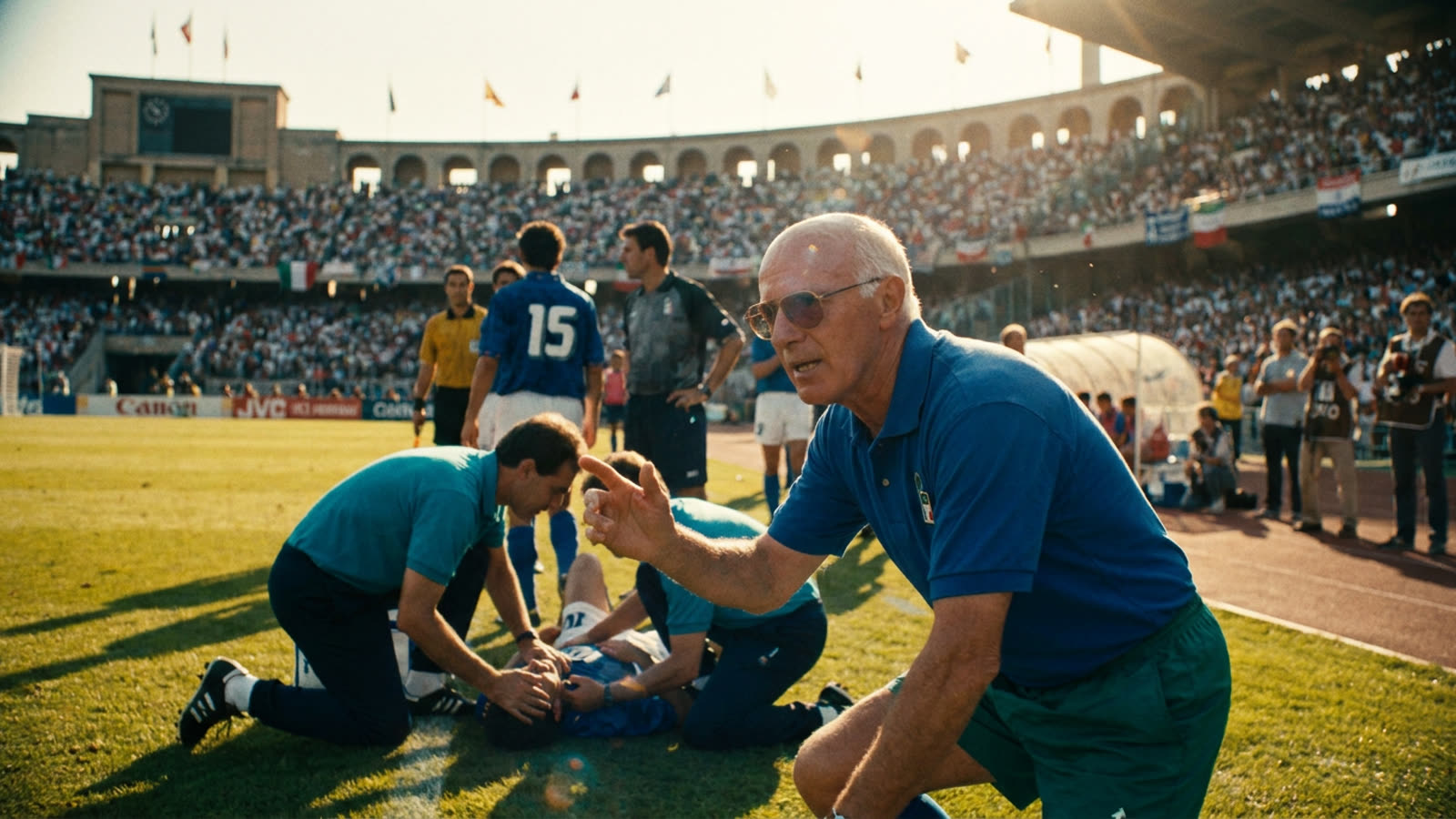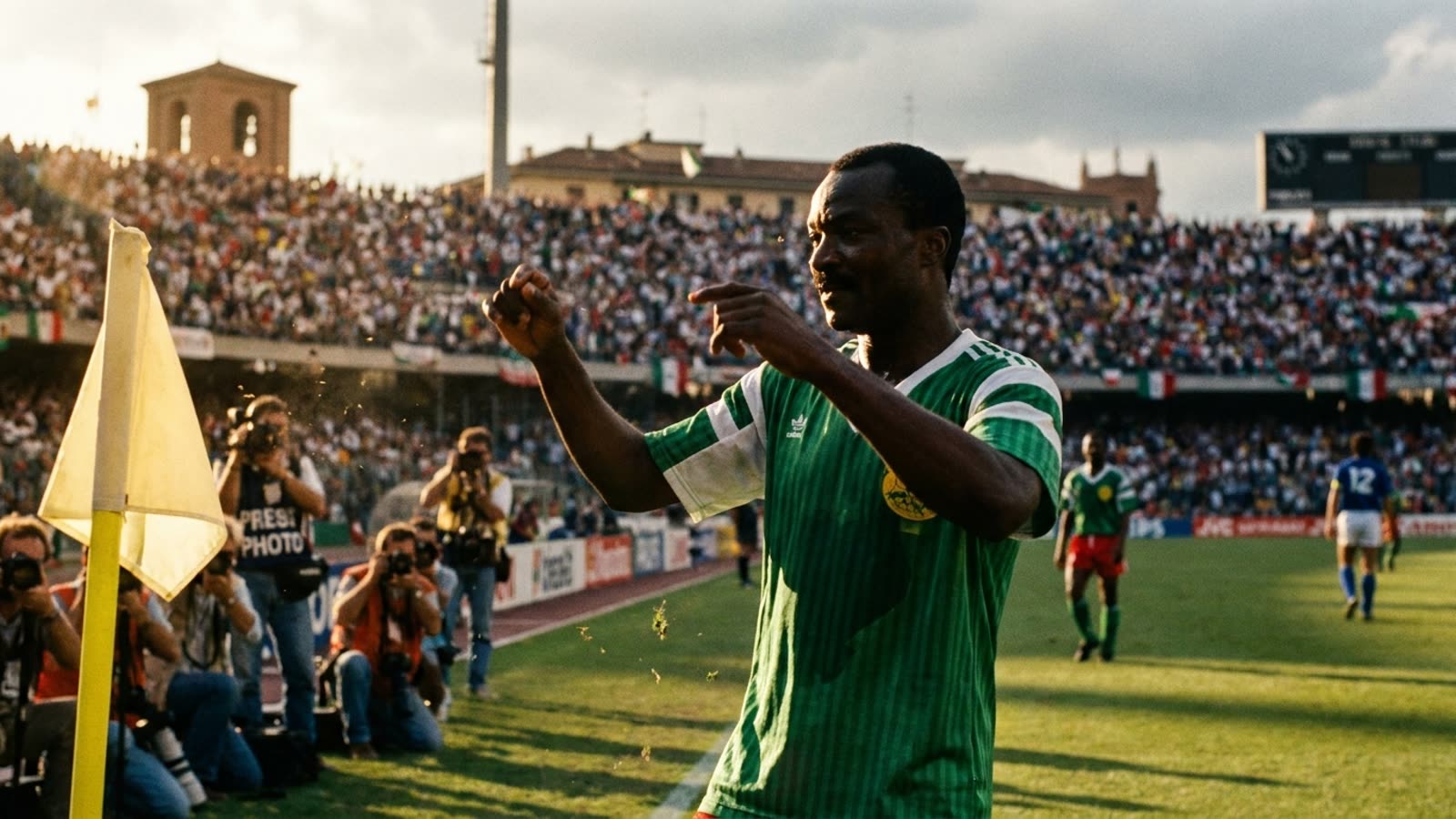
Before Roger Milla shimmied to the corner flag at the Stadio San Paolo in Naples, African football existed in the World Cup as a curiosity, occasionally charming but never threatening. After he finished dancing, the patronizing narrative crumbled. Cameroon's run to the quarterfinals of Italia '90 remains one of the tournament's great upsets, but its true significance lies in what it destroyed: the comfortable assumption that African nations were there to make up the numbers.
Milla was 38 years old — or perhaps 42, depending on which documents you trust — when he came off the bench against Romania in the group stage and scored twice. He was supposed to be a sentimental selection, a gift from President Paul Biya to a national hero enjoying retirement on the island of Réunion. Instead, he became the tournament's most electric presence, a super-sub before the term existed, proving that football intelligence and finishing instinct could age like fine Bordeaux while legs turned to oak.
The tactical irreverence of the Indomitable Lions
Cameroon's approach under Soviet coach Valery Nepomniachi was gloriously unorthodox. They pressed high before pressing high was doctrine. They committed fouls with cheerful abandon — collecting nine yellow cards and two reds against Argentina alone — while playing with a freedom that bordered on chaos. The reigning world champions, led by Diego Maradona, were beaten 1-0 in the opening match, and the football world spent the next month recalibrating its assumptions.
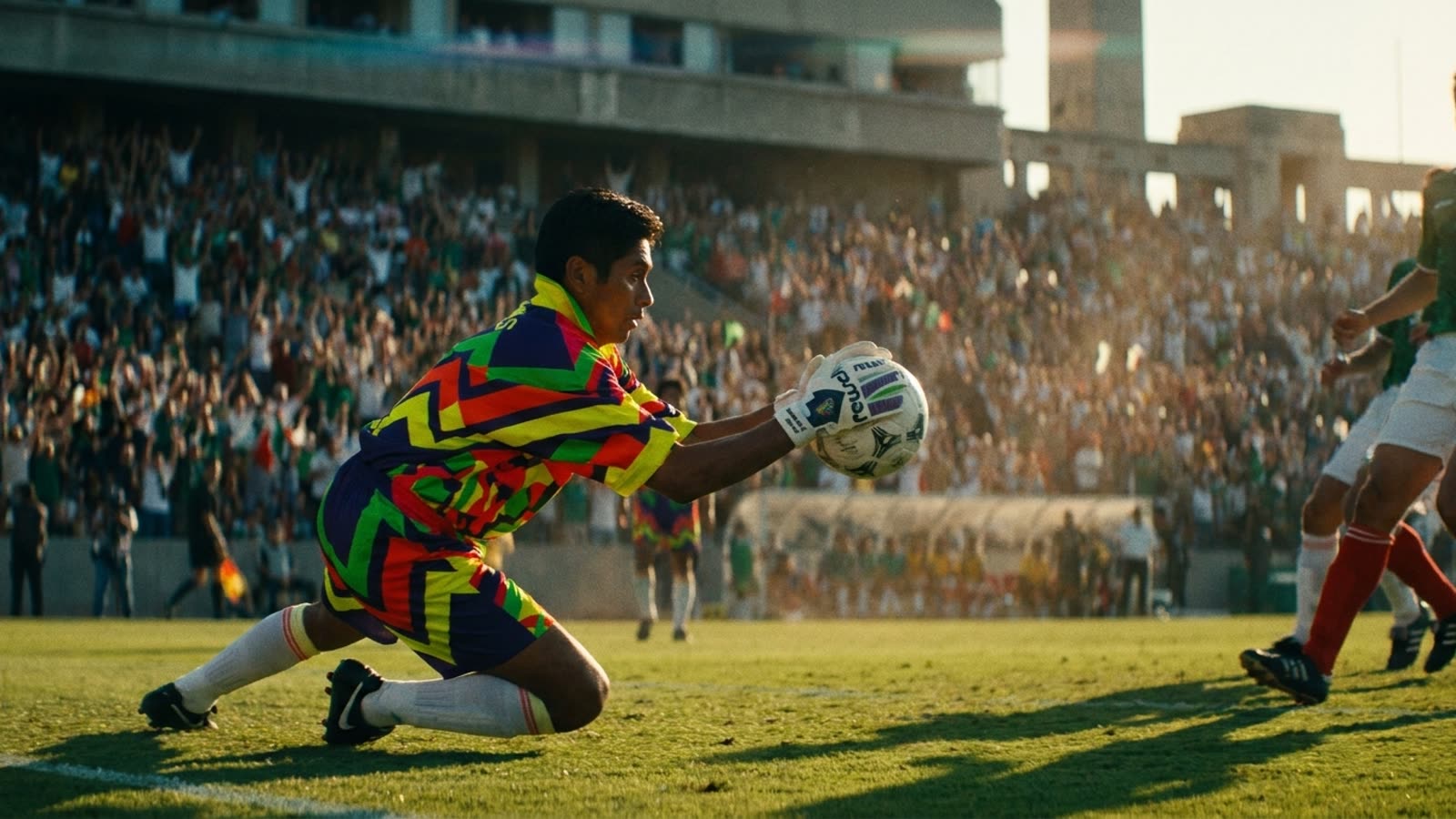
What made Milla devastating was his combination of veteran cunning and childlike joy. His goals against Colombia in the round of sixteen — both created by pressuring goalkeeper René Higuita into catastrophic errors — demonstrated a predator's patience. He waited, he watched, and when the moment arrived, he pounced. Then he danced, that hip-swiveling celebration at the corner flag that became the tournament's defining image.
The inheritance Milla left behind
The immediate aftermath was complicated. FIFA expanded African representation from two berths to three for the 1994 tournament, then to five by 1998. But the deeper legacy was psychological. A generation of African players saw that the World Cup's biggest stages were not reserved for Europeans and South Americans. George Weah, Samuel Eto'o, Didier Drogba — they grew up knowing that Milla had already kicked open the door.
The celebration itself became cultural currency, referenced and imitated across decades of football. When later African stars scored in major tournaments, the corner-flag dance was both homage and inheritance. Milla had given them a visual vocabulary for African joy on the global stage.
Our take
Milla's 1990 remains instructive because it reminds us that World Cup magic often arrives from unexpected angles — a supposedly retired striker, a team given no chance, a celebration that captured something words couldn't. The tournament's history is littered with favorites who disappointed and underdogs who merely competed bravely. Cameroon did something rarer: they competed joyfully, and in doing so, they expanded the imagination of what was possible. Every African nation that has since believed it could win the whole thing traces that belief, in part, to an old man dancing in Naples.