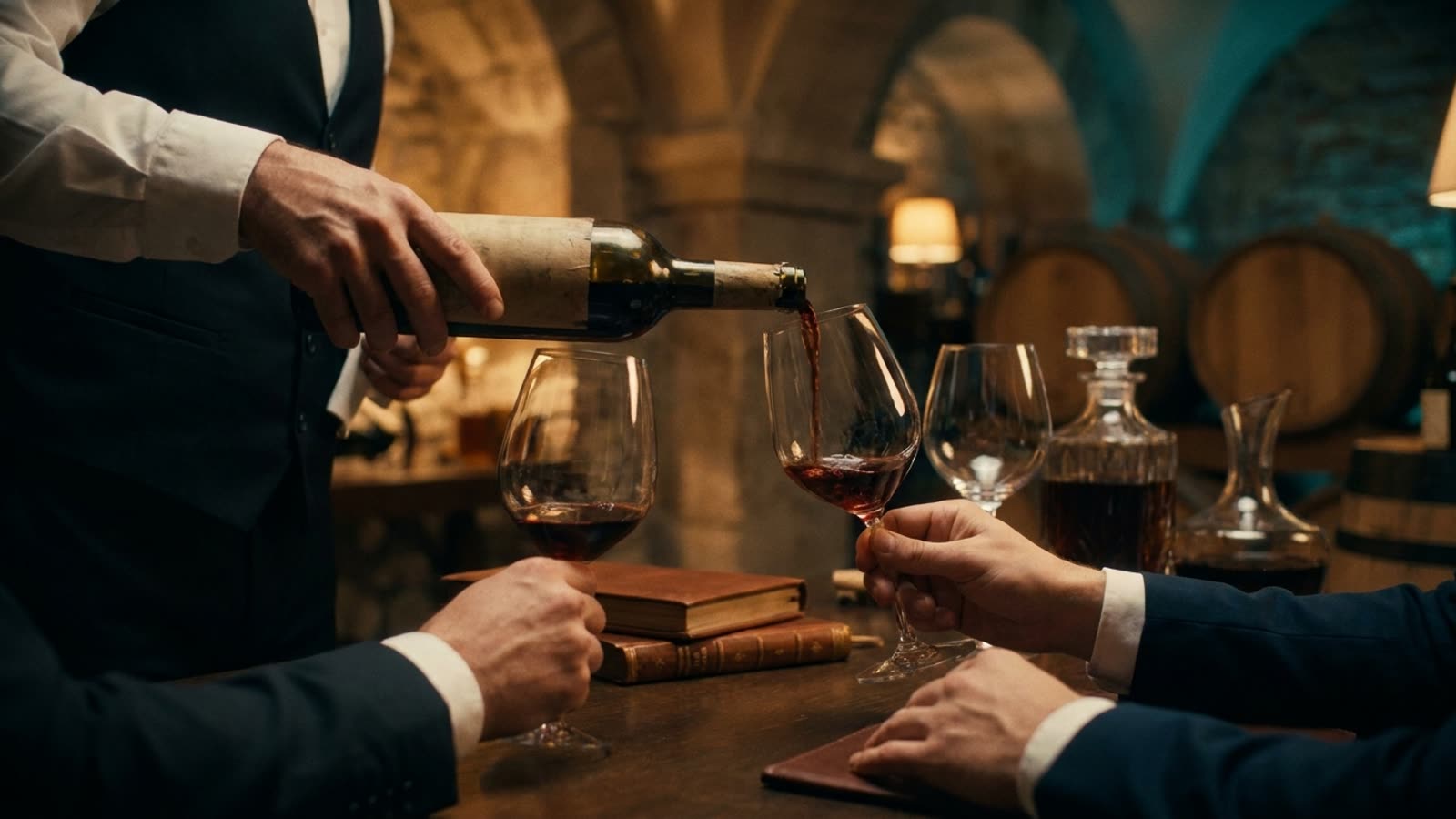
The ten-thousand-bottle cellar, that monument to acquisition that defined wine collecting for generations, is beginning to look like a mausoleum. Among the seriously wealthy, the new flex is not what you own but whom you know — specifically, the private sommelier who manages your drinking life with the intimacy of a therapist and the authority of a dealer.
This shift represents something more interesting than mere fashion. It marks a transition from wine-as-asset to wine-as-experience, from accumulation to curation, from showing to knowing. The private sommelier — sometimes called a cellar consultant, wine advisor, or simply "my wine person" — has become the essential intermediary between money and meaning in the glass.
From cellar to concierge
The traditional model of fine wine consumption followed a predictable arc: acquire prestigious bottles, store them properly, open them on occasions deemed sufficiently important, repeat. The cellar itself became the point — a climate-controlled trophy room that testified to taste, patience, and purchasing power. But this model contained its own contradictions. Collectors accumulated faster than they could drink, leaving heirs to liquidate cellars of wines that had outlived their optimal windows. The bottles became more valuable unopened than enjoyed.
Private sommeliers invert this logic entirely. Rather than building permanent collections, their clients maintain working cellars of perhaps two hundred to five hundred bottles, constantly rotating based on upcoming occasions, evolving palates, and the sommelier's discoveries. The relationship is ongoing and adaptive — weekly calls about dinner plans, quarterly tastings to calibrate preferences, advance sourcing for significant events.
The economics of intimacy
Retainers for elite private sommeliers reportedly range from modest monthly fees to substantial annual commitments, depending on the depth of service. At the higher end, the sommelier functions as a full-service wine department: managing storage, coordinating with household staff, briefing guests on what they're drinking, and maintaining relationships with producers who allocate scarce bottles only to trusted intermediaries.
The value proposition is counterintuitive. Clients often spend less on wine annually than they did as collectors, yet drink better and more appropriately. The sommelier's expertise converts money into experience more efficiently than the collector's shotgun approach ever could. A well-chosen bottle at the right moment outperforms a famous label opened arbitrarily.
The democratization question
Digital platforms have attempted to scale this intimacy, offering algorithm-driven recommendations and subscription services that promise personalization. But the private sommelier market has proven resistant to disruption. The service is inherently about human judgment exercised in context — knowing that a client's important dinner guest has a complicated history with Burgundy, or that the anniversary being celebrated is bittersweet this year. No algorithm captures the social intelligence that distinguishes adequate wine service from transformative hospitality.
This suggests the private sommelier phenomenon is less about wine than about a broader hunger among the affluent for relationships that feel genuinely personal rather than transactional. The sommelier knows your taste because they have shaped it, argued with it, expanded it over years. They remember what you drank at your daughter's wedding and why you stopped drinking Barolo for a while. In a world of frictionless consumption, this friction — the ongoing negotiation of preference — becomes the luxury.
Our take
The private sommelier trend reveals an uncomfortable truth about contemporary wealth: having everything makes having anything meaningful surprisingly difficult. The collectors who once measured status in bottle counts have discovered that abundance without curation is just expensive noise. What they're really paying for is not expertise but attention — someone who makes their consumption feel considered rather than compulsive. That this service exists at all is a quiet indictment of how hollow acquisition alone has become.