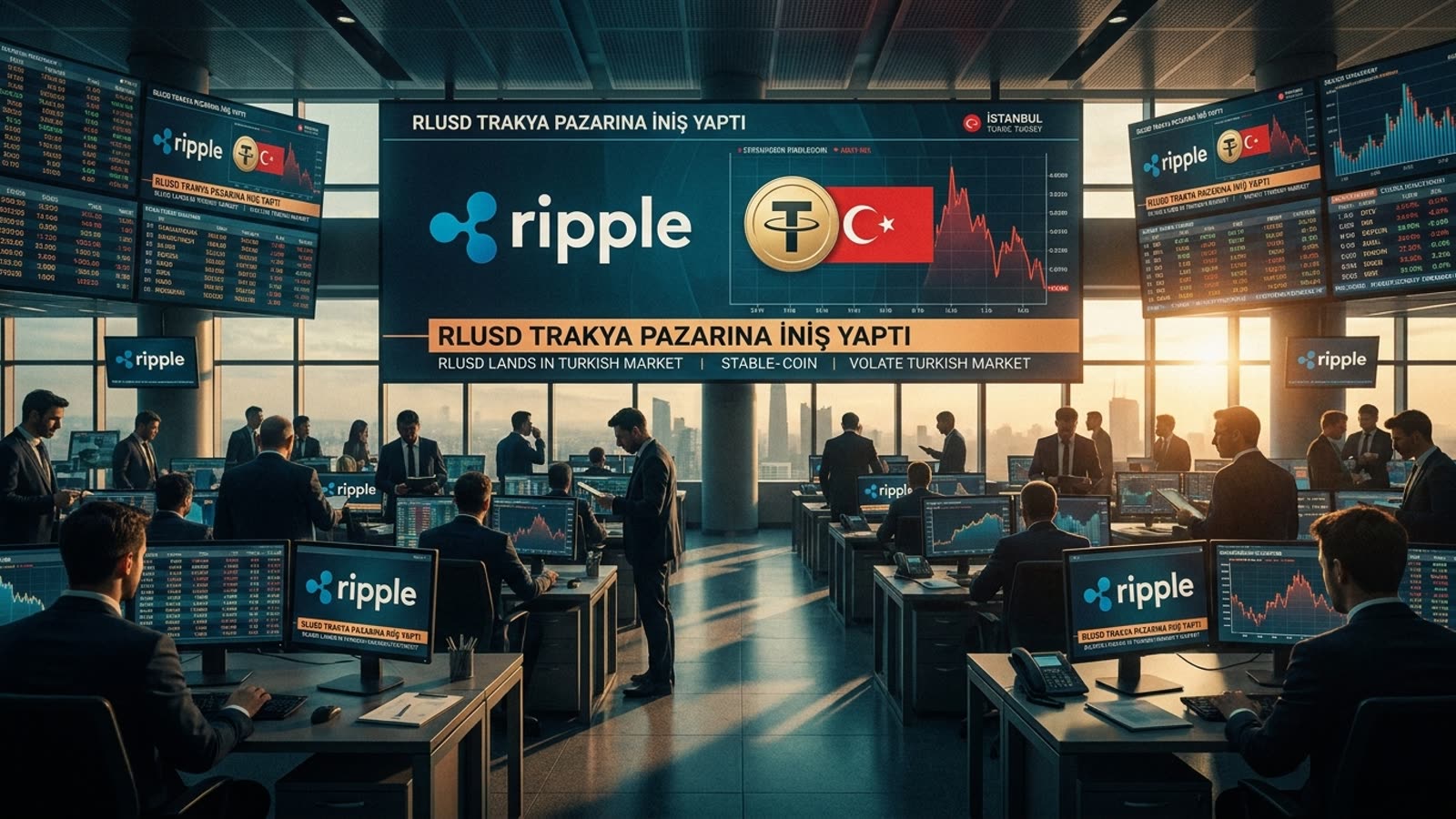
Turkey's chronic inflation problem has become Ripple's growth opportunity. The San Francisco-based company announced that RLUSD, its dollar-backed stablecoin, will now trade on three Turkish cryptocurrency platforms, giving citizens of a nation where the lira has lost roughly 80% of its value against the dollar since 2021 another avenue to dollarize their savings without leaving the country.
The move is less about Turkey specifically and more about Ripple's broader thesis: that stablecoins will achieve mass adoption not through Silicon Valley fintech integrations but through the back door of monetary dysfunction. When your local currency is hemorrhaging purchasing power, the philosophical debates about decentralization versus centralized stablecoins become rather academic.
The Turkish laboratory
Turkey presents an almost ideal test case for dollar-stablecoin demand. The country has a young, digitally literate population, relatively permissive crypto regulations compared to its neighbors, and a central bank that has spent years subordinating monetary policy to political imperatives. Inflation officially sits above 40%, though independent economists argue the real figure is higher. Turks have been quietly dollarizing for years through whatever channels remain open—RLUSD is simply the latest.
Ripple's choice of local partners matters. By integrating with established Turkish exchanges rather than attempting direct-to-consumer distribution, the company sidesteps the regulatory complexity of operating as a money transmitter in a foreign jurisdiction while still capturing the demand. The exchanges handle compliance; Ripple provides the rails.
The stablecoin land grab
RLUSD launched in late 2024 and has been playing catch-up to Tether's USDT and Circle's USDC ever since. Turkey represents the kind of market where that gap might narrow. USDT dominates global stablecoin volume, but its opacity has made some institutional players nervous. USDC has regulatory credibility but limited emerging-market distribution. Ripple is betting that its existing relationships with payment providers and its regulatory posture—the company has spent years fighting the SEC and emerged with a partial victory—position RLUSD as a credible third option.
The timing also reflects a broader industry recognition that the stablecoin wars will be won in places like Istanbul, São Paulo, and Lagos rather than New York or London. Western markets have plenty of dollar access already. The premium for on-chain dollars is highest where traditional banking either fails or actively works against citizens trying to preserve their wealth.
Our take
Ripple's Turkey expansion is a small deal dressed in the language of a big one, but the underlying logic is sound. Stablecoins are not competing with Visa in developed markets—they are competing with mattress cash and gold jewelry in countries where the local currency cannot be trusted. Every lira crisis, every Argentine peso devaluation, every Nigerian naira restriction is a marketing event for dollar stablecoins. Ripple is simply showing up where the demand already exists. The question is whether RLUSD can build enough liquidity and trust to matter, or whether it remains a footnote in Tether's world.