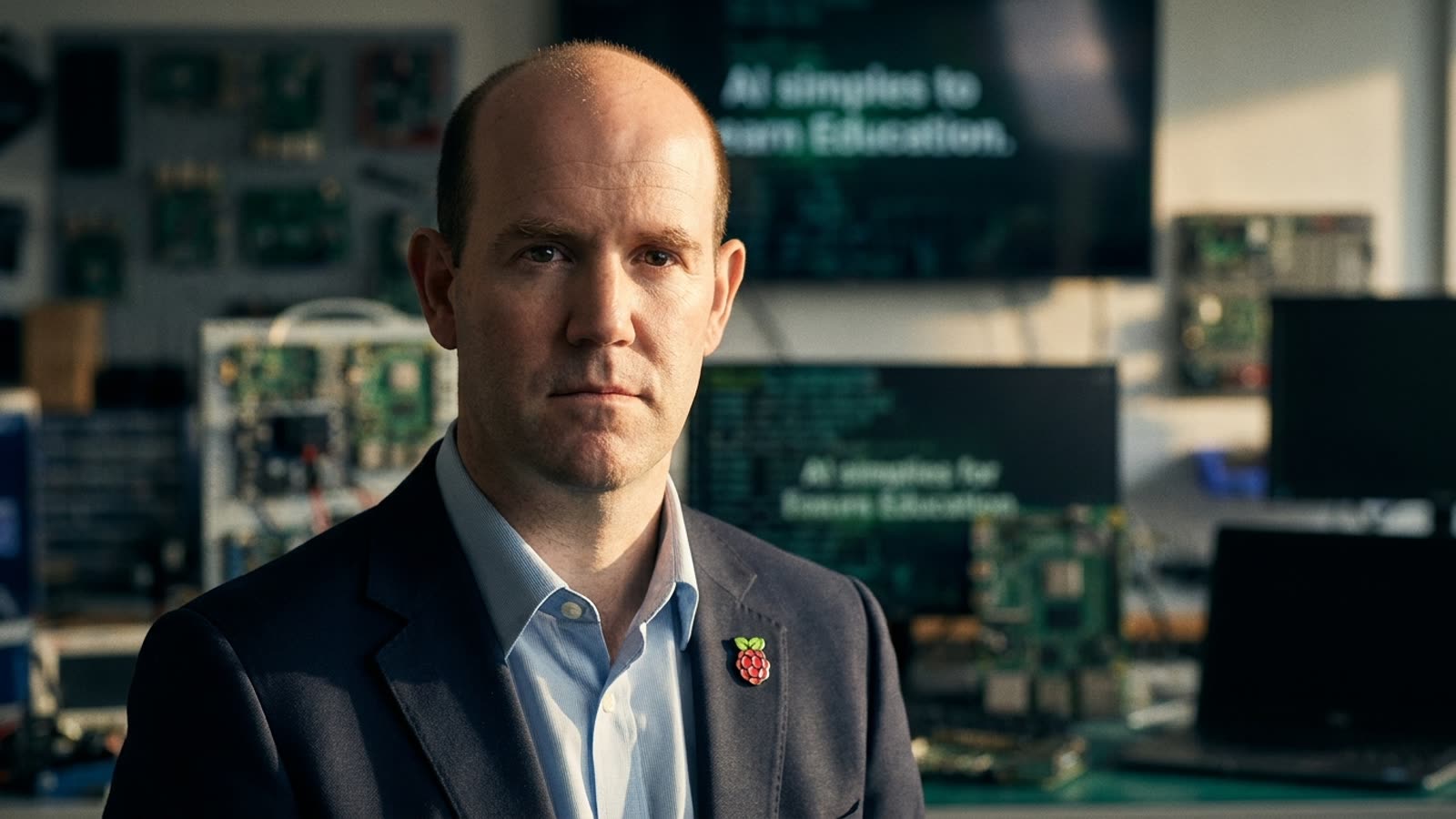
The technology industry has spent two years telling the world that artificial intelligence will automate away millions of jobs, and now one of its most respected figures is asking whether that narrative itself has become the problem.
Eben Upton, the founder and CEO of Raspberry Pi, warned this week that relentless claims about AI destroying computing roles risk discouraging young people from pursuing technical careers altogether. The concern is not that the predictions are wrong—though Upton believes many are overstated—but that they may prove self-fulfilling. If a generation of students decides that learning to code is pointless because machines will do it anyway, the resulting talent shortage could genuinely damage economic productivity, regardless of whether the original AI forecasts were accurate.
The demand paradox
Upton's intervention arrives at a peculiar moment. Technology companies are simultaneously laying off workers while complaining about skills shortages. The apparent contradiction resolves when you examine the specifics: firms are cutting middle-management and marketing roles while struggling to hire engineers capable of building and maintaining AI systems. The workers displaced by automation are rarely the same workers needed to create it.
Raspberry Pi, which manufactures low-cost computers designed to teach programming fundamentals, sits at the base of this pipeline. The company has sold over 60 million units since 2012, many to schools and hobbyists in developing economies. Upton's business model depends on a steady supply of curious teenagers who believe computing skills will remain valuable. His warning is therefore partly self-interested, but that does not make it wrong.
The messaging problem
The AI industry's communication strategy has been remarkably incoherent. Executives toggle between claiming their products will eliminate entire job categories and insisting that the same products merely augment human workers. The contradiction serves short-term purposes—impressing investors while reassuring regulators—but creates long-term confusion. A seventeen-year-old choosing between computer science and medicine cannot parse which version of the future to believe.
Upton's specific complaint is that the most alarming predictions often come from people with financial incentives to exaggerate AI capabilities. Venture capitalists and startup founders benefit from hype cycles; educators and employers bear the consequences when students make career decisions based on marketing materials.
Our take
The technology industry has developed a curious habit of describing its own products as existential threats to human employment, then acting surprised when the public responds with anxiety rather than enthusiasm. Upton is right that this narrative carries costs beyond the philosophical. Economies need programmers, systems administrators, and data engineers regardless of how sophisticated AI becomes—someone has to build the infrastructure, maintain the systems, and fix things when they break. Telling young people that these careers are doomed is not just premature; it is potentially destructive. The industry might consider whether its enthusiasm for dramatic predictions is worth the talent pipeline it may be poisoning.