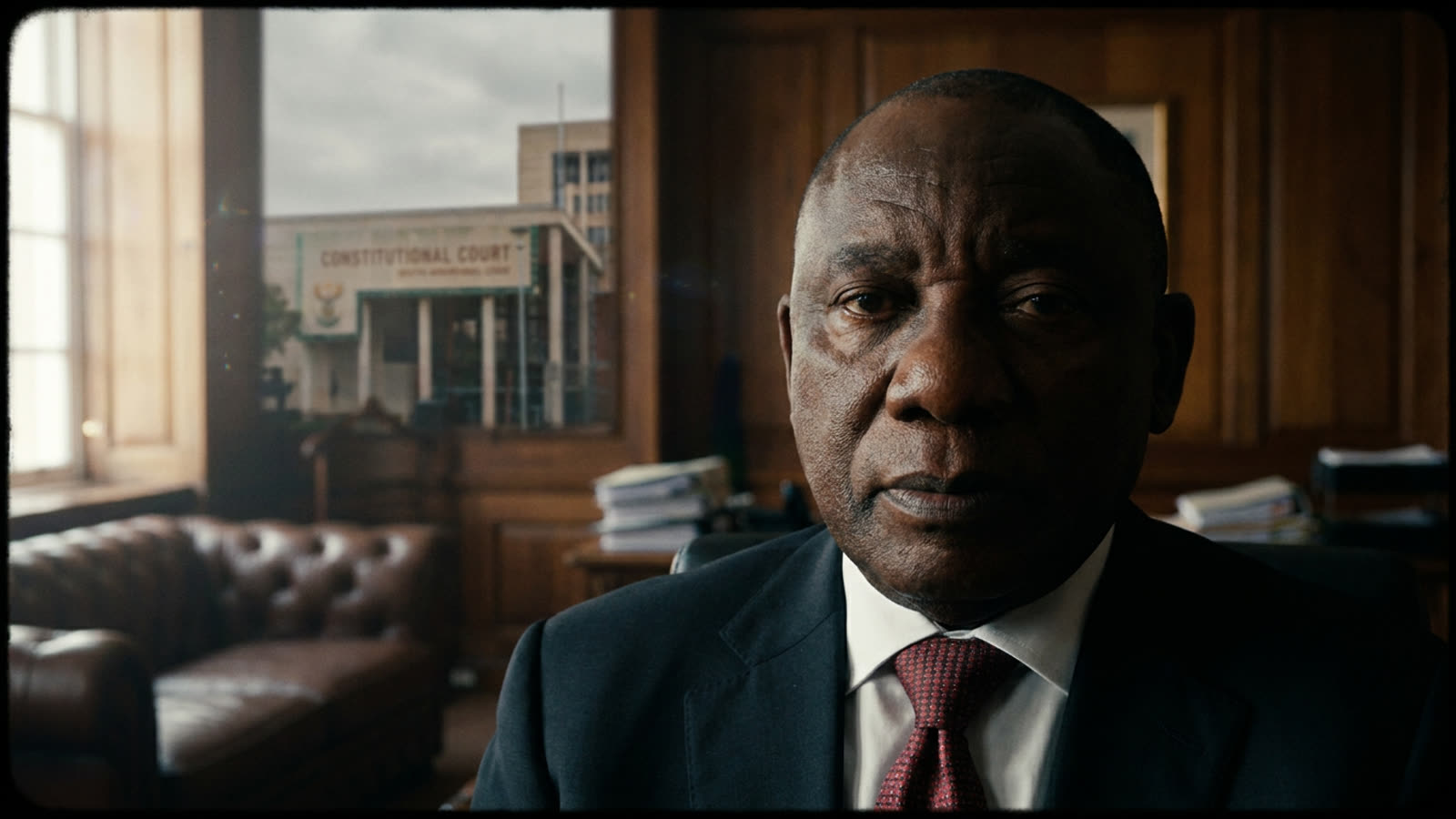
The Constitutional Court of South Africa on Friday handed President Cyril Ramaphosa the worst political morning of his second term, ruling that the National Assembly violated the constitution in December 2022 when it voted 214 to 148 to block an impeachment inquiry into what the country's tabloids long ago christened "Farmgate."
The facts of Farmgate have always been unusually cinematic. In February 2020, burglars broke into Ramaphosa's private game farm, Phala Phala, in the northern Limpopo province and made off with roughly $580,000 in United States cash. The money, prosecutors would later establish, had been hidden inside a sofa. South African currency law requires that any foreign cash of that scale be deposited with a licensed dealer — usually a bank — within thirty days. Ramaphosa said, at the time and since, that the money was proceeds from the sale of a buffalo to a Sudanese businessman. An independent panel concluded in late 2022 that he may have a case to answer. Parliament, controlled by his African National Congress, then voted to make the question go away.
What the court actually said
Friday's judgement, filed after a challenge brought by Julius Malema's Economic Freedom Fighters and the African Transformation Movement, does not find Ramaphosa guilty of anything. It finds the parliament guilty of something — specifically, of failing to test the impeachment case against the independent panel's own findings before voting it down. In the court's telling, the ANC majority did not conduct an inquiry; it conducted a cover vote.
The remedy is significant. The Speaker of the National Assembly, Thoko Didiza, now has to reconvene the impeachment machinery, restart the process, and this time show her work. Malema wrote to her Friday asking for a "clear indication within the next 48 hours" of how she plans to proceed.
The political math has changed
In 2022 the ANC had the numbers to kill the vote on its own. In 2026 it does not. The 2024 election left the ANC below 50 percent for the first time since 1994, forcing it into a governing coalition with the Democratic Alliance — whose leader, Geordin Hill-Lewis, said Friday that "parliament's impeachment committee must now do its work properly, rationally, fairly and constitutionally." That is a polite sentence. In coalition politics it is also a loaded one.
Malema, speaking outside the court in Johannesburg, went further and told Ramaphosa to resign. "You cannot serve the two," he said. "One is going to suffer."
What Ramaphosa's office said
The presidency's response was a masterclass in defensive minimalism. Ramaphosa "respects the judgement," he "reaffirms his commitment to the Constitution," he has been "consistent in providing his full assistance." He maintains, as he has since 2020, that no president is above the law and that allegations must be subjected to due process.
What the statement did not say is also instructive. It did not dispute the existence of the cash. It did not offer a new explanation for why it was in the sofa. And it did not rule out cooperating with an impeachment committee that has now been resurrected by the country's highest court.
Our take
Farmgate has always been a slow-motion constitutional crisis wearing the costume of a farm-burglary story, and Friday's ruling finally strips the costume off. Ramaphosa will probably survive an impeachment vote — the ANC still holds the largest bloc — but he will spend the rest of 2026 defending a pile of cash in a sofa rather than governing a country in recession. For a presidency built on the promise of cleaning up after the Zuma years, that is the worst possible headline.