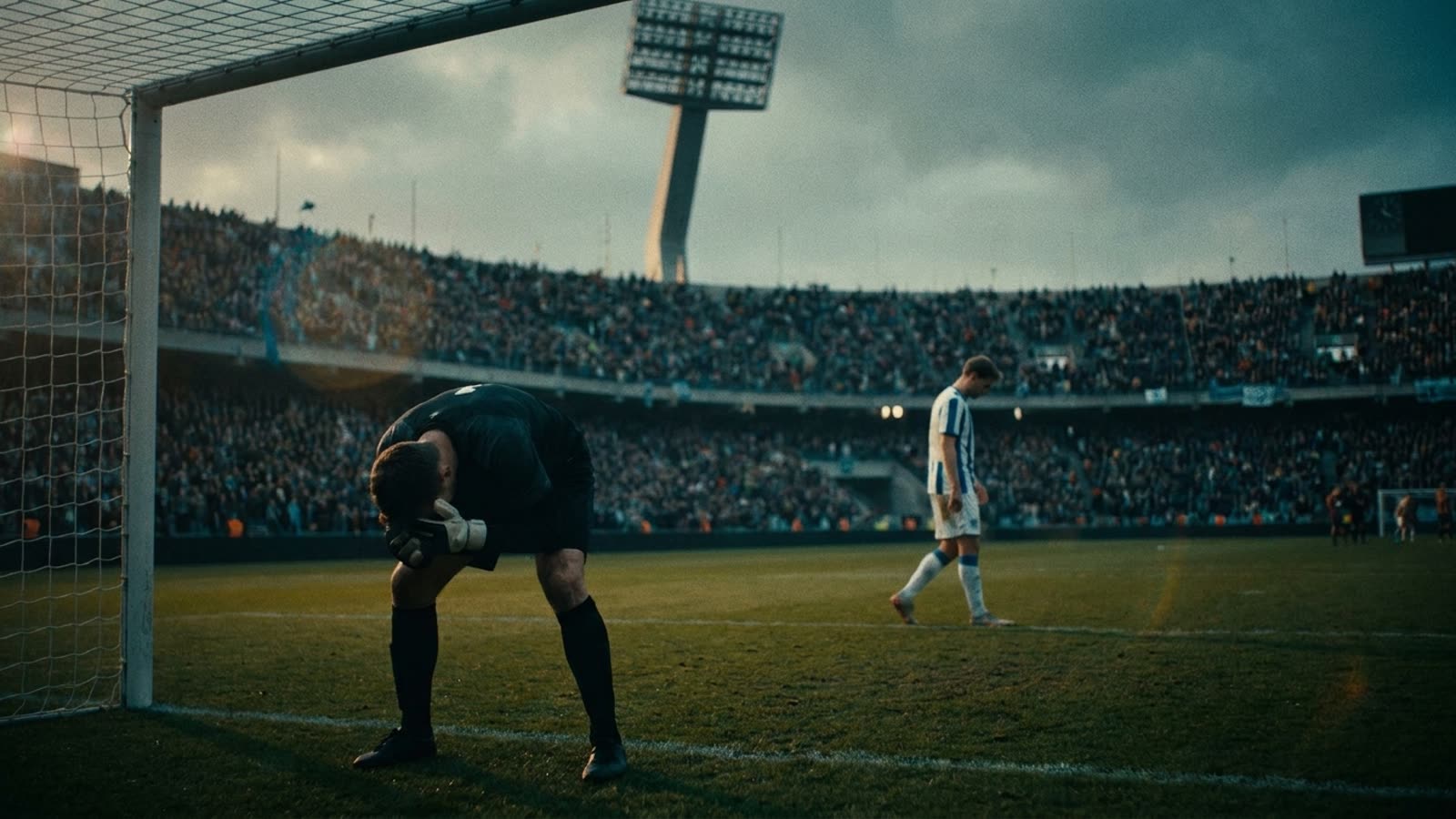
No other moment in sport compresses so much consequence into so little action. A penalty kick takes roughly half a second from foot to net, yet entire national narratives have been rewritten in that sliver of time — careers defined, legacies cemented, and the occasional goalkeeper transformed into an unlikely deity.
The shootout was introduced to World Cup knockout rounds in 1982, replacing the coin toss and replay system that had previously decided deadlocked matches. FIFA's intention was purely administrative: a clean, definitive way to produce a winner. What they inadvertently created was sport's most exquisite psychological pressure chamber.
The mathematics of inevitability
From twelve yards, with a stationary ball and a goal measuring eight feet high by twenty-four feet wide, the advantage overwhelmingly favours the striker. Conversion rates in regular play hover around 75-80 percent. Yet in World Cup shootouts, that figure drops meaningfully — not because the geometry changes, but because the mind does.
The penalty taker faces what psychologists call a "loss frame": the expectation is success, so there is only parity to maintain or failure to suffer. Goalkeepers, conversely, operate in a "gain frame" where any save is heroic. This asymmetry explains why shootouts produce so many unconventional goalkeeper performances and so many inexplicable misses from otherwise clinical finishers.
National mythologies, yard by yard
Certain countries have accumulated shootout records so consistent they border on the mystical. Germany's efficiency became proverbial — a product, analysts suggest, of Teutonic preparation and cultural comfort with high-stakes procedure. England's historic struggles spawned decades of tabloid psychoanalysis and genuine academic study into whether something in the national character produced choking under pressure.
The truth is more mundane and more interesting: preparation matters enormously, and some football cultures simply took shootouts more seriously than others. When England finally invested in systematic penalty practice and psychological coaching, their tournament results improved. The mystique was always just a gap in professionalism wearing national costume.
The goalkeeper's impossible choice
A goalkeeper facing a penalty has approximately 0.4 seconds to react once the ball is struck — insufficient time to read the shot and respond. This means keepers must commit to a direction before or as the ball is kicked, transforming the save attempt into an educated guess informed by research, body-language reading, and intuition.
The best penalty-stopping performances in World Cup history combined exhaustive preparation with theatrical gamesmanship: the delayed approach, the prolonged eye contact, the subtle movements designed to plant doubt. The twelve yards becomes a poker table where the stakes are national glory.
Our take
The shootout's critics call it a lottery unworthy of deciding major tournaments. They miss the point entirely. Penalties strip away the comfortable alibis of team sport — the defensive lapse, the unlucky bounce, the referee's blindness — and leave only an individual, a ball, and a choice. That football's grandest occasions so often conclude with this brutal simplicity is not a flaw in tournament design but a feature. The shootout reveals character precisely because it offers nowhere to hide.