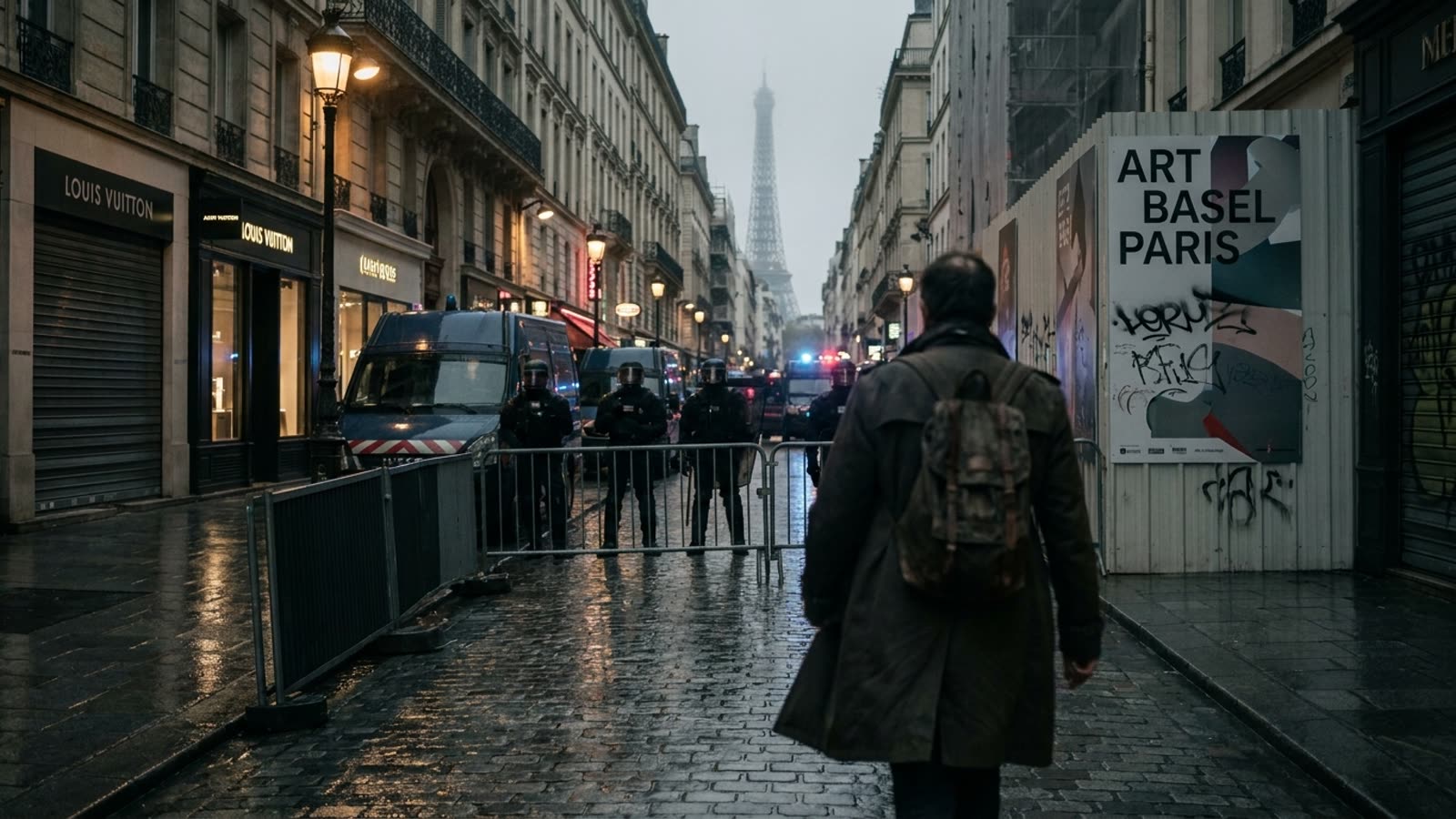
The announcement arrived with the bureaucratic calm that only French institutions can muster: Art Basel Paris will shutter a day early, closing Saturday instead of Sunday, as the city braces for yet another weekend of planned demonstrations that have already forced fashion houses and sporting events to retreat behind barricades or cancel outright.
This is not the Paris of croissants and couture that the luxury industry has spent decades marketing. It is a city where riot police have become as much a fixture of the streetscape as Haussmann balconies, where brands must now factor protest calendars into their event planning with the same rigor they apply to seating charts.
The new normal
The disruptions are not spontaneous. France's protest movements have become remarkably organized, announcing their intentions days in advance, which creates a peculiar planning problem for the cultural institutions caught in the crossfire. Art Basel, which has invested heavily in establishing Paris as a serious autumn counterweight to its Miami and Hong Kong fairs, found itself calculating the reputational cost of staying open against the practical impossibility of guaranteeing collector safety.
Independent fashion brands, many of whom timed presentations around the fair's gravitational pull, are now scrambling to condense schedules or move events to private venues with better security. The major luxury houses, with their fortress-like headquarters and private security apparatus, are better positioned to weather the storm—but even they cannot host clients who cannot reach the door.
Culture as collateral
What makes Paris's current predicament distinctive is the collision between its role as the world's cultural capital and its status as a nation where street protest remains a legitimate, even celebrated, form of political expression. The Fifth Republic was born from barricades; telling Parisians not to march is like telling Venetians not to flood.
But the economic stakes have shifted. Paris now hosts more international art fairs, fashion weeks, and luxury summits than at any point in its history. Each cancellation or curtailment sends ripples through a global network of galleries, brands, collectors, and media outlets that have come to depend on the city's calendar.
Our take
Paris has always sold itself on a certain beautiful chaos—the idea that civilization and disorder could coexist in the same arrondissement, that you might step over a protest to reach a gallery opening. That romantic friction is becoming genuinely costly. The city will survive this weekend, and the next, but the luxury industry is quietly asking a question it never expected to pose: is Paris still worth the trouble?