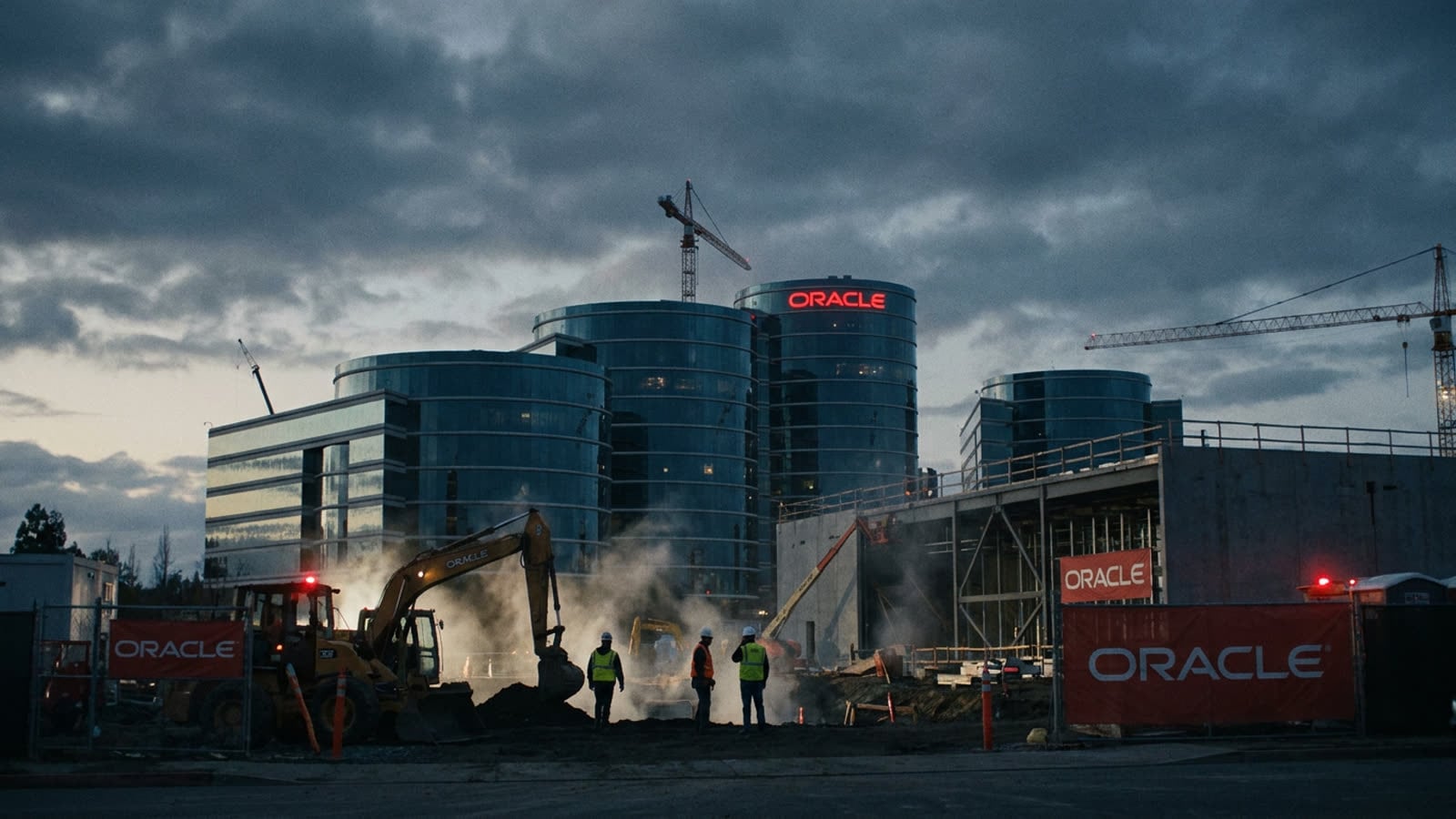
Oracle's decision to eliminate roughly 21,000 positions—about ten percent of its global workforce—while simultaneously loading its balance sheet with tens of billions in new debt reveals the precarious arithmetic of the AI infrastructure race. The company is not merely trimming fat; it is performing a high-stakes financial transplant, redirecting cash flows from human capital to concrete and silicon.
The layoffs, concentrated in sales, consulting, and legacy product divisions, represent Oracle's admission that its traditional database licensing business no longer justifies its headcount. Revenue from on-premises software has been declining for years as customers migrate to cloud alternatives, many of them offered by competitors. Rather than fight a rearguard action, Oracle is choosing to redeploy resources toward the one market where it believes it can still command premium pricing: AI infrastructure.
The debt-for-data-centers trade
Oracle has been on a borrowing spree, raising capital through bond offerings to finance a global buildout of data centers optimized for AI workloads. The logic is straightforward: hyperscalers like Microsoft, Google, and Amazon already dominate general-purpose cloud computing, but the surge in demand for GPU clusters and specialized AI training facilities has created a window of opportunity. Oracle is betting it can capture enterprise customers who want dedicated AI infrastructure without the complexity of negotiating with the Big Three.
The problem is that debt service does not pause while data centers come online. Oracle's interest expenses are climbing at precisely the moment its highest-margin legacy products are losing relevance. If the AI infrastructure business scales quickly and commands the pricing Oracle expects, the bet pays off handsomely. If demand plateaus—or if competitors undercut pricing—the company will be left with expensive real estate and a lighter workforce.
Why layoffs now
The timing is instructive. Oracle's workforce reductions come as the broader tech sector has largely completed its post-pandemic correction. Most large technology companies finished their layoff cycles in 2024 and early 2025. Oracle's cuts feel less like a response to macroeconomic pressure and more like a strategic reallocation—a signal that management views its legacy business as a source of cash to be harvested, not a franchise to be defended.
This is not necessarily irrational. Enterprise software companies have long faced the dilemma of maintaining expensive sales forces for products with declining growth. Oracle appears to have concluded that the marginal return on a salesperson pitching traditional database licenses is lower than the marginal return on a dollar invested in AI infrastructure. The human cost is significant, but the financial logic is coherent.
Our take
Oracle is making the kind of bet that defines corporate legacies. Larry Ellison's company is essentially wagering that the AI infrastructure market will remain undersupplied long enough for Oracle to build scale, generate returns, and service its debt—all before the next technological cycle renders today's investments obsolete. It is a reasonable thesis, but the margin for execution error is razor-thin. Companies that finance transformation with leverage rarely get second chances if the timing is wrong.