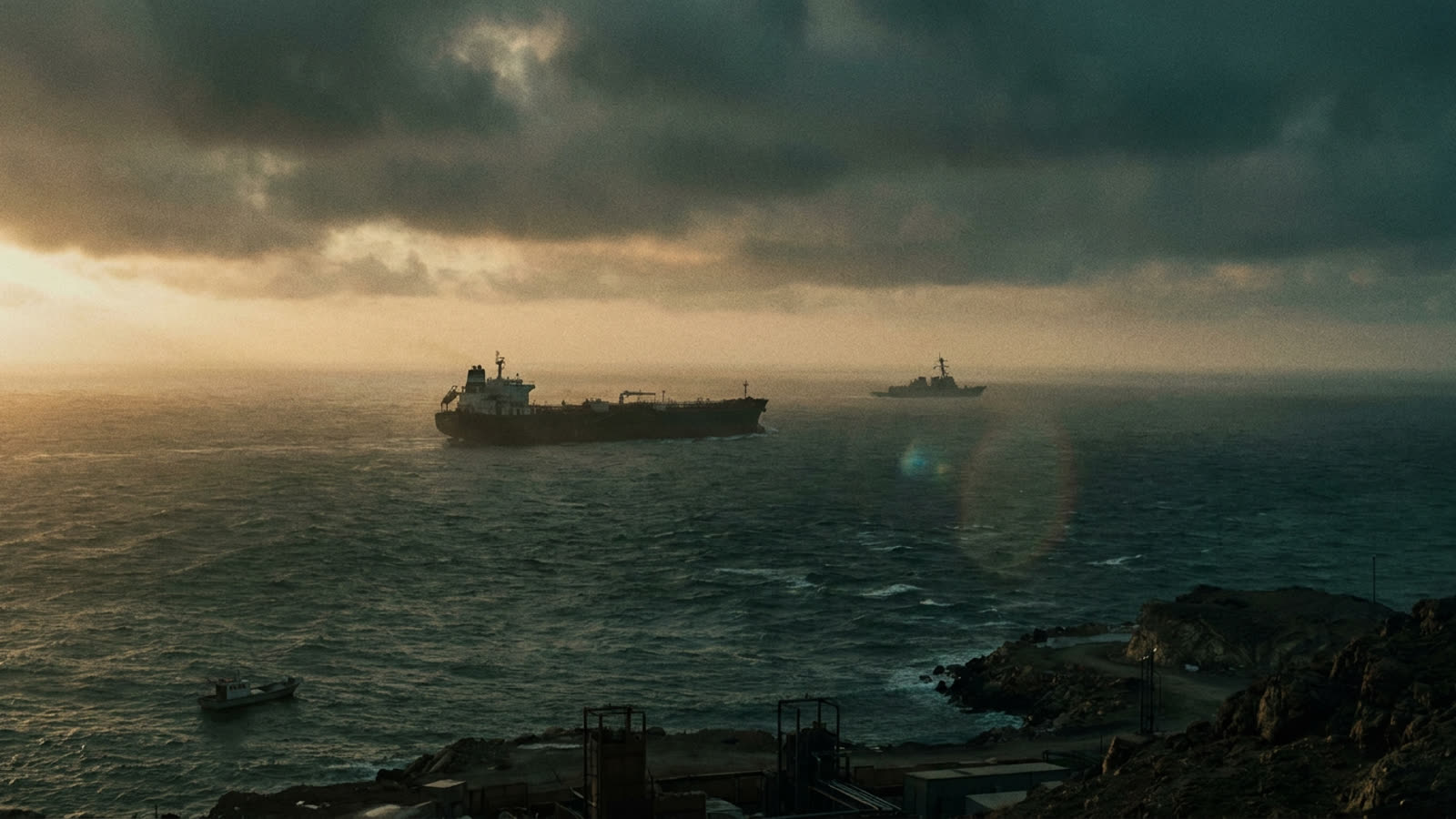
The Strait of Hormuz has a way of concentrating the mind. A fresh strike on an oil tanker in the waters near the narrow passage that handles roughly a fifth of global petroleum consumption sent crude prices climbing on Monday, a pointed reminder that supply-chain spreadsheets mean nothing when missiles are involved.
The incident—details of which remain fragmentary—follows a pattern that has become grimly familiar over the past several years: an attack on commercial shipping in or near the Persian Gulf, a flurry of diplomatic finger-pointing, and a brief spike in oil prices that traders treat as a cost of doing business in the region. Brent crude rose more than 1.5% in early trading, a move that would barely register in calmer times but arrives against a backdrop of already jittery energy markets.
The geography of vulnerability
The Strait of Hormuz is only 21 miles wide at its narrowest point, and the shipping lanes through which supertankers must pass are narrower still. On any given day, roughly 20 million barrels of crude oil transit these waters—a volume that represents the difference between a functioning global economy and a very bad Monday for central bankers everywhere. The strait's strategic importance has made it a perennial flashpoint, with Iran, the United States, and various non-state actors all maintaining the capacity to disrupt traffic if sufficiently motivated.
What makes the current moment particularly delicate is the convergence of several factors: Saudi Arabia's recent decision to slash its official selling prices to rare discounts, signaling concern about demand; ongoing uncertainty about the trajectory of global growth; and a geopolitical environment in which the Middle East's various conflicts show no sign of resolution. The tanker strike is not, in itself, a game-changer. But it arrives at a moment when markets are already primed to overreact.
The Saudi discount gambit
Riyadh's decision to cut its Arab Light crude price for August delivery to Asian buyers—to the lowest differential against the regional benchmark in years—tells its own story. The kingdom is clearly worried about competition from rival producers and softening demand from China, whose economic recovery has disappointed optimists. By lowering prices, Saudi Arabia hopes to defend market share, but the move also signals that OPEC's de facto leader sees rough waters ahead.
The tanker strike, then, creates an awkward tension: prices rise on supply-side fear even as the demand picture darkens. This is the oil market's perpetual condition—caught between the physics of geology and the psychology of geopolitics, never quite sure which force will dominate on any given day.
Our take
The Strait of Hormuz is the world's most dangerous cliché, a chokepoint that everyone knows about and nobody can do anything about. Monday's tanker strike will fade from headlines within days, but the underlying vulnerability will remain. The global economy has spent decades building an energy infrastructure that depends on a 21-mile gap between Iran and Oman staying peaceful. That is not a bet; it is a prayer. And prayers, as any oil trader will tell you, do not hedge well.