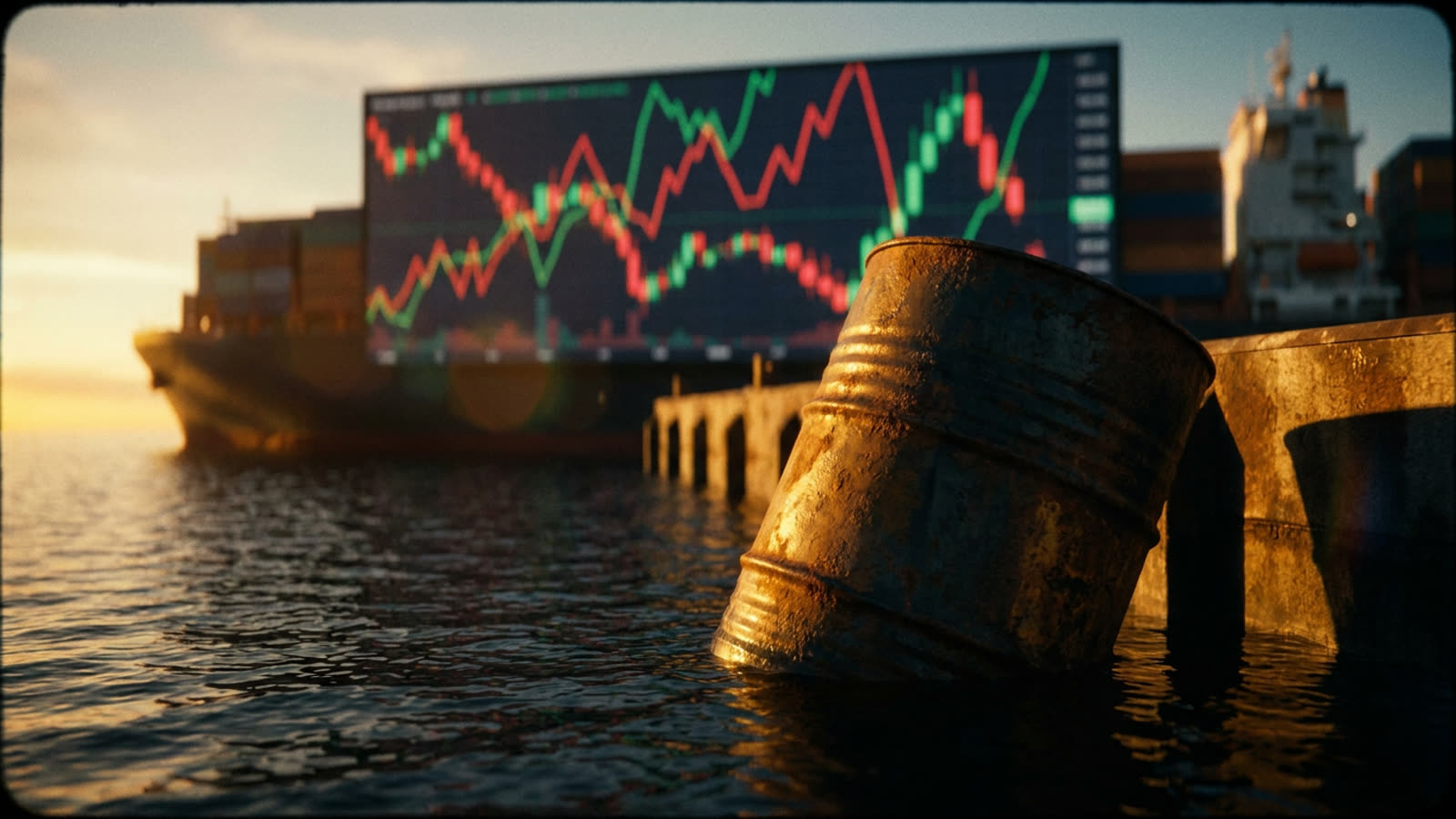
The peace trade lasted about 72 hours. Brent crude, which had tumbled toward $68 on optimism that a U.S.-Iran accord would soon uncork sanctioned barrels, reversed course Monday after American forces struck Iranian missile installations and patrol boats in the Strait of Hormuz. By the Asian open, prices were climbing back toward $73—a swing that erased roughly half of last week's relief rally in equities and reminded traders that geopolitical risk premiums are not optional.
The lesson is not that diplomacy failed; negotiations in Qatar continue, and both Washington and Tehran still appear to want an off-ramp. The lesson is that oil markets have been pricing in an almost frictionless resolution—one in which sanctions lift smoothly, Iranian exports resume at scale, and the Strait stays calm. None of those assumptions can survive contact with reality.
Why the Strait matters more than the barrels
Iran's sanctioned production—perhaps 1.5 million barrels a day that could theoretically return—is meaningful but not transformational in a 102-million-barrel global market. What is transformational is the Hormuz chokepoint, through which roughly 20 percent of the world's seaborne crude passes daily. Even a brief closure or insurance-rate spike ripples into tanker economics, refinery margins, and ultimately pump prices. The weekend strikes, though limited, demonstrated that the corridor remains contested. Shipping insurers have already begun re-rating Gulf-bound cargoes.
The Fed's inflation headache just got worse
Central bankers were quietly celebrating oil's slide. Cheaper energy feeds directly into headline inflation and, with a lag, into transportation and food costs. A sustained move back above $75 Brent would complicate the Federal Reserve's calculus ahead of this week's PCE data and next month's rate decision. Markets had been pricing two cuts by year-end; futures now show traders hedging toward one, or none.
Our take
Energy traders love a clean narrative—sanctions off, barrels on, prices down—but the Middle East rarely cooperates. The smarter bet is that oil will remain volatile and elevated until a deal is not merely signed but implemented, verified, and boring. That could take quarters, not weeks. Investors who sold the rumor may find themselves buying back the reality at a premium.