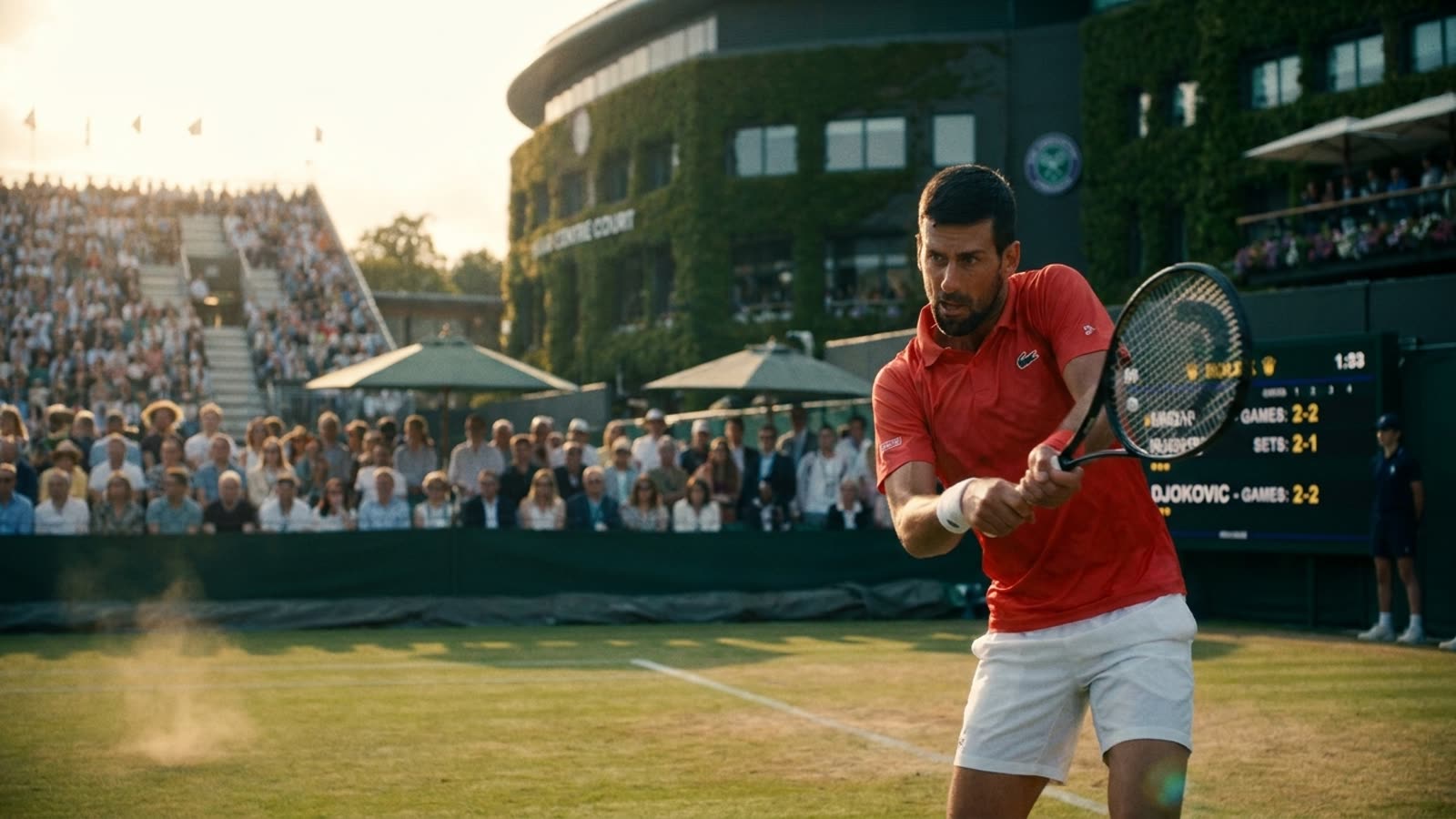
The number 106 does not capture what Novak Djokovic has done to Wimbledon so much as it understates it. One hundred and six match wins at the All England Club—more than any man in the Open Era—and the Serbian is through to the quarterfinals again, moving with the same metronomic certainty that has defined his relationship with grass since he first won the title in 2011. He is 39 years old. He moves like someone who has read the ending and is simply playing out the middle chapters for the audience's benefit.
The victory itself was characteristic: controlled, efficient, and curiously devoid of the drama that Djokovic can summon when required. He did not need to summon it. The opponent was dispatched in the manner of a bureaucrat processing paperwork—nothing personal, simply procedure.
The architecture of dominance
What separates Djokovic's Wimbledon tenure from mere excellence is its architectural completeness. He has won the tournament seven times, reached the final four more, and lost before the quarterfinals only twice since 2010. The grass, supposedly the most unpredictable surface in tennis, has become his most reliable canvas. His return of serve—still the best in the sport's history—neutralizes the weapon that grass is meant to reward. His court coverage, somehow undiminished by age, turns potential winners into extended rallies he inevitably wins. His opponents arrive with game plans and leave with questions.
The younger generation was supposed to have solved him by now. Carlos Alcaraz has managed it occasionally. Jannik Sinner has found moments. But neither has achieved the sustained Wimbledon success that would signal a true changing of the guard. Djokovic remains the favorite in any match he plays on these courts, a status that defies both actuarial tables and the sport's hunger for new narratives.
What 106 means in context
Roger Federer, the previous holder of the Wimbledon match-wins record, accumulated his total across a career that included eight titles and a playing style that seemed designed specifically for grass. Djokovic has surpassed him while being, by his own admission, more naturally suited to hard courts. This is the difference between genius and system—Federer made grass look like his birthright; Djokovic made it submit through superior engineering.
The record also speaks to longevity in an era that punishes it. The modern tour is faster, more physical, and more demanding than anything Federer faced in his prime. That Djokovic continues to excel at 39, when most players have long since retired or descended into ceremonial appearances, suggests either extraordinary physical maintenance or an understanding of the game so complete that athleticism has become secondary to anticipation.
Our take
There is something almost tedious about Djokovic's excellence at this point, and that tedium is itself the highest compliment. He has made the extraordinary ordinary, turned the improbable into the expected, and transformed Wimbledon's grass from a neutral battleground into something closer to a home court. The quarterfinals await, then presumably the semifinals, then probably another final. The only real question is whether anyone has figured out how to stop the inevitable, and fifteen years of evidence suggests they have not.