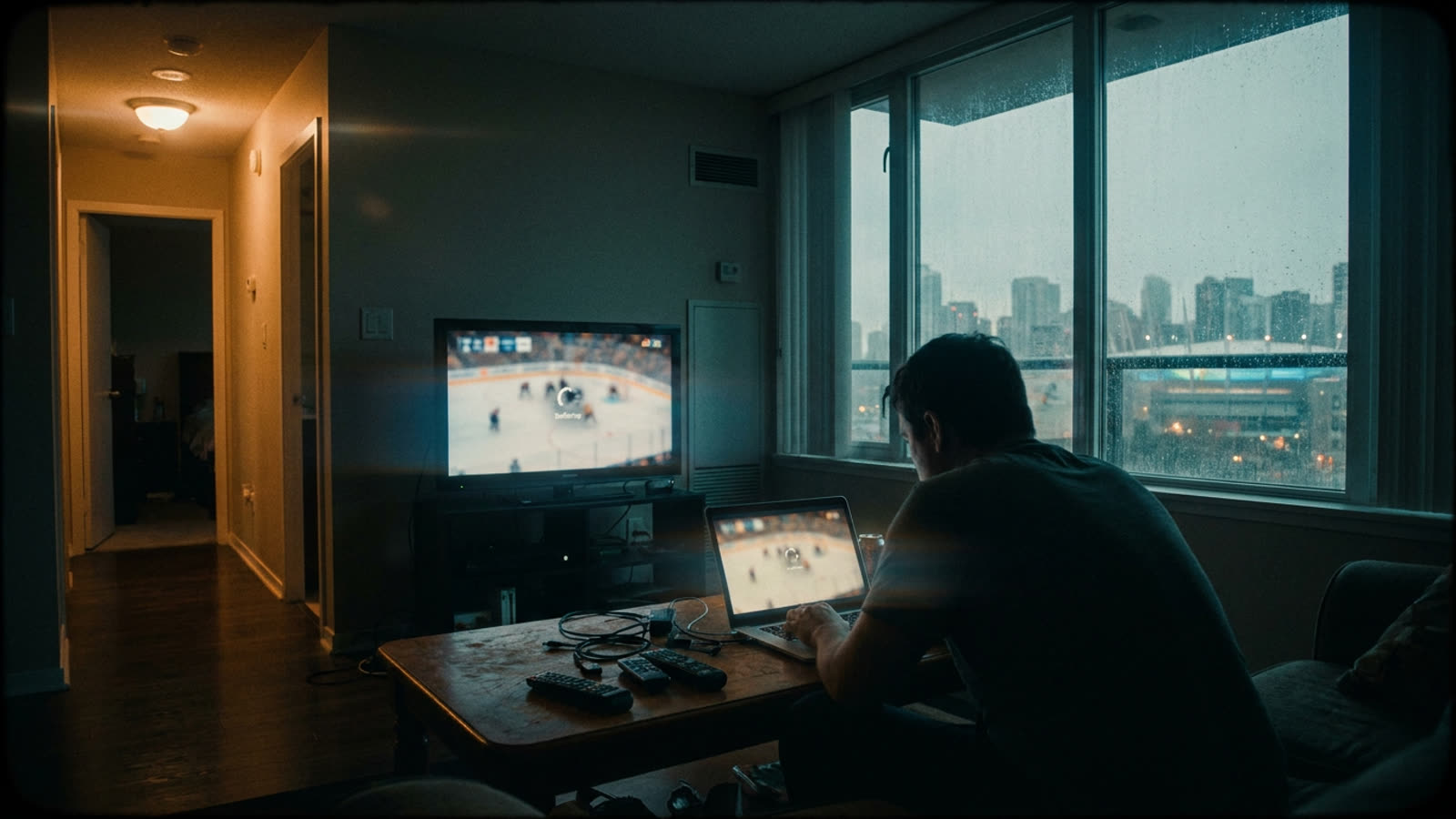
The Stanley Cup Finals are underway, and millions of casual fans are discovering what hockey diehards have known for years: watching the NHL in 2026 requires navigating a labyrinth of streaming services, cable packages, and regional blackouts that would confuse a telecommunications lawyer.
ESPN's multi-year deal with the NHL, now in its fifth season, was supposed to elevate hockey to mainstream prominence. The reality has been more complicated. Games are scattered across ESPN, ESPN2, ABC, ESPN+, and Hulu, with different matchups requiring different subscriptions on different nights. The Stanley Cup Finals themselves bounce between ABC broadcast and ESPN cable, a scheduling puzzle that assumes viewers have both antenna access and a cable login.
The fragmentation problem
The NHL's broadcast situation reflects a broader crisis in sports media. Regional sports networks, once the backbone of local hockey coverage, have collapsed across the country. Diamond Sports Group's bankruptcy left fans in multiple markets without easy access to their teams. The league's response—pushing more content to ESPN+ while maintaining traditional broadcast windows—created a worst-of-both-worlds scenario where neither cord-cutters nor cable subscribers get a complete product.
For the Finals, at least, the path is clearer: ABC carries the marquee games, with ESPN handling overflow. But the journey to this point has been rocky. Regular-season games often required ESPN+ subscriptions that came with their own blackout restrictions. Playoff rounds mixed ESPN and TNT coverage before TNT's deal expired. The result is a fanbase that has learned to expect confusion.
Hockey's audience question
The deeper issue isn't just where to watch—it's whether anyone is watching at all. The NHL remains the fourth major North American league, trailing the NFL, NBA, and MLB in television ratings and cultural cachet. ESPN's investment was supposed to change that calculus, bringing hockey the promotional muscle that elevated UFC and college football on the network.
The results have been mixed. Ratings for marquee games have improved modestly, but hockey hasn't broken through to casual audiences the way ESPN hoped. The sport's regional concentration—strong in the Northeast, Midwest, and Canada, weaker elsewhere—limits its national ceiling. The streaming-first strategy may have alienated older fans without capturing enough younger ones to compensate.
Our take
ESPN's NHL experiment isn't a failure, but it's not the transformation either party envisioned. The Stanley Cup Finals remain appointment television for hockey fans, and the games themselves are as compelling as ever. But the league's fragmented broadcast approach has made casual fandom unnecessarily difficult, and that's a problem for a sport that needs to grow its audience beyond the converted. The NHL has the best playoff format in professional sports—a two-month marathon of elimination hockey that produces genuine drama. It deserves a distribution strategy as elegant as its tournament structure.