The National Football League's international ambitions have always outpaced its execution. For years, the league has dangled the prospect of Italian football before Roman crowds, only to retreat to the safer confines of London and Munich. Now, with the Clash in Italy 2026 officially on the calendar, the NFL is betting that the Eternal City can become a permanent stop on its global circuit — a proposition that requires more than just booking the Stadio Olimpico.
The game arrives at a peculiar moment for American football's European experiment. London fixtures have become routine, drawing respectable if unspectacular crowds, while Germany has proven surprisingly rabid for the sport. Italy, by contrast, remains something of a question mark: a massive media market with no established NFL fandom infrastructure, no homegrown feeder league of consequence, and a sports culture dominated so thoroughly by calcio that even basketball struggles for oxygen.
Why Rome, why now
The NFL's decision to plant a flag in Italy reflects commissioner Roger Goodell's stated goal of hosting games in multiple European countries annually. The league has spent years cultivating relationships with Italian officials and broadcasters, and Rome offers something London cannot: novelty. The British capital, after nearly two decades of hosting games, has lost some of its marketing luster. Italy provides fresh imagery, new sponsorship opportunities, and access to a Mediterranean market that extends beyond national borders.
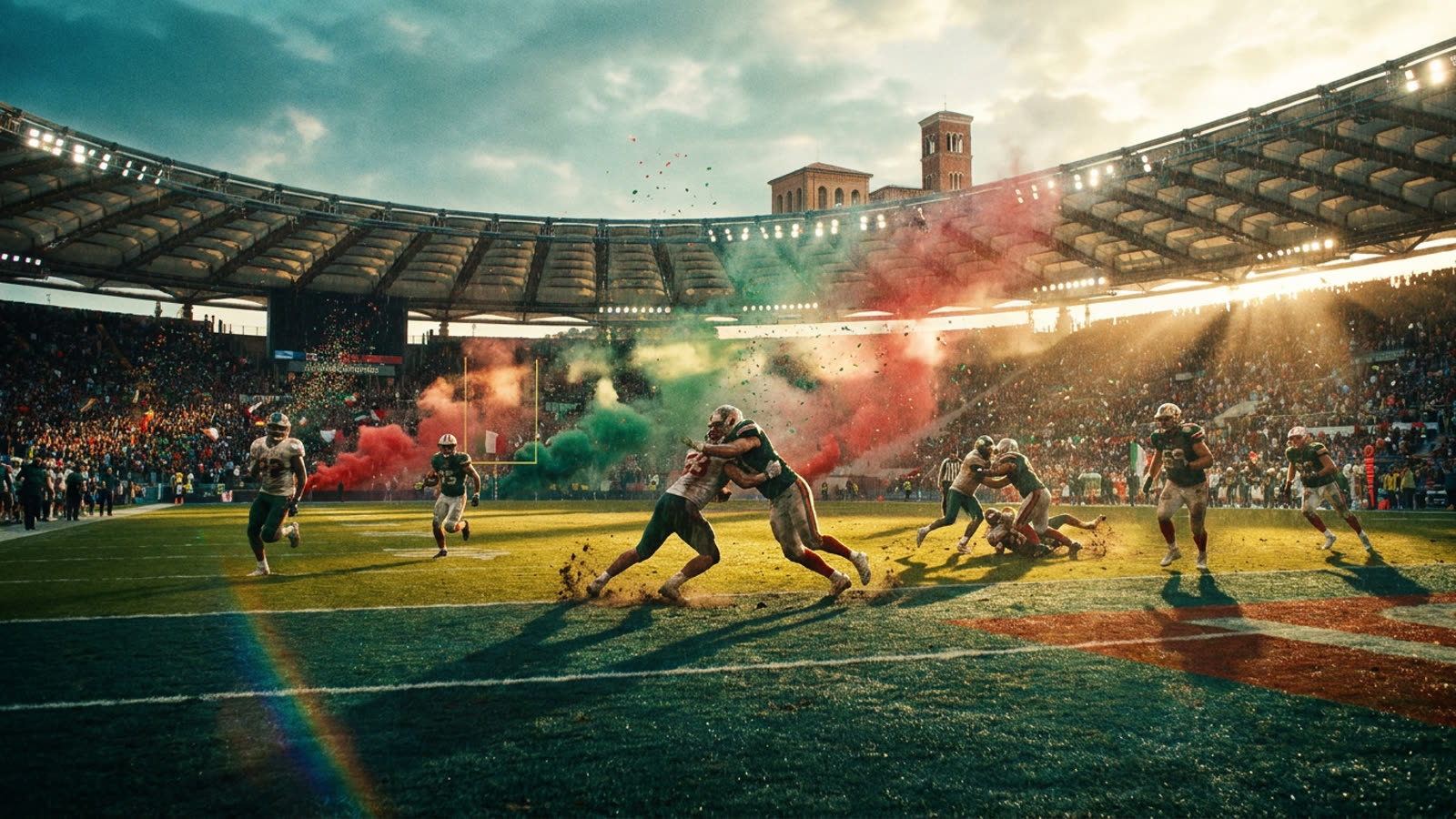
There is also the matter of stadium economics. The Stadio Olimpico, home to both Roma and Lazio, seats approximately 70,000 and comes with the kind of classical backdrop that NFL marketing departments dream about. A sellout would represent a significant payday for the participating franchises, though the league has been characteristically vague about which teams will make the trip.
The infrastructure problem
Expansion enthusiasts should temper their expectations. A single game does not a market make, and the NFL's track record of converting international curiosity into sustainable fandom is mixed at best. The league's European ambitions have historically foundered on a basic problem: American football is expensive to play, difficult to learn, and requires infrastructure that most countries lack. Italy has a small but dedicated American football community, yet it operates on budgets that would embarrass a Division III program.
The more realistic goal is probably not converting Italians into football obsessives but rather capturing the attention of American expatriates, tourists, and the continent's existing NFL fans who might travel for a Roman holiday with a gridiron twist. This is event tourism dressed up as sports expansion — which is fine, provided no one pretends otherwise.
Our take
The NFL's Italian gambit is less about building a fanbase than about building a brand. Rome offers the league exactly what it craves: prestige, novelty, and a photogenic setting for its relentless content machine. Whether Italian sports fans will care about American football in five years is almost beside the point. The game will sell out, the highlights will look spectacular, and the league will declare victory regardless of what comes next. That is how the NFL has always approached international expansion — with the confidence of an empire that assumes the world will eventually come around.