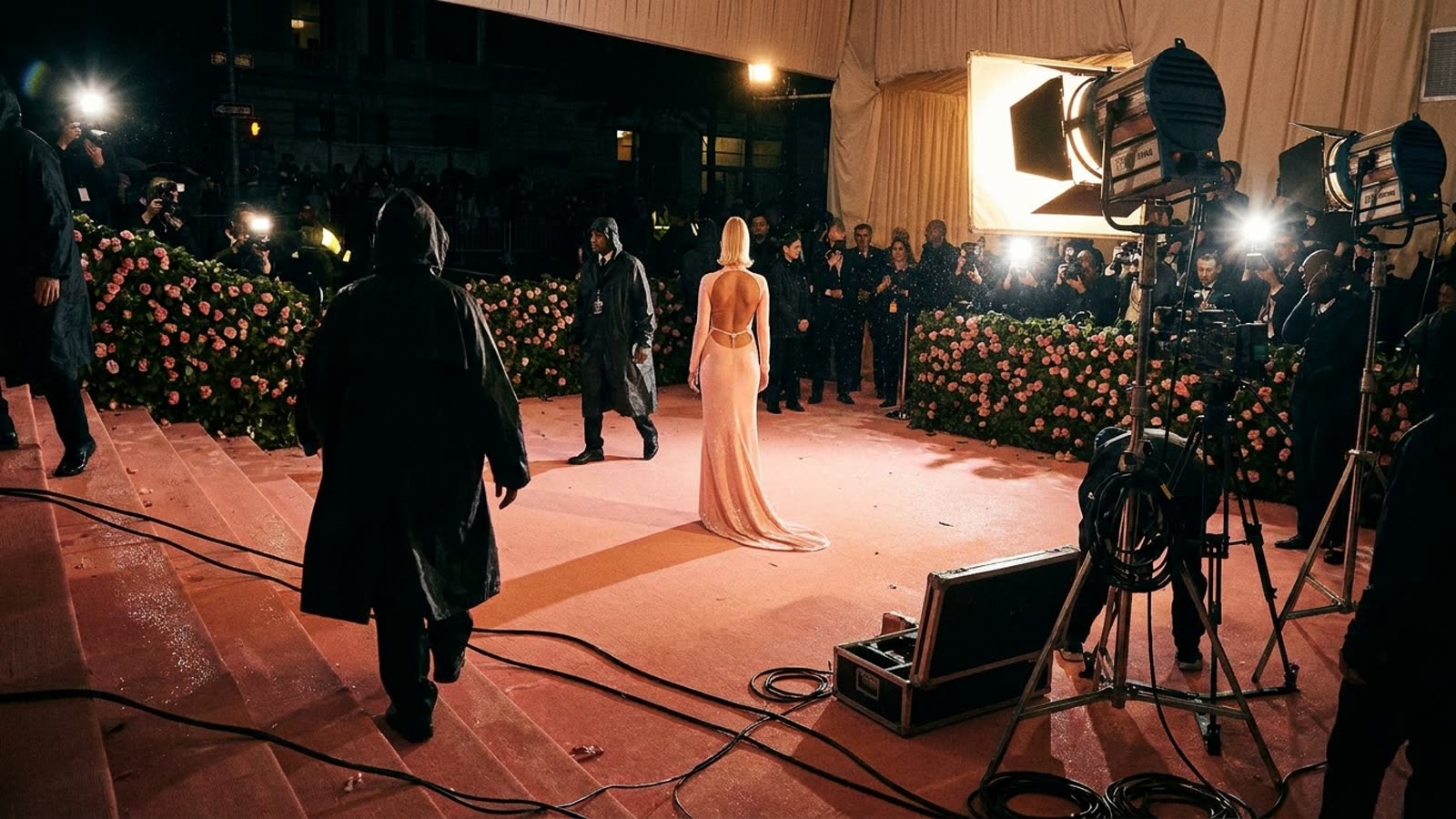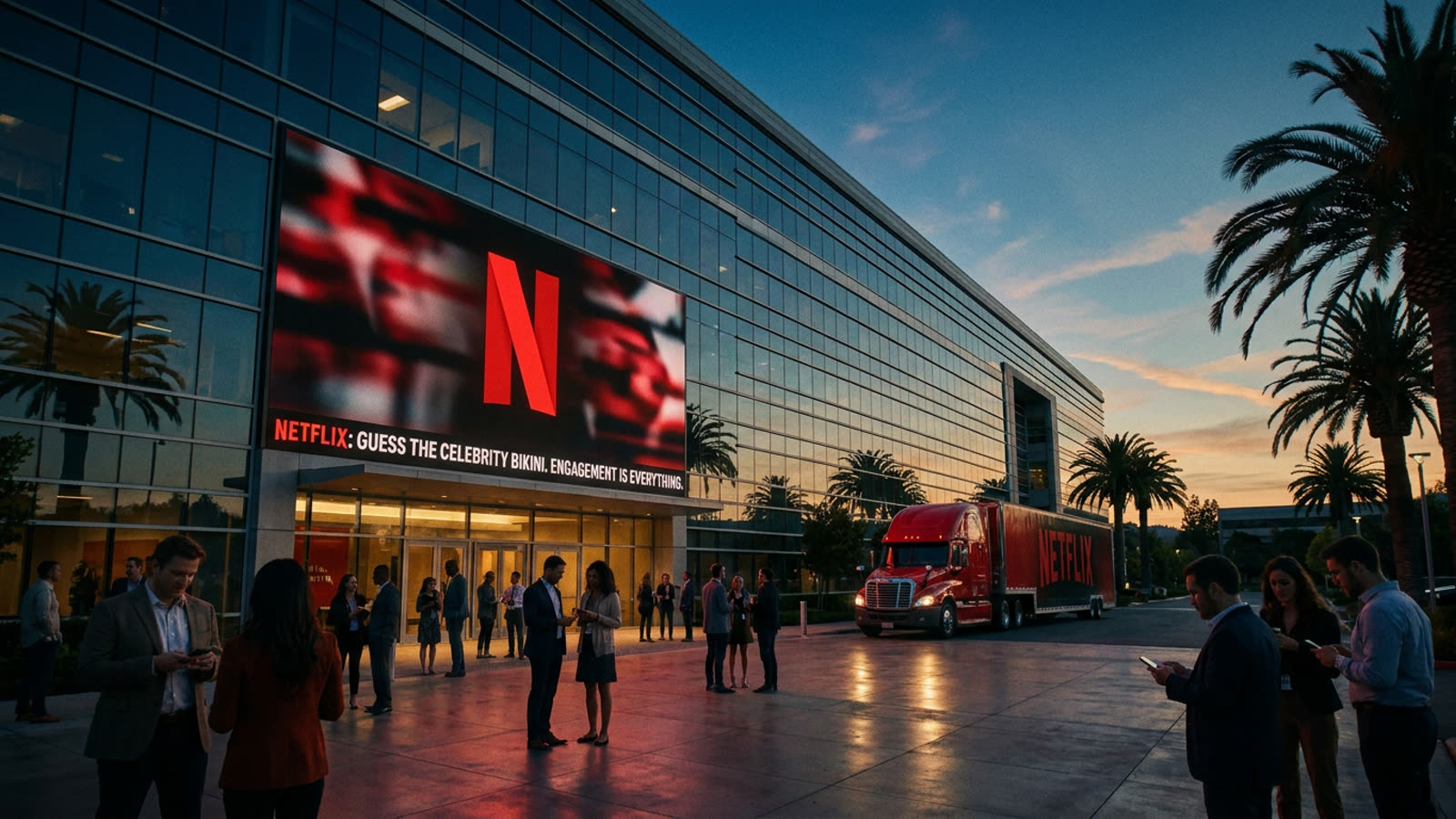
Netflix has discovered what tabloid editors knew decades ago: nothing drives engagement quite like a disembodied celebrity torso in swimwear and a question mark.
The streaming platform's latest social media gambit—a "Guess Whose Itsy Bitsy Hot Pink Bikini" feature showcasing anonymous Netflix talent in beach attire—represents either the nadir of celebrity journalism or its purest distillation, depending on your tolerance for irony. The format is aggressively simple: crop a famous person's body, remove identifying context, invite the internet to play forensic anatomist. It works embarrassingly well.
The anatomy of attention
What Netflix understands, and what legacy entertainment media has been slower to grasp, is that the parasocial relationship between audience and celebrity has become granular to the point of absurdity. Fans don't just recognize their favorite actors—they can identify them by the curve of a hip, the specific shade of a spray tan, the angle of a clavicle. This isn't new; celebrity magazines have run "Whose Body Part?" features for generations. What's changed is the shamelessness with which prestige platforms now deploy the tactic.
Netflix positions itself as the home of auteur television and Oscar-bait cinema. It spends billions on content that wins Emmys and generates think pieces. And yet its social media team has concluded, correctly, that a cropped bikini photo generates more engagement than a carefully crafted trailer. The cognitive dissonance is the point.
The engagement trap
The streaming wars have entered their mature phase, which means subscriber growth has slowed and attention has become the scarce resource. Every major platform is now competing not just against each other but against TikTok, Instagram, and the infinite scroll of digital distraction. In this environment, the distinction between "content" and "marketing" has collapsed entirely.
A bikini guessing game costs nothing to produce, requires no licensing negotiations, and generates thousands of comments from users eager to demonstrate their celebrity-identification prowess. It's the perfect late-capitalism content: zero production value, maximum engagement, plausible deniability as harmless fun. Netflix can always claim it's celebrating body positivity or summer vibes while harvesting the data of everyone who clicks.
Our take
There's no point in moralizing about this. Netflix isn't degrading culture; it's reflecting it with uncomfortable accuracy. We click because we want to click, because the small dopamine hit of correctly identifying a celebrity's midsection scratches an itch we didn't know we had. The streaming giant has simply accepted what we've been reluctant to admit: the line between prestige television and tabloid entertainment was always thinner than we pretended. At least they're honest about it now.