The annual ritual of NBA mock drafts has reached its final, frantic week — and the only thing analysts agree on is that they will almost certainly be wrong about most of it.
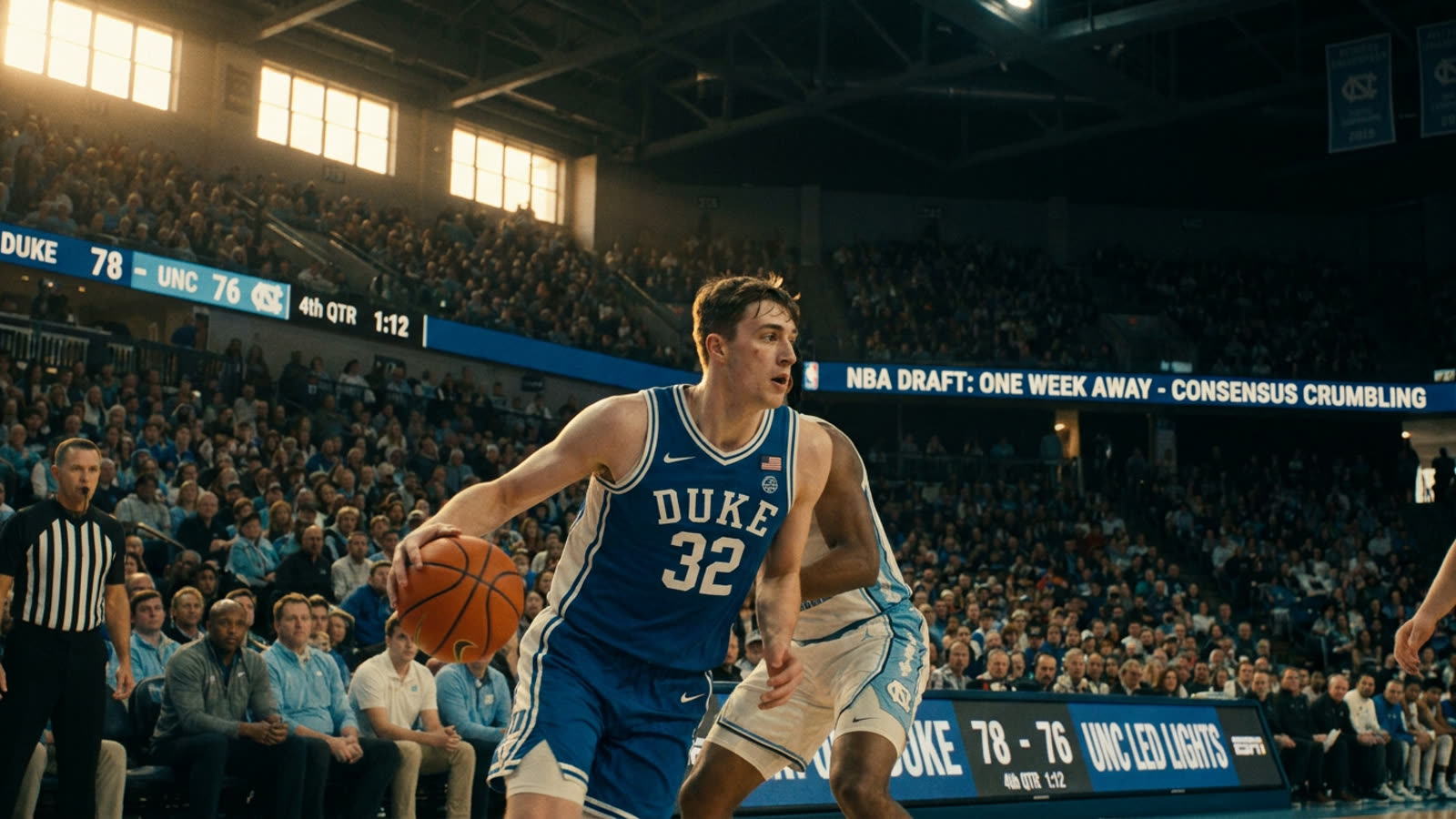
Cooper Flagg to the Jazz at No. 1 remains the closest thing to a lock this class offers. The Duke freshman's combination of two-way versatility and franchise-player ceiling has Utah's front office reaching for the pen. Beyond that consensus pick, the draft board resembles a Rorschach test: every evaluator sees something different, and none of them are lying.
The top five is deceptively stable
Most projections slot the same names near the top — Flagg, followed by some combination of Ace Bailey, Dylan Harper, VJ Edgecombe, and Kon Knueppel — but the order shifts daily based on workout reports and whispered trade discussions. Washington at No. 2 appears torn between Bailey's scoring upside and Harper's playmaking floor. The Hornets at No. 3 need everything, which paradoxically makes their pick harder to predict. Front offices with specific needs often reach; those with general desperation often panic.
The real chaos begins around pick six, where teams start weighing immediate rotation players against developmental swings. This is where mock drafts become creative writing exercises.
The middle rounds are where reputations are made
General managers know the truth that fans often forget: championships are built in the teens and twenties. The Spurs found Manu Ginóbili at 57. The Warriors selected Draymond Green at 35. This year's mid-first-round features intriguing international prospects and polarizing college performers whose stock fluctuates with each private workout.
The combine measurements have reshuffled several boards. Wingspan numbers that exceeded expectations have pushed certain prospects up; disappointing athletic testing has quietly buried others. Teams are also gaming out trade scenarios — the Celtics and Thunder, fresh off their draft-night maneuvering, are expected to be active again.
Our take
Mock drafts serve a purpose beyond prediction: they reveal what evaluators value, which archetypes are in fashion, and which skills the league has decided matter most this cycle. The current consensus prizes length, switchability, and shooting — the template that has dominated playoff basketball for half a decade. Whether that template still applies in three years, when this class reaches its potential, is the bet every team is making. The draft is not a test of who is right today; it is a test of who can see furthest into an unknowable future. One week out, everyone is guessing. Some guesses are just better informed than others.