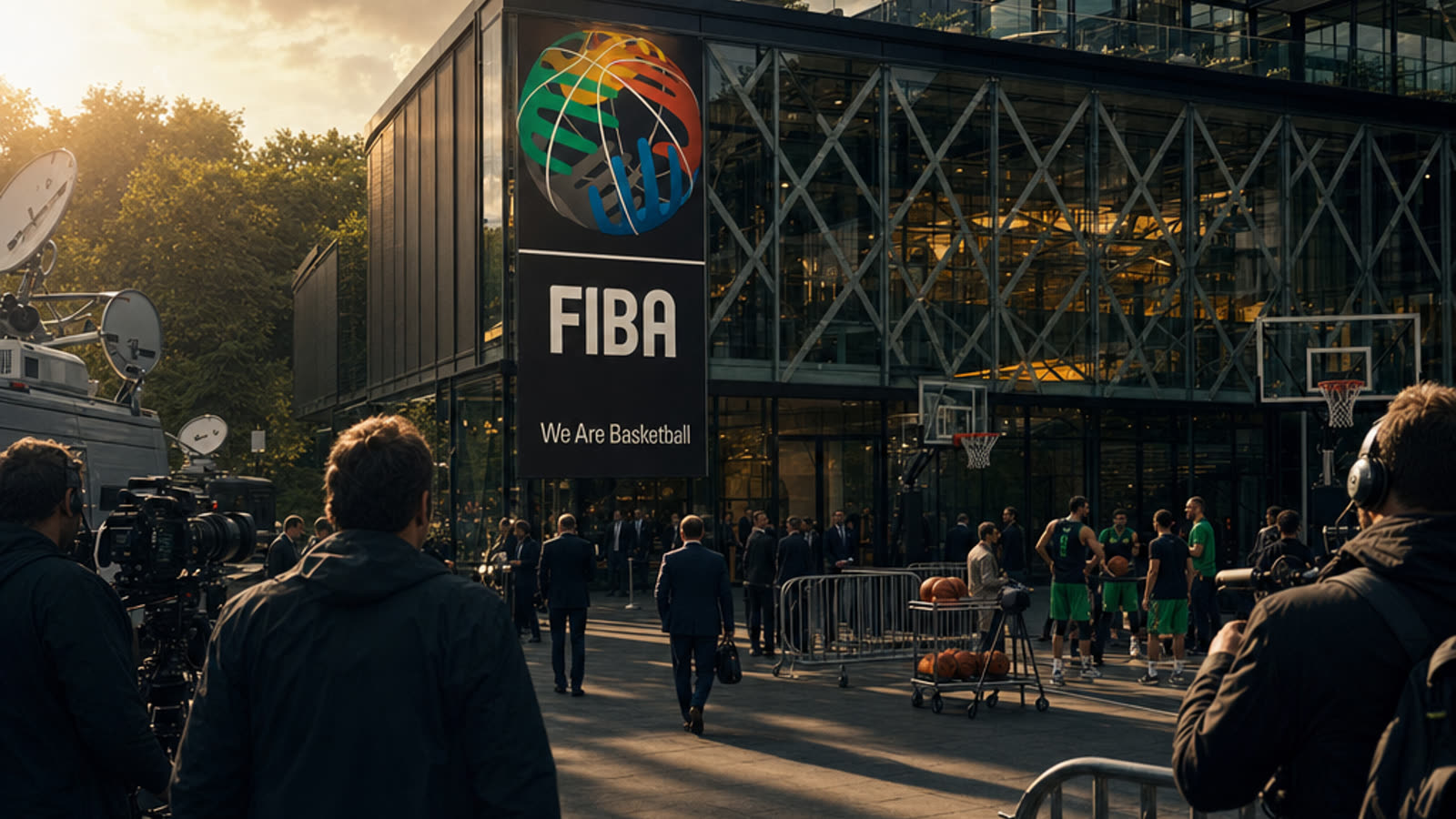
The NBA and FIBA have decided they no longer need EuroLeague to expand basketball's footprint in Europe, and the implications extend far beyond scheduling conflicts and broadcast rights. The joint announcement that both organizations will continue their European expansion initiatives without the continent's premier club competition represents a fundamental rupture in how elite basketball outside America will be organized, financed, and consumed.
The split has been brewing for years. EuroLeague, which operates as a private company controlled by eleven shareholder clubs, has long resisted FIBA's authority over the international calendar and competition structure. The NBA, meanwhile, has watched European talent pipelines with increasing strategic interest—Luka Dončić, Nikola Jokić, and Giannis Antetokounmpo didn't emerge from American AAU circuits. Controlling the development ecosystem that produces such players is worth billions.
The governance fracture
FIBA, basketball's global governing body, and EuroLeague have been locked in a cold war since 2016, when EuroLeague broke away from FIBA's competition umbrella. The NBA largely stayed neutral during that decade of tension, content to cherry-pick the best European talent regardless of which organization developed them. That neutrality is now over.
By aligning explicitly with FIBA, the NBA gains leverage over international windows, player release policies, and the regulatory framework governing how young European players are scouted and signed. EuroLeague's shareholder clubs—Real Madrid, Barcelona, CSKA Moscow, and their peers—suddenly find themselves on the outside of basketball's most powerful institutional alliance.
Economic stakes
The financial calculus is stark. The NBA's international revenue streams have grown to represent nearly a quarter of league income, with Europe as the most lucrative non-American market. FIBA controls national team competitions and, crucially, the regulatory apparatus that governs player movement between leagues. EuroLeague controls the most prestigious club competition but lacks the institutional authority to shape rules.
For EuroLeague clubs, the nightmare scenario is a FIBA-NBA partnership that creates competing club competitions with superior broadcast deals and player access. The NBA has floated various European expansion concepts for years; with FIBA as a partner rather than an obstacle, those concepts become considerably more viable.
Player development implications
The most consequential long-term effect may be on how European basketball develops talent. EuroLeague clubs have invested heavily in youth academies, producing players who command eight-figure NBA contracts. If the NBA-FIBA alliance creates alternative pathways—perhaps through expanded Basketball Champions League formats or new regional competitions—the economic model that sustains those academies could erode.
Young European players may increasingly face a choice between systems rather than a single ladder. That fragmentation could benefit individual talents with leverage but harm the overall development infrastructure.
Our take
This is the NBA completing its transition from domestic league to global basketball hegemon. The partnership with FIBA isn't about growing the game—it's about controlling the game's growth. EuroLeague's independence was always an anomaly, a legacy of European club football's governance model applied to a sport where one league generates more revenue than all others combined. The anomaly is being corrected, and EuroLeague's shareholder clubs will eventually have to choose between resistance and accommodation. History suggests accommodation wins.