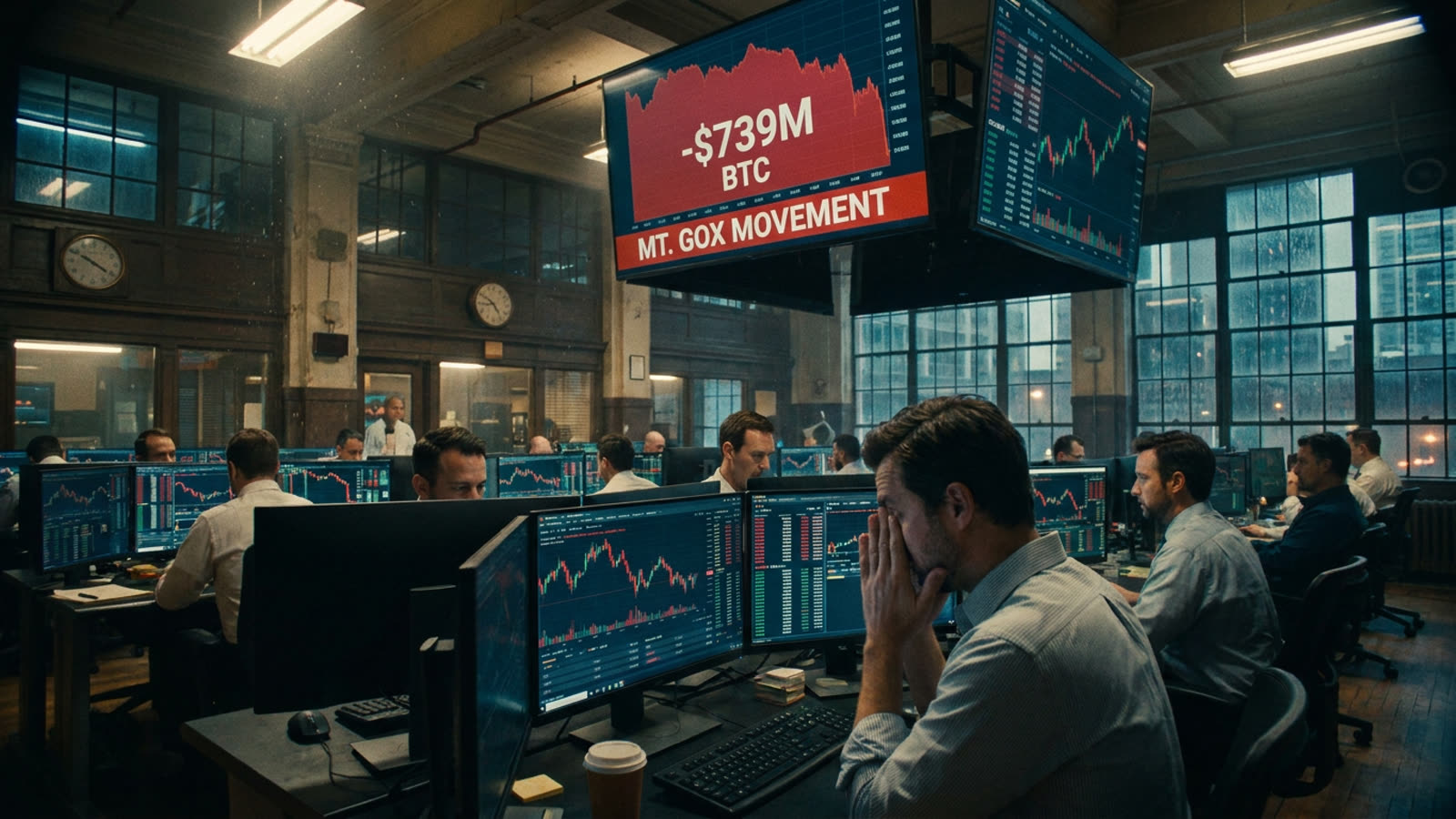
The ghosts of crypto past are stirring again. Mt. Gox, the Tokyo exchange whose 2014 collapse became the original cautionary tale of cryptocurrency custody, has moved 10,422 Bitcoin—worth approximately $739 million at current prices—to a new wallet as its final distribution deadline approaches. For an industry that has spent over a decade waiting for this moment, the response has been remarkably composed.
The transfer, detected by on-chain analysts in the past 24 hours, represents another step in the laborious process of returning funds to creditors who have been waiting since the exchange lost roughly 850,000 Bitcoin to hackers more than twelve years ago. The rehabilitation trustee, Nobuaki Kobayashi, faces an October 2026 deadline to complete distributions, and the recent wallet activity suggests the machinery is finally grinding toward resolution.
The overhang that wouldn't die
Mt. Gox has haunted Bitcoin markets for so long that it has become almost mythological. The exchange once handled more than 70% of global Bitcoin trading volume before its spectacular implosion. The subsequent bankruptcy proceedings dragged through Japanese courts for years, with creditors receiving periodic updates that amounted to bureaucratic poetry about the complexity of returning cryptocurrency to people who held it when a single Bitcoin cost a few hundred dollars.
The fear has always been straightforward: when creditors finally receive their Bitcoin, many will sell. They bought at prices that make today's levels look like winning lottery tickets. The temptation to realize those gains—and the psychological relief of finally closing a chapter that began in a different technological era—could create significant selling pressure.
Why the market shrugged
Bitcoin barely flinched on the news, which tells us something important about how the market has matured. The Mt. Gox overhang has been discussed, modeled, and anticipated for so long that sophisticated participants have already adjusted their positioning. Institutional investors who now dominate trading through ETFs and prime brokerage accounts have factored the potential supply into their risk models.
There's also the question of scale. While $739 million sounds enormous, Bitcoin's daily trading volume regularly exceeds $30 billion. The Mt. Gox coins, if distributed and sold gradually, represent a manageable absorption rather than a market-breaking event. The trustee has also demonstrated a preference for measured distributions rather than dumping, having conducted previous sales through exchanges in ways designed to minimize market impact.
Our take
Mt. Gox is crypto's Godot—always about to arrive, perpetually reshaping expectations through its absence. The muted market reaction to this latest movement suggests that after twelve years, the industry has simply learned to live with the uncertainty. When the final distributions do occur, some creditors will sell, others will hold, and Bitcoin will absorb the supply the way it has absorbed every other challenge. The real story isn't the wallet movement; it's that an asset class once defined by Mt. Gox's failure has grown large enough to treat its resolution as a footnote rather than a crisis.