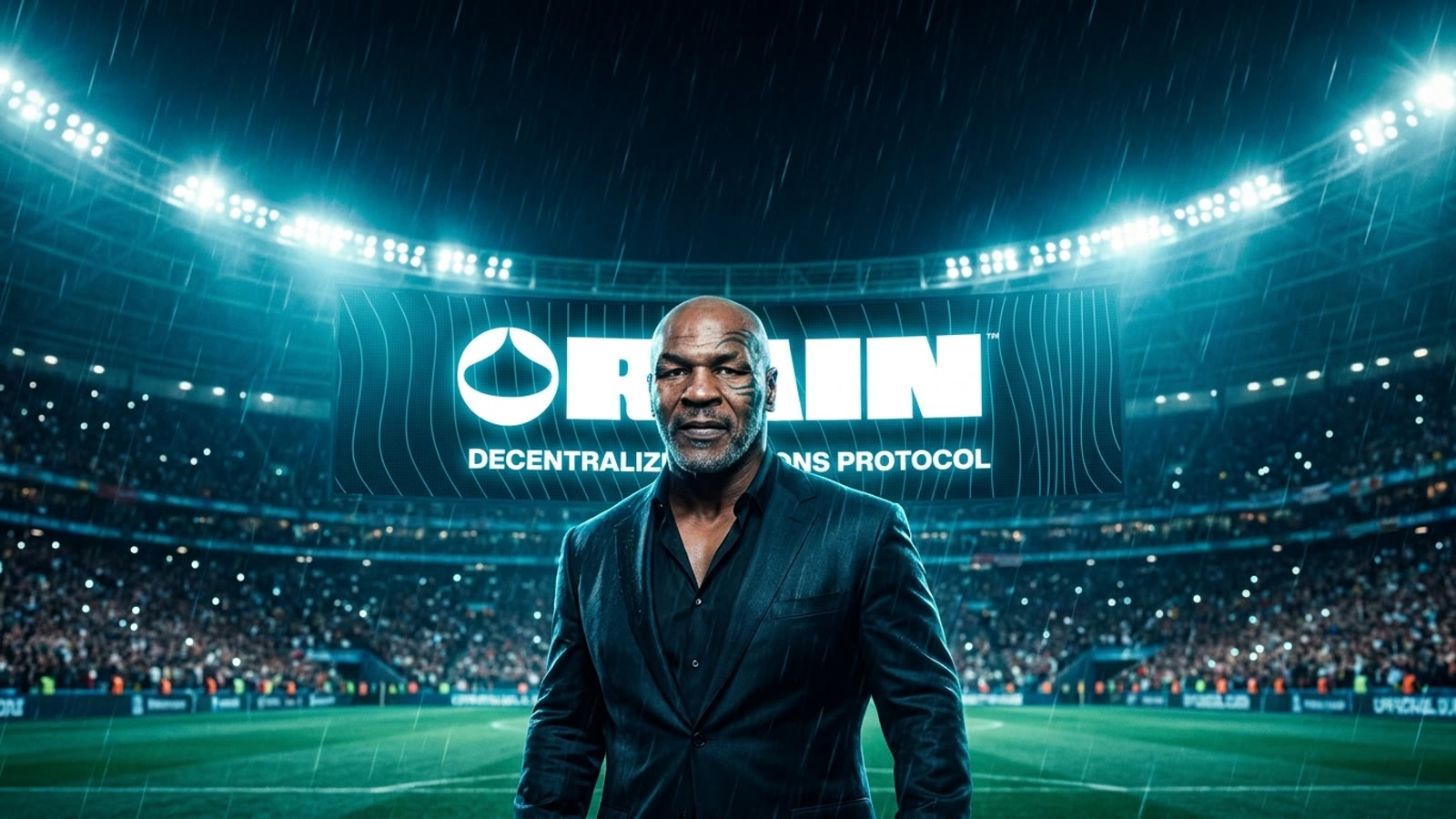
Boxing icon Mike Tyson has become the unlikely frontman for crypto's hottest sector. In a video advertisement posted to his own X account on June 22, the 59-year-old former heavyweight champion endorsed Rain Trade, a decentralized prediction-market app built on the Arbitrum blockchain. "I realized anything can become a prediction market with a little bit of creativity," Tyson wrote. "That's what @rain__trade is all about."
The spot — shot inside a soccer stadium, riffing on the over-the-top goal celebrations that define the sport — is timed to the 2026 World Cup, which Rain's team has openly described as a defining moment for the category. The protocol behind the app has engaged advertising giant McCann and allocated a significant user-acquisition budget for the tournament window. The message is unsubtle: prediction markets are going mainstream, and Rain wants to be the face of it.
The product behind the celebrity
Rain Trade is the consumer-facing application sitting on top of Rain Protocol, a permissionless infrastructure layer for building prediction markets. The pitch is genuinely differentiated. Where established players like Polymarket and Kalshi curate their markets and concentrate on large, global events — elections, major sports finals, macro outcomes — Rain lets anyone spin up a market on virtually anything. A Brazilian league match. A reality-TV finale. A local election no centralized platform would bother listing.
That "long tail" is the strongest argument in Rain's favor. It is, in spirit, what Uniswap did for token listings: open the gates to the markets the incumbents ignore. The protocol pairs this with AI-assisted market resolution, an automated-market-maker design, and a deflationary token model in which trading fees are used to buy back and burn the RAIN token.
The valuation question
The celebrity glow arrives alongside hard scrutiny. RAIN has climbed into the upper ranks of crypto assets by market capitalization, a valuation that critics argue is sharply disconnected from the protocol's actual usage. On-chain investigator ZachXBT publicly urged traders to avoid the project, pointing to thin real liquidity, modest annual protocol fees, and questions about how the token's price has behaved on-chain. The team has pushed back, with CEO Roy Shaham arguing in a lengthy public statement that the company is community-funded, still early, and should be "judged by the protocol, by the users, by the innovation — not by the noise."
Both things can be true at once. The technology is real and the addressable market — prediction markets are a sector where rivals are reportedly raising at valuations from $15 billion to $40 billion — is large and growing. At the same time, a token priced for a future that has not yet arrived carries obvious risk, and celebrity endorsements have a long, checkered history in crypto.
What to watch
Tyson will pull eyeballs; he always has. The real test is whether the World Cup blitz converts curious first-time visitors into people who actually trade, and keep trading once the ad stops running. Daily trading volume and retained active users — not impressions — are the numbers that will reveal whether Rain has built a business or bought a moment. For now, the protocol has the technology, the marketing muscle, and one of the most recognizable faces on the planet. What it still has to prove is the usage.