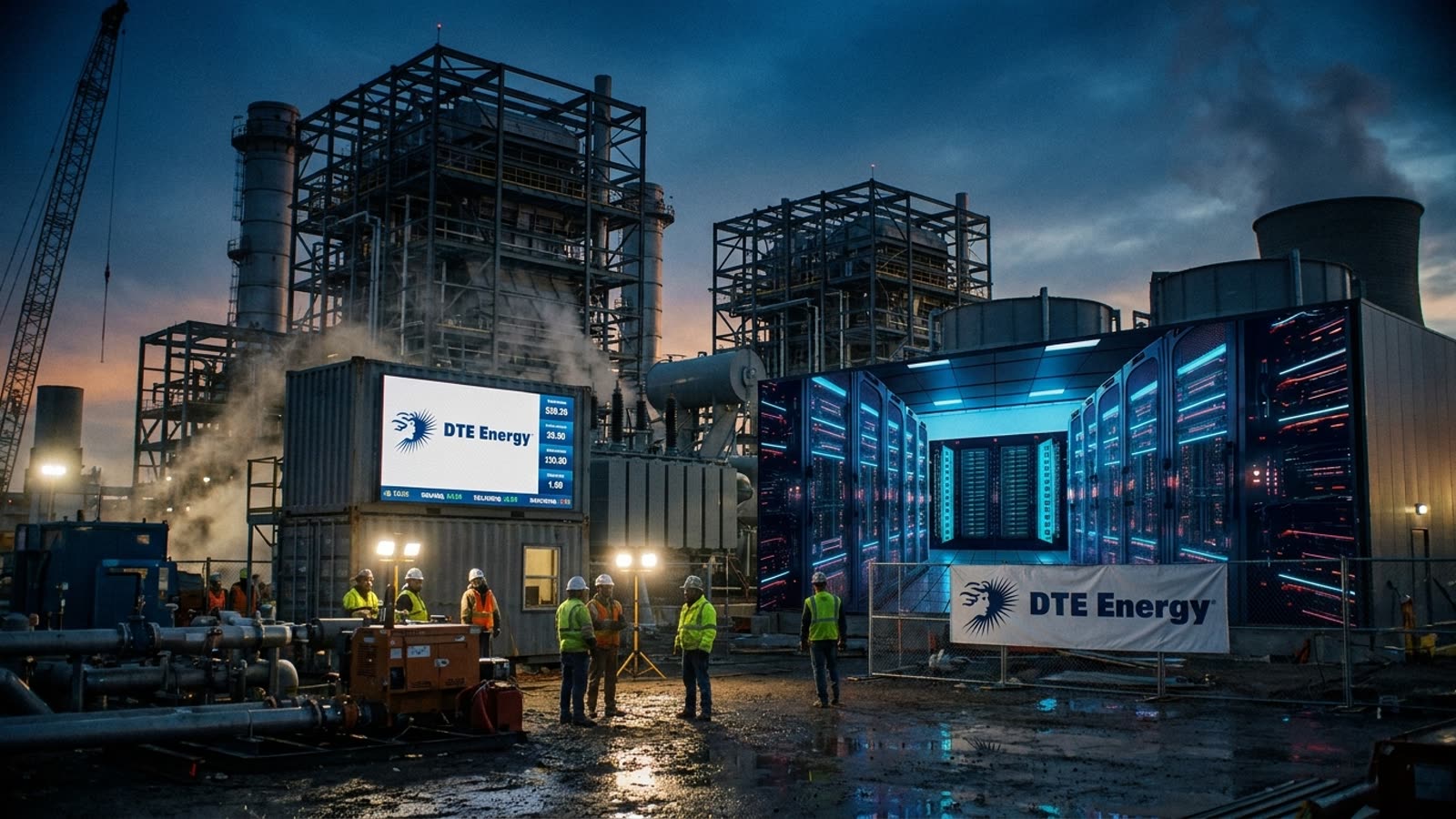
The artificial-intelligence gold rush has a billing problem, and Michigan is about to become its test case. DTE Energy, one of America's largest utilities, has filed for regulatory approval to construct two new natural-gas power plants at an estimated cost of $6.4 billion—expenses it intends to recover from the state's residential and commercial ratepayers. The plants exist for one purpose: to feed the insatiable electricity appetite of datacenters proliferating across the Midwest.
The proposal has ignited fury among consumer advocates and environmental groups who argue that tech giants reaping billions from generative AI should not be subsidized by Michigan families already struggling with energy costs. "That is insanity," one resident told regulators at a recent public hearing, a sentiment echoing across community forums from Detroit to Grand Rapids.
The math behind the megawatts
Datacenters are electricity hogs. A single large AI-training facility can consume as much power as a small city, and demand is surging as OpenAI, Microsoft, Google, and a constellation of startups race to build ever-larger models. Utilities nationwide are scrambling to add generation capacity, but the question of who pays—and who profits—remains unresolved. DTE's filing makes the trade-off explicit: without new gas plants, the company warns, it cannot guarantee grid reliability for existing customers, let alone accommodate new industrial load.
Critics counter that the framing is a false choice. Michigan already has substantial renewable-energy potential and could pursue demand-response agreements that shift datacenter consumption to off-peak hours. More pointedly, they ask why hyperscalers worth trillions of dollars in market capitalization are not financing their own power infrastructure, as some have begun doing in Texas and Virginia.
A fossil-fuel detour on the road to net zero
The environmental stakes are considerable. Michigan has committed to carbon neutrality by 2050, and adding two gas plants would lock in decades of emissions precisely when the state should be accelerating its clean-energy transition. Proponents of the DTE plan argue that natural gas is a "bridge fuel" and that the plants could eventually be retrofitted for hydrogen or carbon capture. Opponents note that such retrofits remain expensive and unproven at scale, and that the bridge metaphor has been invoked for so long it now resembles a permanent structure.
The Michigan Public Service Commission is expected to rule on the proposal early next year. Whatever it decides will set a precedent watched closely by regulators in Ohio, Georgia, and other states facing similar datacenter-driven demand spikes.
Our take
AI companies have spent the past three years insisting their technology will transform the economy. They are probably right—but transformation should not mean offloading infrastructure costs onto households that will never see a dividend check from Nvidia. If datacenters are as valuable as their backers claim, those backers can afford to build their own power plants, or at minimum negotiate cost-sharing arrangements that do not treat ratepayers as involuntary venture capitalists. Michigan's regulators have an opportunity to establish that principle before the rest of the country gets the bill.